




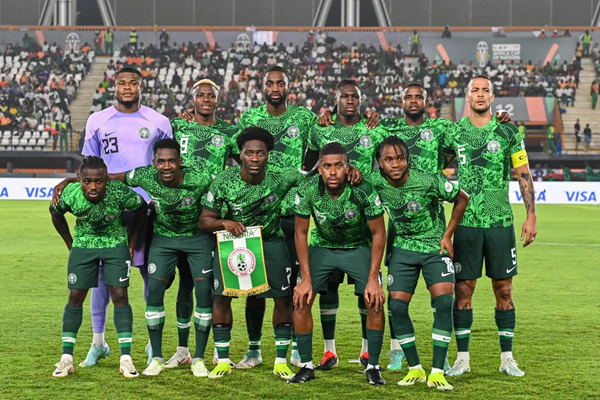
Nigeria’s quest to feature at the 2026 global showpiece has come to a painful halt after FIFA confirmed the Democratic Republic of the Congo as Africa’s representative in the inter-confederation play-off tournament.
In an official accreditation notice issued to media organisations, the world football governing body unveiled the format and participants for the decisive play-off series that will determine the final two qualifiers for the expanded 2026 FIFA World Cup.
The tournament will be co-hosted by the United States, Canada and Mexico across 16 cities.
Conspicuously missing from the confirmed list is Nigeria, whose football authorities had challenged their elimination after a tense CAF play-off against Democratic Republic of the Congo.
The dramatic encounter ended 1-1 before the Leopards edged the tie on penalties. The Nigeria Football Federation subsequently filed a protest, alleging the use of ineligible players and seeking reinstatement. However, the latest confirmation leaves little doubt that the result stands.
The six teams named for the play-off tournament are Bolivia, Congo DR, Iraq, Jamaica, New Caledonia and Suriname. Matches will take place between March 26 and March 31, 2026, in the Mexican cities of Guadalajara and Monterrey.
Under the approved structure, the four lowest-ranked nations will contest semi-final brackets, while the two highest-ranked sides advance directly to the final stage.
This places the Congolese side just one victory away from sealing a historic ticket to the mundial.
For Nigeria, the confirmation signals the end of a turbulent qualification journey one filled with hope, controversy and ultimate disappointment. Fans must now turn their focus to rebuilding efforts and the promise of future campaigns.
The development is expected to spark renewed debate within Nigerian football circles, particularly over the handling of the protest and the broader technical direction of the national team. Many supporters believe the Super Eagles had the quality to secure qualification on the pitch and will now demand a thorough review of what went wrong during the campaign.
Attention is likely to shift toward rebuilding, strengthening grassroots development, and ensuring greater consistency in future qualifiers. With the next competitive cycle on the horizon, Nigerian football authorities face mounting pressure to restore confidence and chart a clearer path back to the world stage

