




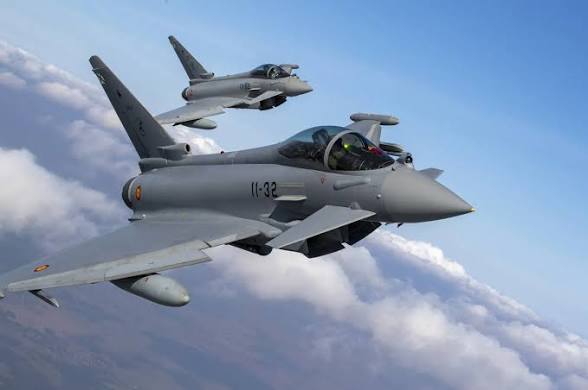
NATO fighter jets were scrambled to intercept and shoot down an unidentified drone that entered Romanian airspace, marking another reminder of the heightened security challenges facing Eastern Europe as tensions continue to simmer near the alliance’s eastern frontier.
The incident has reignited discussions about regional airspace security, the growing use of unmanned aerial vehicles in modern conflicts, and the readiness of NATO member states to respond swiftly to potential threats.
According to initial reports, the unidentified drone was detected by Romania’s air surveillance systems after it crossed into the country’s airspace under circumstances that immediately raised concerns among military authorities. Romania, a key member of the North Atlantic Treaty Organization (NATO), activated its air defence protocols, prompting allied fighter aircraft to take off and identify the object before it could pose any danger to populated areas or strategic infrastructure.
Military officials disclosed that the drone failed to respond to standard identification procedures and communication attempts. After assessing the potential risks and determining that the aircraft could threaten national security, the decision was taken to neutralise the drone. NATO fighter jets successfully intercepted and destroyed the unmanned aircraft before it could continue deeper into Romanian territory.
Although authorities have yet to officially identify the origin or ownership of the drone, investigations have commenced to determine where it came from, what mission it was performing, and whether it was conducting surveillance or any other military activity. Fragments recovered from the crash site are expected to undergo forensic examination to establish the drone’s manufacturer, technical specifications, and possible flight path.
The incident comes at a time when Romania and other NATO countries bordering Ukraine have remained on heightened alert because of the continuing security situation in the region. Since the outbreak of the Russia-Ukraine war, several incidents involving drones, missiles, and unidentified flying objects have been reported near the borders of NATO member states, increasing fears that the conflict could unintentionally spill beyond Ukraine’s territory.
Romania occupies a strategically important position along NATO’s eastern flank, sharing a border with Ukraine and maintaining access to the Black Sea. Its geographical location has made it a critical hub for military coordination, humanitarian assistance, and regional surveillance since the conflict escalated. As a result, Romanian airspace has become one of the most closely monitored in Europe.
Security analysts say the increasing use of drones has significantly altered modern warfare. Unmanned aerial vehicles are now employed for reconnaissance, intelligence gathering, target acquisition, electronic warfare, and precision strikes. Their relatively low cost and ability to operate without risking pilots have made them valuable assets for both state militaries and non-state actors.
However, the widespread deployment of drones has also created new security challenges. Small unmanned aircraft can be difficult to detect, particularly when flying at low altitudes or using advanced navigation systems. This has compelled NATO members to strengthen radar coverage, improve electronic warfare capabilities, and invest in more sophisticated air defence systems capable of detecting and neutralising aerial threats.
Military experts believe rapid decision-making is essential whenever unidentified aircraft violate the airspace of NATO member states. Every incursion must be carefully evaluated to determine whether it represents an accidental navigation error, an intelligence-gathering mission, or a deliberate act of provocation. Failure to respond promptly could expose strategic installations and civilian populations to unnecessary risks.
Romanian authorities have reassured citizens that there is currently no indication of an immediate threat to public safety. Nevertheless, additional surveillance operations have reportedly been intensified along the country’s eastern border while defence officials continue to cooperate closely with NATO command structures and neighbouring allies.
The alliance has consistently reaffirmed its commitment to collective defence under Article 5 of the North Atlantic Treaty, which provides that an attack against one member is considered an attack against all. Although isolated drone incidents do not automatically trigger collective defence mechanisms, every violation of allied airspace is treated with utmost seriousness because of its potential implications for regional stability.
Defence observers note that the incident also demonstrates the effectiveness of NATO’s integrated air policing mission. Member states routinely cooperate by sharing intelligence, coordinating radar systems, and deploying fighter aircraft whenever suspicious aerial activity is detected. These joint operations are designed to ensure rapid responses while reducing the risk of misunderstandings or escalation.
International security experts have repeatedly warned that technological advancements in drone development will continue to reshape military strategies worldwide. Artificial intelligence, longer flight ranges, improved stealth capabilities, and autonomous navigation systems are making unmanned aircraft increasingly sophisticated. Consequently, governments are investing heavily in counter-drone technologies, including electronic jamming equipment, laser defence systems, advanced radar networks, and interceptor drones.
The Romanian incident is expected to further strengthen calls for expanded cooperation among NATO allies in addressing emerging aerial threats. Defence planners argue that sharing intelligence, standardising operational procedures, and conducting regular multinational exercises remain essential to protecting allied airspace against evolving security risks.
Beyond its military significance, the event also highlights the broader geopolitical tensions affecting Europe. As the conflict in Ukraine continues, neighbouring countries remain vigilant against incidents that could undermine regional peace or test NATO’s collective security arrangements. Maintaining open communication channels while preserving robust defensive capabilities has become an essential balancing act for alliance members.
Diplomatic observers caution against premature conclusions regarding responsibility for the drone until investigations are completed. Determining ownership, flight objectives, and operational control will require careful technical analysis and intelligence assessment. Such investigations are often complex because damaged drone components may not immediately reveal their origin.
Meanwhile, aviation authorities are expected to review available radar data alongside military investigators to reconstruct the drone’s route before it entered Romanian airspace. This information could provide valuable insight into whether the aircraft deviated from its intended course or deliberately crossed into NATO territory.
As investigations continue, the interception serves as another reminder of the rapidly changing nature of global security. Modern defence is no longer limited to conventional aircraft and missiles but increasingly involves responding to sophisticated unmanned systems capable of crossing borders within minutes. The ability to detect, identify, and neutralise such threats has become a defining feature of contemporary military preparedness.
For Romania and its NATO allies, the swift response demonstrates both operational readiness and the alliance’s determination to safeguard its airspace.
While the identity and purpose of the drone remain under investigation, the incident reinforces the importance of vigilance, technological innovation, and international cooperation in preserving peace and stability across Europe’s increasingly sensitive eastern frontier.

