



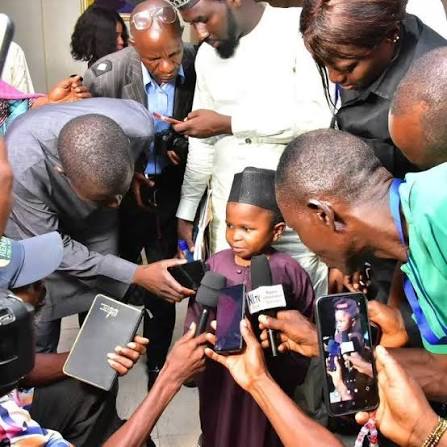
In a political landscape where representation is often discussed but not always fully realized, the emergence of a House of Representatives aspirant with dwarfism has stirred conversations about inclusion, equality, and the evolving nature of leadership.
His decision to step into the political arena is not just a personal ambition but a broader statement about breaking barriers that have long limited who is seen, heard, and accepted in governance.
For many years, politics in Nigeria and beyond has been dominated by familiar patterns, wealth, connections, physical presence, and long-standing political networks.
Against this backdrop, individuals with disabilities, including people with dwarfism, have often been overlooked or underestimated, not because of lack of capability, but due to societal bias and structural exclusion. This aspirant’s journey challenges those assumptions head-on.
His entry into the race for a seat in the House of Representatives is rooted in a desire to serve his community and advocate for policies that promote fairness, accessibility, and opportunity for all citizens. He has consistently emphasized that leadership is not defined by physical stature but by vision, integrity, and commitment to public service. According to him, representation matters deeply, especially for communities that rarely see themselves reflected in decision-making spaces.
Growing up, he experienced firsthand the subtle and overt barriers that come with living with dwarfism in a society that is not always accommodating. From limited accessibility in public spaces to social stereotypes that questioned his abilities, his journey has been shaped by resilience. Instead of allowing these experiences to define him negatively, he transformed them into motivation. He pursued education, developed professional skills, and built a reputation within his community as someone who speaks up and stands firm on issues affecting ordinary people.
His decision to contest for the House of Representatives was not made lightly. It came after years of community involvement and civic engagement. Friends and supporters describe him as someone who has always been deeply interested in governance, public policy, and community development. He has participated in local advocacy efforts, attended town hall meetings, and contributed to discussions on youth empowerment and social welfare.
What makes his candidacy particularly significant is not only his physical condition, but the message it sends about inclusivity in politics. In many societies, persons with disabilities are often spoken about in terms of sympathy or welfare, rather than leadership and decision-making. His campaign challenges this narrative by placing competence and ideas at the center of attention rather than physical appearance.
His political platform focuses on several key issues affecting his constituency. Education is at the top of his agenda, particularly improving access to quality schooling for children in underserved communities. He has also spoken about healthcare reform, especially the need for better support systems for persons with disabilities. Infrastructure development, youth employment, and community security are also central to his message.
Supporters of his candidacy see him as a symbol of progress. For them, his ambition represents a shift in mindset—one that recognizes that leadership potential exists in all segments of society. They argue that democracy is strengthened when diverse voices are included, and his presence in the race helps expand the boundaries of political participation.
However, the journey has not been without challenges. He has faced skepticism from some quarters, with critics questioning whether society is truly ready to accept a person with dwarfism in such a visible leadership position. Others have attempted to reduce his campaign to symbolism rather than substance. Yet, his response has remained consistent: focus on ideas, policies, and the needs of the people.
He has also addressed misconceptions about dwarfism, emphasizing that it is a medical condition and not a limitation of intelligence, ability, or leadership capacity. His message has been reinforced by disability rights advocates who continue to call for greater inclusion in politics and governance structures. They argue that representation should reflect the diversity of the population, including people living with disabilities.
As his campaign gains attention, it has sparked broader conversations about electoral accessibility. Questions are being raised about whether political spaces are truly open to all, and what reforms are needed to ensure equal participation. These discussions include the need for accessible campaign environments, inclusive party structures, and protection against discrimination in political processes.
Despite the attention, the aspirant remains focused on grassroots engagement. He continues to meet with constituents, listen to their concerns, and share his vision for development. His campaign style is described as personal and direct, often involving small community gatherings where dialogue is encouraged.
Observers note that his candidacy is part of a wider global trend where individuals from historically marginalized groups are increasingly stepping into leadership roles. This shift reflects a growing recognition that diversity in governance leads to more inclusive and effective policymaking.
For young people, especially those living with disabilities, his journey is particularly inspiring. It challenges long-held assumptions about what is possible and encourages them to pursue their ambitions without self-imposed limitations. Schools, advocacy groups, and community organizations have begun referencing his campaign as an example of perseverance and civic participation.
As election season progresses, his candidacy will continue to be closely watched. Whether or not he wins a seat in the House of Representatives, his impact is already being felt in the conversations he has sparked and the boundaries he has challenged. He has placed inclusion firmly on the political agenda, forcing both supporters and critics to reconsider their perceptions of leadership.
In a democracy, the strength of a system is often measured not only by who wins elections, but by who is allowed to compete. His journey stands as a reminder that true progress lies in expanding opportunities and ensuring that every citizen, regardless of physical condition, has a fair chance to contribute to national development.
Ultimately, his story is not just about politics. It is about dignity, determination, and the ongoing struggle to create a society where leadership is defined by capacity and vision rather than physical appearance.

