





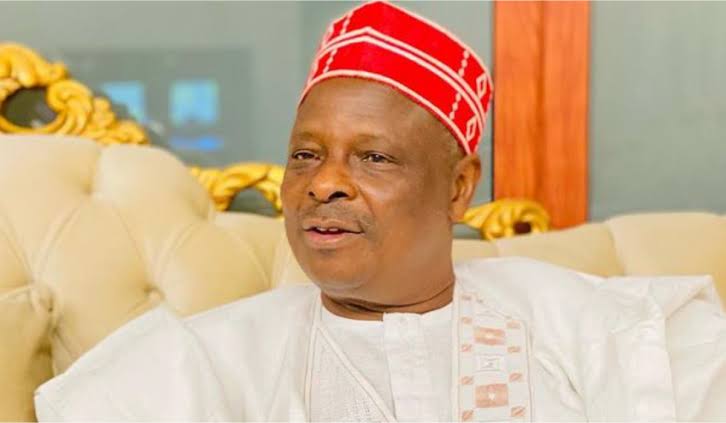
Former Kano State Governor and national political leader, Rabiu Musa Kwankwaso, has openly expressed disappointment over what he described as a lack of recognition and political reward after playing what he claims was a major role in delivering millions of votes to former President Muhammadu Buhari during the landmark 2015 presidential election.
Kwankwaso, one of northern Nigeria’s most influential political figures, made the statement while addressing supporters during a recent political gathering. His remarks have stirred fresh debate across Nigeria’s political space, reopening old conversations about loyalty, political sacrifice, and the nature of alliances in the country’s democracy.
According to Kwankwaso, his political structure, particularly in Kano State, contributed significantly to Buhari’s emergence as president under the platform of the All Progressives Congress (APC). Kano, known as one of Nigeria’s most politically strategic states due to its large voting population, delivered one of the highest vote counts during the 2015 election, helping Buhari secure victory over then-incumbent President Goodluck Jonathan.
Kwankwaso stated that his movement worked tirelessly during the campaign period, mobilizing supporters across communities, engaging grassroots voters, and investing political capital to ensure Buhari’s success at the polls. He noted that his supporters believed they were working toward a shared vision of change and national progress.
However, according to him, the expectations of inclusion and recognition that followed the election victory were never met.
He lamented that despite the sacrifices made by himself and members of his political camp, they were sidelined after Buhari assumed office. He suggested that appointments and political opportunities were distributed without fair consideration for those who worked hard to make the victory possible.
Kwankwaso’s comments reflect frustrations that many political observers say had been simmering beneath the surface for years. His relationship with the APC leadership began to deteriorate shortly after Buhari’s administration took office, leading to internal conflicts that eventually forced him to leave the ruling party.
Many analysts believe this fallout marked one of the most significant cracks within the APC’s northern political coalition.
Kwankwaso’s departure from the party and eventual return to opposition politics significantly altered Nigeria’s political equation. He later became the presidential candidate of the New Nigeria Peoples Party (NNPP), where he built on his strong grassroots following, especially in Kano and across parts of northern Nigeria.
His latest remarks are being interpreted by some as an attempt to remind Nigerians of his political relevance and his historical contributions to major electoral victories in the country.
Political commentators say Kwankwaso’s statement highlights a recurring issue in Nigerian politics, the fragile nature of political alliances.
In many cases, coalitions are formed based on immediate electoral goals rather than long-term ideological alignment. Once victory is achieved, disagreements over appointments, influence, and policy direction often lead to division and betrayal.
The 2015 election remains one of the most historic moments in Nigeria’s democratic journey. It marked the first time an incumbent president was defeated through the ballot box, with Buhari’s victory celebrated as a major democratic milestone.
Several political heavyweights came together to make that victory possible, including leaders from different regions and ideological backgrounds. Kwankwaso was widely seen as one of the pillars of that coalition.
His political influence in Kano was especially critical. At the time, his popularity and grassroots machinery gave the APC a formidable advantage in the state.
Many political observers acknowledged that his support base played a major role in ensuring Buhari secured overwhelming votes from the region.
For Kwankwaso to now publicly state that he received little recognition afterward reveals how deep the political wounds may still be.
His statement has generated mixed reactions among Nigerians.
Supporters of the former governor argue that he has every right to feel disappointed if his contributions were ignored. They insist that political partnerships should be built on fairness, trust, and mutual respect.
Some have pointed out that Kwankwaso’s political movement remains one of the most organized grassroots structures in northern Nigeria, making his concerns impossible to dismiss.
Others, however, believe politics should not be viewed strictly through the lens of reward and compensation. They argue that public service and political collaboration should focus on national interest rather than personal or factional gain.
Some APC loyalists have also dismissed the comments as unnecessary political rhetoric aimed at positioning for future electoral contests.
Still, the broader implications of Kwankwaso’s remarks cannot be ignored.
With political realignments already beginning ahead of future elections, statements like these often serve as signals of possible new alliances or strategic repositioning.
Kwankwaso remains a major political force whose influence could shape coalition-building efforts in the coming years.
His ability to command loyalty among supporters gives him leverage in national political negotiations. Whether he chooses to strengthen the NNPP further, align with another opposition bloc, or seek fresh partnerships remains uncertain.
What is clear is that his political voice continues to carry weight across northern Nigeria and beyond.
His comments also raise broader questions about political gratitude and accountability in Nigeria’s democratic culture.
Should political leaders who contribute significantly to electoral victories expect recognition? And when such recognition does not come, what does it say about the nature of trust in political partnerships?
These are questions that continue to shape political discourse in Nigeria.
As reactions continue to trail Kwankwaso’s statement, many Nigerians are watching closely to see whether this marks another turning point in the nation’s evolving political landscape.
For now, his words stand as a powerful reminder that in Nigerian politics, alliances are often temporary, interests frequently shift, and yesterday’s trusted allies can quickly become tomorrow’s critics.

