


Over the past few days, President Bola Tinubu used the interfaith breaking of fast sessions hosted at the Presidential Villa in Abuja for members of the National Assembly to highlight that a constitutional framework enabling the creation of state police is something he would like realised as soon as possible.
In a dinner with the leadership of the Green Chambers, the President argued that decentralising security architecture is essential to effectively tackle emerging threats, but cautioned against a wholesale or poorly structured approach.
“If security is local, we just have to work together to put pressure on our public to accept the need for state police. Amend it, not a straight free fall for everybody. Tie it in a way that will not be abused, like in the past,” he said.
In an earlier banquet with Senators, Tinubu insisted that a decentralised policing structure would complement existing federal security architecture and promote intelligence-led, community-focused law enforcement.
“We are facing terrorism, banditry, and insurgency. But we will never fail to make a right response to this cause. What I will ask for tonight is for you (Senators) to start thinking how best to amend the constitution to incorporate the State Police for us to secure our country, take over our forests from marauders, and free our children from fear,” he said.
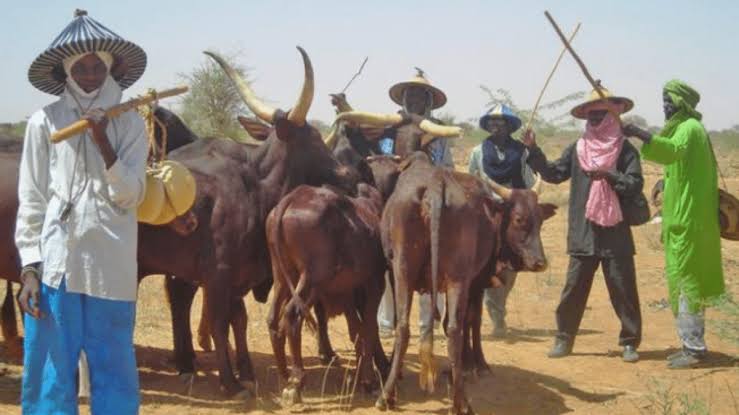
Reacting to the proposed agenda, the Miyetti Allah Cattle Breeders Association of Nigeria (MACBAN) held that while the creation of state police could help address the country’s security challenges, clear constitutional provisions must be put in place to prevent its abuse.
National President of MACBAN, Baba Ngelzarma observed that Nigeria is currently faced with a shortage of security personnel and that decentralising policing could help improve the response to crime.
“As far as the security situation in the country is concerned, there is definitely a shortage of security personnel. It (state police) is the only avenue that can be used to provide an adequate number of security required in the country to combat the criminalities going on,” Punch reports him as saying.
The MACBAN leader, however, warned that recruitment into state police must be balanced and reflective of the ethnic and religious diversity within each state to avoid domination by any particular group.
According to him, the recruitment process should be structured to prevent any tribe or religion from gaining undue advantage.
Ngelzarma also cautioned that state police could be exploited by politicians against opponents if adequate constitutional safeguards are not established.
“If recruitment becomes lopsided, instead of solving the problem, it will create more problems. We are in a political era and politicians are going to use it to their own advantage, especially when they want to come back to power. They may use state police against their opponents,” he said.
To address this concern, MACBAN urged lawmakers to empower the Federal Government to regulate the activities of state police formations and ensure oversight.
The group went on to recommend that the constitution should provide penalties for any abuse and grant the National Assembly authority to create a supervisory mechanism to monitor the operations of the state police.