





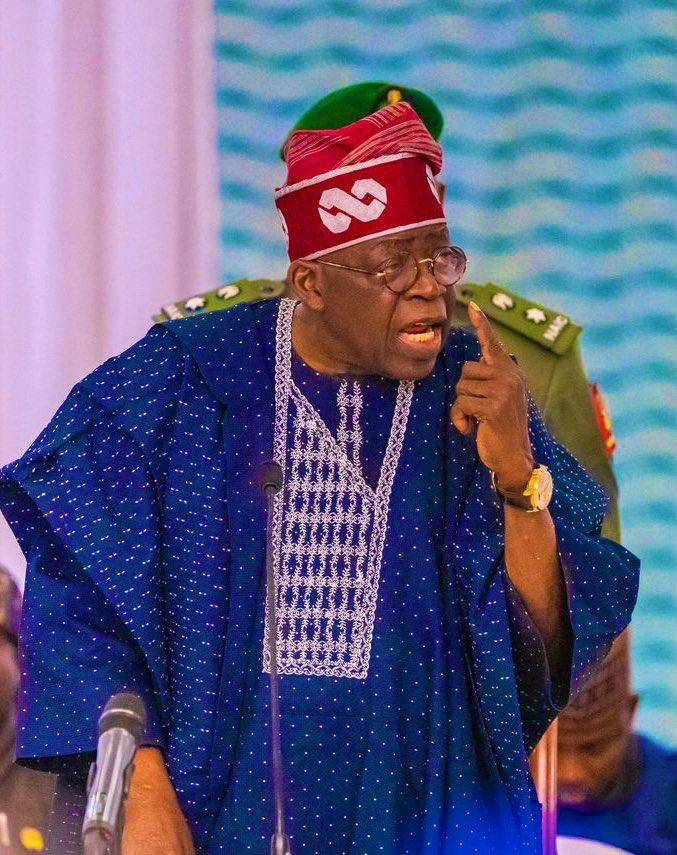
President Bola Tinubu has defended his removal of fuel subsidy and the unification of the naira to the dollar exchange rate at the outset of his administration, stressing that reform is a very difficult decision but necessary.
Speaking at the ongoing Africa CEO Forum on Friday in Kigali, Rwanda, the Nigerian leader said he stopped reading newspapers and commentary to avoid pushback to his economic reforms.
His words, “The philosophy I came with in governance is believing that the hallmark of a transformative leader is the ability to take decisions, do it at the time it is supposed to be done on behalf of the people.
“If you miss that curve, you are not on the path to success. That’s what I believe. First term, took hard decisions, regardless of pain, I stopped reading newspapers and commentary because I knew I was going to get big pushback, and I did. I was sitting on a hot burner.
“But we made the curve. Today, there’s a very bright light at the end of the corner. The naira is stable, predictable, planners can do reasonable budget, they can plan their lives well, the students are in school, the vulnerable are being helped; we have a direct transfer to very poor households.”
Tinubu added that his reforms have made it possible for the government to support education for students “who ordinarily would stay out of school because their parents cannot afford school fees. They are now even giving them allowances and upkeep for their school.”
The Nigerian leader maintained that the country cannot continue to spend ïts future generations’ endowment before they are born. According to him, the world would not wait for anyone, so there is a need to continue to reset, rethink, and challenge the intellectual curiosity of his government.
“It was very necessary to reset, recalibrate and reform the economy. It is a fake life to think you can, in a global economy, continue the subsidy that is wasteful; it is an encouragement for falsification of papers, (and) smuggling,” he said.

