

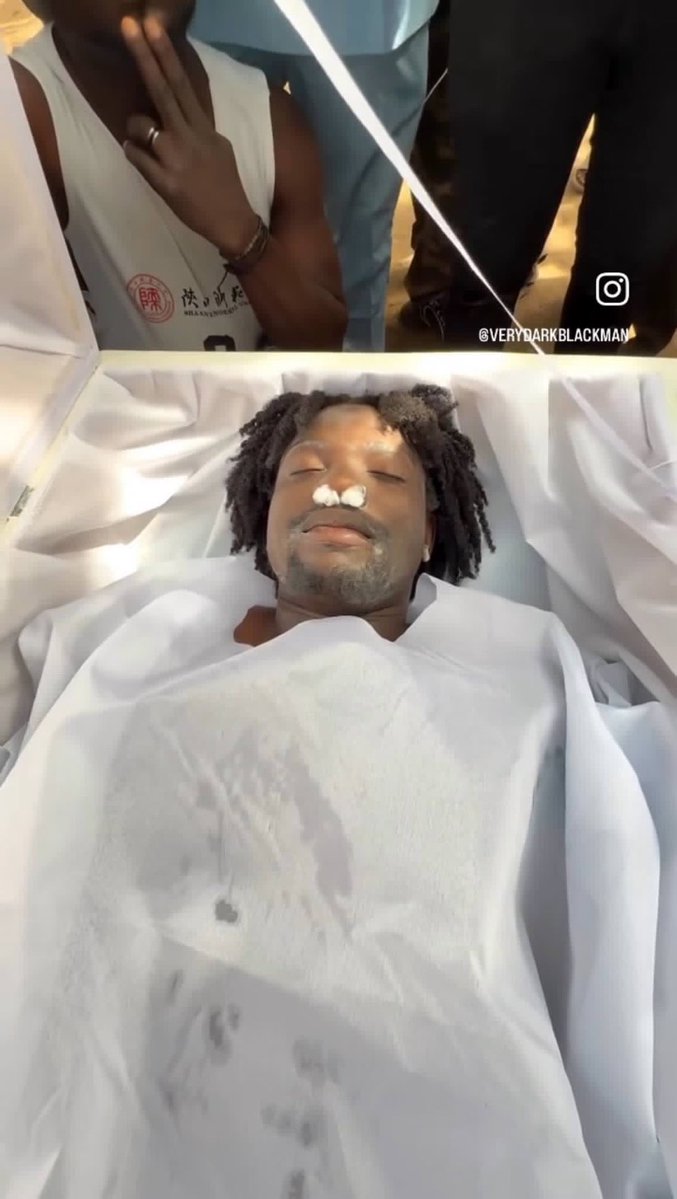
Controversial Nigerian online personality VeryDarkMan, popularly known as VDM, has once again set social media ablaze this time for staging what appeared to be his own mock burial. The stunt, which featured funeral-like settings and dramatic symbolism, has ignited a fierce debate across Nigeria’s digital space. While some supporters described it as satire and social commentary, others believe he crossed a sensitive line.
Top Society recalls that the video, which circulated widely across platforms, showed VDM lying in a coffin as mourners gathered around in a setting designed to resemble a real funeral ceremony. The atmosphere was intense and emotional, deliberately crafted to send a message. In typical VDM fashion, the performance was layered with commentary about criticism, threats, and the pressures he claims to face as a public figure.
But Nigerians are asking: was this bold activism, or a reckless publicity stunt?
VDM is no stranger to controversy. Over the years, he has built a reputation for calling out celebrities, institutions, and influencers he believes are misleading the public. His confrontational style has earned him a loyal fan base as well as powerful critics. This latest act appears to follow his pattern of dramatic storytelling, but many observers argue that death even symbolically is not a theme to toy with lightly.
For some supporters, the mock burial represented a metaphor. They argue that VDM was symbolically “burying” his old self or highlighting how society tries to silence outspoken individuals. In their view, the performance was artistic expression — an exaggerated way to draw attention to issues he feels are ignored.
However, critics insist that funerals carry deep cultural and emotional weight in Nigeria. Burial rites are sacred in many communities, and staging one for shock value could be seen as disrespectful. Several commentators expressed discomfort, saying the imagery could trigger painful memories for people who have recently lost loved ones. Others accused him of trivializing death just to trend.
Beyond cultural sensitivity, there are also concerns about mental health messaging. Public displays that simulate death can be misinterpreted, especially by young audiences who form a significant portion of his followers. Some social media users questioned whether such stunts unintentionally glamorize extreme reactions to conflict or criticism. In an era where online influence carries real-world consequences, the boundaries between performance and responsibility are increasingly blurred.
Yet, controversy often fuels visibility and VDM understands the mechanics of virality. Within hours of the video’s release, hashtags linked to his name began trending. Reaction videos flooded timelines. Debates spilled into comment sections and live streams. Whether one agrees with his methods or not, the strategy undeniably captured attention.
Media analysts say shock content remains one of the fastest ways to dominate Nigeria’s social conversation. With social media algorithms rewarding engagement positive or negative dramatic gestures can quickly overshadow more conventional messaging. For influencers whose brand thrives on disruption, walking the line between bold and offensive can sometimes be intentional.
Still, there is a larger question about influence and accountability. Public figures shape narratives. When they stage provocative acts, they also set tone and precedent. Critics argue that Nigeria’s digital culture is already saturated with extreme antics designed purely for clicks. If mock funerals become normalized as performance art, what message does that send?
On the other hand, defenders point out that creative freedom should not be policed simply because it makes people uncomfortable. Art has historically used symbolism related to death and rebirth. From theatrical performances to music videos, dramatic imagery has long been a storytelling device. They argue that outrage might stem more from VDM’s polarizing personality than the act itself.
Interestingly, the incident has also sparked conversations about the psychology of public scrutiny. VDM has often claimed he faces intimidation and backlash from powerful interests. Some viewers interpret the staged burial as commentary on “character assassination” the idea that critics attempt to destroy reputations without physical harm. In that context, the coffin becomes symbolic rather than literal.
Despite the divided opinions, one thing is clear: the stunt has intensified discussions about boundaries in digital activism and entertainment. Nigeria’s online space continues to evolve, with influencers wielding enormous power to shape trends and conversations. As audiences grow more diverse and socially aware, tolerance for controversial content may shift.
Did he go too far? The answer largely depends on perspective. For some, it was a creative metaphor executed with theatrical flair. For others, it was an unnecessary escalation that exploited a deeply sensitive theme. What cannot be denied is that VDM once again proved his ability to dominate headlines and command attention.
Whether this moment strengthens his brand or erodes public trust remains to be seen. But in Nigeria’s fast-moving digital arena, silence rarely trends and VDM clearly has no intention of being silent anytime soon.