






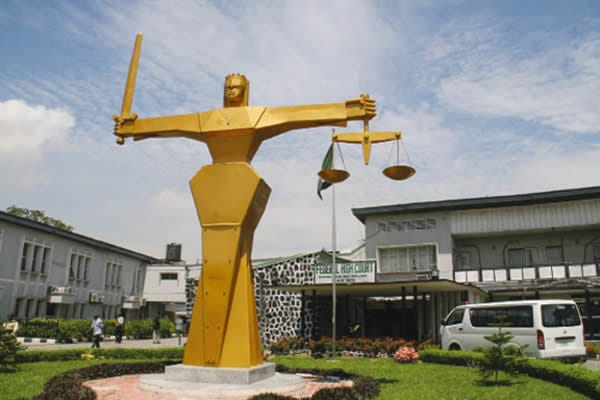
A high-profile trial has begun in Nigeria following the arraignment of six individuals accused of plotting to overthrow the government, with all defendants pleading not guilty to charges of treason and terrorism.
The suspects, reportedly including a former military officer, were brought before a federal court amid tight security, reflecting the sensitivity of the case and its potential implications for national stability. Prosecutors allege that the group was involved in a coordinated plan to destabilize the government, though specific details of the alleged plot remain limited in the public domain.
According to the charges, the defendants are accused of engaging in activities that could undermine the authority of the state, a serious offense under Nigerian law that carries heavy penalties if proven. The inclusion of terrorism-related charges has further heightened the gravity of the case, suggesting that authorities believe the alleged actions may have extended beyond mere conspiracy.
In court, all six suspects firmly denied the allegations, setting the stage for what is expected to be a closely watched legal battle. Defense lawyers have indicated their readiness to challenge the prosecution’s claims, raising questions about the strength of the evidence and the circumstances surrounding the arrests.
Legal analysts note that treason cases are relatively rare in Nigeria, and as such, they often attract significant public and political attention. The outcome of this trial could have far-reaching consequences, not only for the accused but also for how similar cases are handled in the future.
The proceedings come at a time when concerns about national security remain prominent, with ongoing efforts by authorities to address various threats across the country. While officials have not publicly linked this case to any broader pattern of instability, the allegations have nonetheless sparked conversations about internal security and vigilance.
Human rights observers are also paying close attention, emphasizing the importance of due process and a fair trial. They stress that while national security is critical, it must be balanced with the protection of individual rights and adherence to the rule of law.
Outside the courtroom, reactions have been mixed. Some Nigerians view the trial as a necessary step in safeguarding democracy, while others urge caution, calling for transparency to ensure that justice is not only done but seen to be done.
As the case progresses, more details are expected to emerge, shedding light on the nature of the alleged plot and the evidence supporting the charges. For now, the not guilty pleas have set a clear tone: the battle will be fought not just in headlines, but in the courtroom, where the burden of proof lies squarely with the prosecution.

