


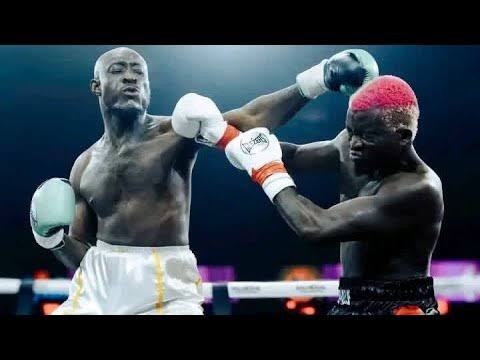
The celebrity boxing clash between Portable and Carter Efe was never going to end quietly. Built on weeks of online insults, ego battles, and street credibility, the fight delivered exactly what many expected, chaos, spectacle, and a result that refused to settle once the final bell rang. But while the match itself lasted only a few rounds, the real drama has unfolded afterward, driven almost entirely by Portable’s explosive reaction to defeat.
From the moment the judges handed victory to Carter Efe, the narrative shifted. For many viewers, the decision appeared straightforward.
Carter Efe showed more composure, better stamina, and a clearer strategy across the rounds. Portable, known for his unpredictable energy, came in aggressive but lacked consistency. Yet in Portable’s world, losing is not just about points on a scorecard, it is about pride, image, and the street reputation he has carefully built.
Within hours of the fight, Portable took to social media, launching into a series of rants that quickly went viral.
He rejected the outcome outright, insisting the fight was manipulated. According to him, the judges were biased, the environment was hostile, and the entire setup was designed to make him lose. In his words, “they cheated me,” a phrase that has since echoed across blogs, TikTok clips, and street conversations.
But Portable did not stop at accusations. He questioned everything, from the officiating to the fairness of the rounds. He claimed that he was not given proper recognition for his effort and suggested that unseen forces influenced the result. Whether these claims hold weight or not is almost secondary; what matters is how they feed into Portable’s larger persona. He thrives on conflict, and this loss has given him new fuel.
In multiple live videos, Portable doubled down, portraying himself not as a defeated fighter but as a victim of a rigged system. He argued that his opponent was favored, that the crowd energy was against him, and that external interests wanted Carter Efe to win for publicity reasons. These statements, while lacking concrete evidence, have resonated with a section of his fan base that sees him as an underdog constantly battling industry politics.
Interestingly, Portable’s reaction has followed a familiar pattern. Throughout his career, he has built a brand around resistance, against critics, against authority, and even against fellow entertainers. Losing the match did not break that identity; instead, it reinforced it. By rejecting the outcome, he maintains control of the narrative. In his framing, he did not truly lose, he was wronged.
At the same time, his tone has shifted between anger and defiance. In some moments, he appears genuinely frustrated, almost wounded by the result. In others, he leans into his usual bravado, insisting that no one can bring him down. He has repeatedly reminded fans of his street roots, emphasizing that his value is not defined by a boxing match or a judge’s decision. This duality, vulnerability mixed with loud confidence, is part of what keeps people watching him.
Meanwhile, Carter Efe has taken a much quieter approach. Rather than engaging heavily in the back-and-forth, he has largely allowed the result to speak for itself. His victory has elevated his image beyond comedy, at least temporarily, positioning him as someone capable of stepping into different arenas and winning. The contrast between his calm response and Portable’s outbursts has only amplified public interest.
The fight itself, already chaotic due to crowd issues and reports of disruptions at the venue, has now become even more significant because of the aftermath. In Nigeria’s entertainment space, moments like this rarely end when the event is over.
They evolve into extended narratives, driven by personalities, social media, and public perception. Portable understands this better than most. Every rant, every accusation, every live video is content and content keeps him relevant.
There is also a deeper layer to his reaction. For Portable, image is currency. He has spent years cultivating the identity of a fearless, untouchable street figure. A clear loss, especially in a public setting like a boxing ring, challenges that image. By disputing the result, he protects his brand. He transforms a defeat into controversy, and controversy, in today’s digital culture, often carries more weight than victory.
Fans have been divided in their reactions. Some believe Portable’s claims, arguing that celebrity matches are often influenced by entertainment value rather than strict fairness.
Others see his response as an inability to accept defeat, pointing out that Carter Efe simply performed better on the night. This split has kept the conversation alive, with debates spilling across social platforms, street discussions, and media commentary.
What makes this situation particularly compelling is how it reflects the nature of modern celebrity culture in Nigeria. Entertainment is no longer confined to music, comedy, or film. It is an ecosystem where personalities extend into multiple spaces boxing rings, online feuds, and live events. The Portable vs Carter Efe fight sits at the intersection of all these elements. It is sport, but it is also theatre. It is competition, but it is also storytelling.
Portable’s ongoing commentary ensures that the story does not end. He has hinted at wanting a rematch, suggesting that under “fair conditions,” the outcome would be different. Whether that rematch happens or not, the idea itself keeps fans engaged. It creates anticipation, debate, and speculation all of which benefit both fighters in terms of visibility.
In the end, the fight may have had a clear winner on paper, but in the broader sense, both men have gained something. Carter Efe walks away with the official victory and increased credibility, while Portable walks away with what he arguably values just as much attention. His voice, loud and unfiltered, continues to dominate the conversation.
The real question now is not who won the fight, but how long the aftermath will last. If Portable continues on this path, turning every grievance into a public spectacle, the story could stretch far beyond a single event. And if a rematch is eventually organized, it will likely draw even more attention, fueled by the unresolved tension and the narratives both men have b0uilt.
For now, one thing is certain: the final bell may have rung in the ring, but outside it, Portable is still fighting, this time, for his version of the truth.