






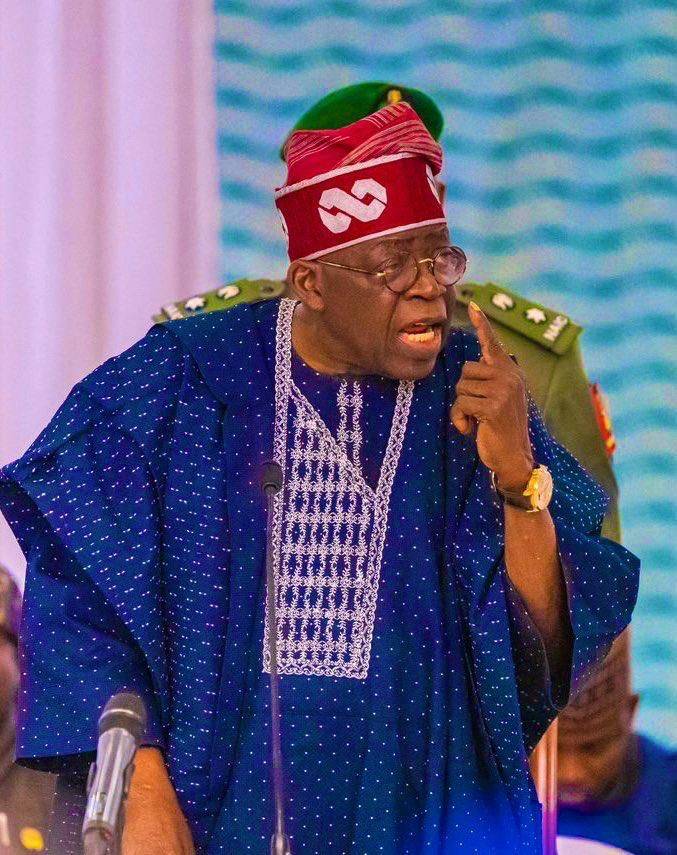
On Workers’ Day in Abuja, President Bola Ahmed Tinubu made a significant public statement declaring that insecurity and poverty have now reached the level of national emergencies.
The message, delivered during a day meant to celebrate workers and their contributions to national development, reflected the growing pressure on the government as Nigerians continue to face rising living costs, widespread insecurity, and economic uncertainty.
This declaration is important because it goes beyond routine political speeches. It signals an acknowledgement from the highest level of government that the country is dealing with structural problems that are affecting nearly every aspect of life. Insecurity and poverty are not new issues in Nigeria, but describing them as national emergencies highlights the seriousness of their current impact on productivity, stability, and social wellbeing.
Insecurity has remained one of Nigeria’s most persistent challenges for years. Different regions of the country continue to experience varying forms of violence, including insurgency in the North-East, banditry in parts of the North-West, and communal clashes in other regions.
These security issues have disrupted farming activities, reduced trade in many rural areas, and forced people to leave their homes in search of safety. The effects are not limited to affected communities alone; they extend to the national economy, food supply chains, and public confidence.
When insecurity becomes widespread, economic activity slows down. Farmers are unable to access their land safely, transport routes become risky, and businesses either reduce operations or shut down completely in affected areas. This creates a ripple effect that contributes to unemployment and reduced income for families. Government spending on security operations also increases significantly, reducing the amount of resources available for development projects such as healthcare, education, and infrastructure.
Alongside insecurity, poverty remains a deeply rooted issue affecting millions of Nigerians. Despite the country’s large economy and abundant resources, a significant portion of the population continues to struggle with basic needs. Rising inflation has made food, transportation, and essential goods more expensive, placing additional pressure on households. Many families are forced to adjust their lifestyles, cut down on spending, or rely on informal support systems just to manage daily survival.
For workers, the situation has become particularly challenging. Wages in many sectors have not kept pace with the rising cost of living, leading to a growing gap between income and basic expenses. This has contributed to ongoing demands from labour groups for better wages, improved working conditions, and stronger social support systems. Workers’ Day, which is meant to celebrate labour and productivity, has increasingly become a platform for highlighting economic hardship and demanding reforms.
Tinubu’s statement also draws attention to the relationship between insecurity and poverty. The two issues are closely connected and often reinforce each other. Insecure environments discourage investment and economic activity, which leads to job losses and reduced opportunities.
At the same time, poverty can increase vulnerability to crime and instability, especially in communities where unemployment and lack of opportunity are high. This creates a cycle that is difficult to break without coordinated and sustained intervention.
The declaration of these issues as national emergencies raises public expectations about government response. While the statement itself does not change conditions immediately, it suggests that the administration recognizes the urgency of the situation. Nigerians will now be looking for concrete actions that go beyond political messaging. These could include stronger security strategies, improved economic policies, targeted social intervention programs, and efforts to create more job opportunities.
However, public reaction has been mixed. Some view the statement as a realistic acknowledgment of the country’s current challenges, while others see it as another expression of problems that have long been known without sufficient progress in addressing them. Opposition voices and labour groups continue to emphasize that recognition must be followed by effective implementation if meaningful change is to be achieved.
Ultimately, the success of this declaration will depend on what follows in practice. Nigeria’s challenges are deeply structural and require long-term solutions rather than short-term fixes. Improving security, reducing poverty, and stabilizing the economy will require consistent policy direction, strong institutional coordination, and sustained political will.
For now, Tinubu’s Workers’ Day message stands as both an admission of the seriousness of Nigeria’s situation and a test of how the government plans to respond. It highlights the reality that insecurity and poverty are not isolated problems but interconnected challenges that affect national development, social stability, and the daily lives of millions of people.

