



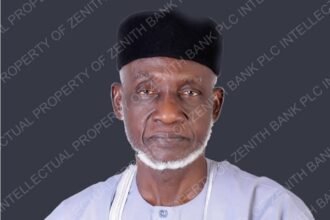

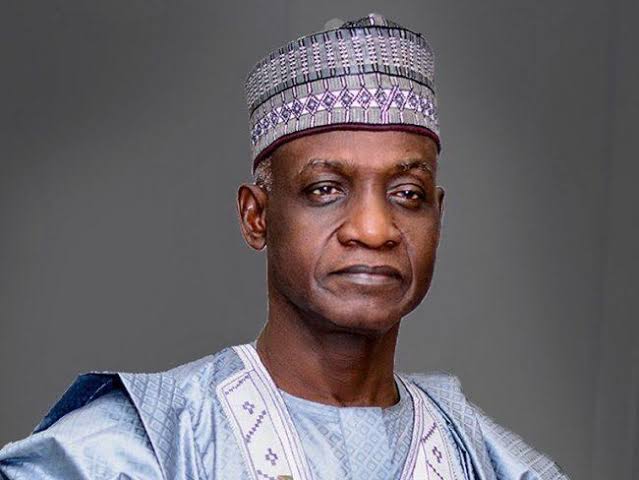
Engr. Mustafa Bello’s career reflects a steady progression from technical excellence to national economic leadership, shaped by discipline, education, and years of public service.
His journey began at Ahmadu Bello University, where he studied Civil Engineering and graduated in 1978 with a Second Class Upper Division. His academic performance earned him the Shell Prize for the best project and thesis in the Faculty of Engineering, marking him early as a standout student with strong analytical abilities.
Following his graduation, Bello served in the Directorate of Quartering and Engineering Services of the Nigerian Army between 1978 and 1979. This early experience exposed him to structured systems, infrastructure planning, and disciplined execution. It also helped build a foundation of responsibility and precision that would guide his later roles in both engineering and governance.
He later moved into the civilian sector, joining the Niger State Housing Corporation between 1980 and 1983 as a Senior Civil Engineer. In this role, he worked on housing and infrastructure projects, contributing to efforts aimed at addressing urban development challenges. His time there gave him practical insight into Nigeria’s infrastructural needs and the realities of delivering public projects within limited resources.
Bello’s transition into national leadership came in 1999 when he was appointed Federal Minister of Commerce. This was a crucial period in Nigeria’s history, as the country had just returned to democratic rule and was working to reposition its economy. As Minister, he played a role in shaping trade and commerce policies, helping Nigeria align with global standards and improve its economic engagement with the rest of the world.
During his tenure, he contributed to the development of trade policies that were consistent with international frameworks, particularly those linked to the World Trade Organization.
These efforts were important in strengthening Nigeria’s credibility in global trade and creating a more structured environment for economic growth. His work focused on making Nigeria more competitive while ensuring that its policies reflected global best practices.
After serving as Minister until 2002, Bello continued his contributions at a strategic level when he was appointed Executive Secretary and Chief Executive Officer of the Nigerian Investment Promotion Commission in November 2003. This role placed him at the center of Nigeria’s investment drive, where he was responsible for attracting and facilitating both local and foreign investments.
During his time at the commission, which lasted until February 2014, Bello focused on improving the investment climate in Nigeria. He worked on reducing bureaucratic delays, simplifying processes, and promoting Nigeria as a destination for investors. His approach emphasized long-term institutional improvement rather than short-term gains, reflecting a belief that sustainable development depends on strong systems and clear policies.
He was also involved in initiatives that helped modernize Nigeria’s business environment. One notable example was his role in the early development of the Corporate Affairs Commission’s online registration system. This innovation made it easier for businesses to register and operate, reducing delays and increasing efficiency in the system.
Beyond his formal positions, Bello has represented Nigeria at numerous international conferences, trade missions, and high-level meetings. Through these engagements, he helped present Nigeria’s economic opportunities to the global community and built relationships that could support investment and development.
After leaving the Nigerian Investment Promotion Commission in 2014, Bello continued to focus on economic growth, particularly in Northern Nigeria. He currently serves as Chairman of Invest-in-Northern Nigeria Limited, an initiative aimed at driving economic and social transformation in the region. His work in this role reflects a commitment to addressing regional development challenges and promoting balanced growth across the country.
Throughout his career, Engr. Mustafa Bello has maintained a consistent focus on development, whether through engineering, policy-making, or investment promotion. He is known for his structured approach, attention to detail, and commitment to building systems that support long-term progress.
His story is one of steady impact rather than dramatic visibility. From his early days as an engineer to his leadership roles in government and economic institutions, Bello has contributed to shaping Nigeria’s development in meaningful ways. His legacy lies in the institutions he has strengthened, the policies he has helped shape, and the ongoing efforts to promote sustainable economic growth in Nigeria.

