




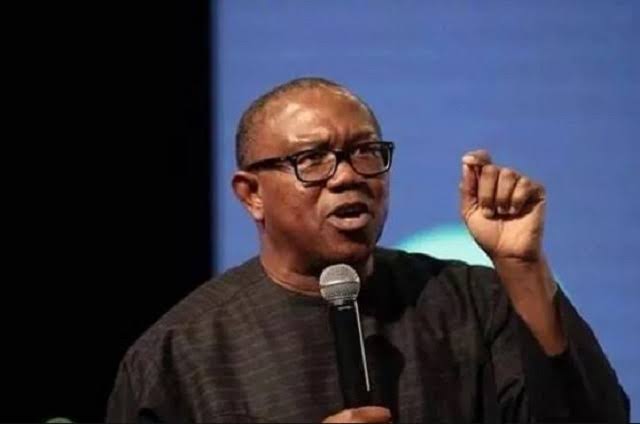
Former Labour Party presidential candidate Peter Obi has called on President Bola Ahmed Tinubu to step aside from seeking another term in office, arguing that Nigeria urgently needs a new generation of leadership capable of addressing the country’s mounting economic and security challenges.
Obi made the remarks during an interview on Channels Television’s Sunday Politics, where he criticized the current administration’s handling of key national issues and suggested that the President should be allowed to retire peacefully rather than pursue re-election in 2027.
According to Obi, Nigeria is facing one of the most difficult periods in its history, with millions of citizens struggling under rising inflation, unemployment, insecurity, and the high cost of living. He maintained that the nation requires energetic and innovative leadership to reverse the current trend and restore public confidence.
The former Anambra State governor stated that his comments were not driven by personal attacks but by what he described as genuine concern for the country’s future. He argued that leadership should always be about service and delivering measurable results rather than holding onto power.
Obi said Nigerians deserve leaders who can inspire hope, rebuild institutions, strengthen the economy, and create opportunities for young people. He insisted that the country has enormous potential but has continued to underperform because of poor governance and weak implementation of policies.
He also expressed concern over the worsening security situation across several parts of the country, noting that many communities continue to battle banditry, kidnappings, terrorism, and other violent crimes despite government assurances.
On the economy, Obi highlighted the persistent depreciation of the naira, soaring food prices, and the hardship experienced by households and businesses. He stressed that ordinary Nigerians should be the primary focus of government policies, adding that leadership should be judged by improvements in citizens’ welfare.
The Labour Party chieftain reiterated his long-standing position that prudent management of public resources, investment in production, education, healthcare, and agriculture remain essential for Nigeria’s recovery. He argued that the country must shift from consumption-driven policies to productive economic growth capable of generating employment.
Obi’s comments have already generated widespread reactions across the political landscape. Supporters praised his remarks as an honest assessment of the country’s current realities, while critics accused him of engaging in early political campaigns ahead of the 2027 general elections.
Members of the ruling All Progressives Congress (APC) defended President Tinubu’s administration, insisting that many of the ongoing economic reforms require time before their full benefits become evident. They argued that difficult but necessary decisions have been taken to stabilize Nigeria’s economy and attract long-term investment.
Political analysts believe the exchange reflects the growing intensity of political discourse as parties gradually position themselves for the next election cycle. Although the Independent National Electoral Commission (INEC) has not commenced formal activities for the 2027 elections, political alignments and public debates have continued to gather momentum.
Since leaving office as governor of Anambra State, Obi has remained one of the country’s most vocal opposition figures, frequently commenting on governance, fiscal discipline, and national development. His public engagements often focus on accountability, transparency, and policies aimed at improving living standards.
President Tinubu, on the other hand, has consistently defended his administration’s reforms, maintaining that measures such as fuel subsidy removal, exchange-rate reforms, and increased investment in infrastructure are laying the foundation for long-term economic stability.
With political conversations already intensifying across the country, Obi’s latest remarks are expected to fuel further debate over leadership, governance, and the direction Nigeria should take as preparations for the 2027 elections gradually unfold. For many Nigerians, the discussion highlights the increasing public interest in accountability and the desire for policies that can effectively address the nation’s economic and security challenges.

