
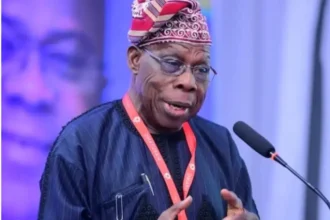


The 2023 presidential candidate of the Labour Party (LP), Peter Obi says Nigeria’s poor showing in the Global Terrorism Index (GTI) as a troubling reflection of poor leadership, lamenting that the country remains one of the most terrorised in the world, with a significant rise in related deaths.
According to the GTI, Nigeria recorded the highest global increase in terrorism-related deaths in 2025, with fatalities rising by 46 percent from 513 in 2024 to 750. This places Nigeria on the GTI ranking, behind Pakistan, Burkina Faso and the Republic of Niger.
Also reacting to the report, the Peoples Democratic Party (PDP) strongly criticised the administration of Bola Ahmed Tinubu following Nigeria’s ranking in the Global Terrorism Index 2026, describing the situation as evidence of worsening insecurity across the country.
In a statement issued by its National Publicity Secretary, Ini Ememobong, the party said Nigeria’s position as the fourth most impacted country by terrorism highlights what it called the failure of the ruling All Progressives Congress (APC)-led federal government to protect lives and property.
In a statement shared on his X handle on Thursday, Obi said that while many countries are recording a decline in terrorism, Nigeria appears to be moving in the opposite direction.
“This trend is a direct result of misplaced priorities, weak governance, corruption, a lack of rule of law, and the persistent neglect of security, which is the government’s most fundamental duty.
“From the insurgency of Boko Haram to the growing threat posed by the Islamic State West Africa Province, the crisis of kidnapping, and unchecked violence in our rural communities by heavily armed bandits, Nigerians are dying daily while those in power continue to feast.”
“What is the purpose of government if it cannot protect lives? Why are we normalizing tragedy while other nations make progress?
“This is not the Nigeria we should accept. We cannot continue down this path. It is time to move from excuses to action and from failure to measurable progress.
“A safe and secure Nigeria is not too much to ask; it is the right of every citizen, and it must be delivered.” the former Anambra governor wrote.
The PDP further cited findings by the Institute for Economics and Peace, which indicated that Nigeria is among five countries responsible for nearly 70 percent of terrorism-related deaths globally, and recorded one of the largest increases in such fatalities.
Expressing concern over the state of security, the PDP spokesman stated, “While this report is not surprising to Nigerians, it is most painful that people who promised… to secure our country are wining, dining, and dancing in a faraway land, whilst terrorists are killing and kidnapping citizens rampantly.”
The party argued that the report reflects the “daily lived reality” of Nigerians, claiming that insecurity has worsened significantly in recent times. It also alleged that criminal activities linked to insecurity have grown into what it described as a “trillion-naira economy.”
Calling for urgent action, Ememobong urged the federal government to move beyond what he described as reactive responses to attacks. “We call on the President and the entire security hierarchy to stop performing reactive responses… and rather adopt a whole-of-society approach towards solving insecurity,” he said.
He added that authorities must implement strategies aimed at achieving both immediate safety and long-term stability, noting the need for policies that ensure “negative peace” — the cessation of violence — and “positive peace,” defined as sustainable and harmonious coexistence.
Reiterating the PDP’s position, the spokesman emphasized that protecting lives and property remains the primary responsibility of any government. “It needs reminding that the primary duty of every Government is the protection of lives and property — a task that this administration has consistently failed glaringly,” he stated.
The opposition party urged Tinubu to deploy his leadership experience to address the crisis, warning that Nigerians are growing increasingly frustrated with persistent insecurity across the country.