


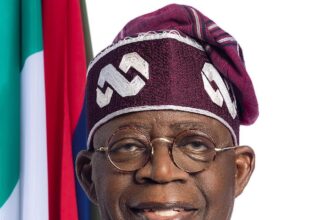



The renewed calls for Goodluck Jonathan to return and lead Nigeria for a single “reset” term ahead of 2027 raise a question that cuts deeper than politics: is going backward really the best way forward right now?
It’s an idea that sounds comforting on the surface. In moments of uncertainty, people naturally reach for familiarity. Jonathan represents a period many remember as less tense politically, more measured in tone, and anchored in a defining democratic moment, his concession in 2015. That single act still echoes in Nigeria’s political memory as a symbol of restraint and respect for the system.
So when things feel unstable, it’s not surprising that some voices are asking: why not bring back someone who once chose peace over power?
But governance is not memory, it is reality. And Nigeria today is not the Nigeria Jonathan left behind.
The country is facing a layered crisis: insecurity that refuses to fully retreat, an economy that continues to test the resilience of ordinary citizens, and a political climate already heating up long before campaign season officially begins. In this context, the idea of a “single-term reset” almost sounds like a shortcut, a way to pause the chaos, recalibrate, and then move forward properly. But nations are not machines you switch off and reboot. Transitions are messy, and resets are rarely as clean as they sound.
There is also a harder truth many avoid: Nigeria’s political space often struggles to produce and trust new leadership. When things go wrong, the instinct is to recycle familiar names rather than invest in fresh thinking.
The conversation around Jonathan reflects that pattern. Instead of asking who is ready to lead Nigeria into the future, the focus shifts to who once held the wheel without crashing the system completely.
That’s a low bar for a country with such high stakes.
Supporters of the idea argue that a one-term presidency would remove the usual political pressure of re-election and allow for bold, corrective decisions. In theory, that sounds ideal. No need to campaign again, no need to play long political games just fix what’s broken and leave. But Nigerian politics doesn’t operate in a vacuum.
Even a single-term president would still be surrounded by party interests, power blocs, and institutional resistance. The assumption that one person returning or not can simply rise above that and “reset” the country may be more hopeful than realistic.
And then there is the question of accountability. If the country is struggling today, it didn’t happen overnight. Every past administration, including Jonathan’s, played a role in shaping the present. So bringing back a former leader as a solution raises a difficult question: are Nigerians asking for change, or just a different version of what they already know?
Meanwhile, the political landscape is already shifting. Bola Ahmed Tinubu has signaled his intention to seek a second term, which means any potential challenger, Jonathan included would have to present not just a familiar face, but a compelling alternative. Nostalgia alone cannot compete with the machinery of incumbency or the urgency of current realities.
Public opinion itself is split in a telling way. Some Nigerians see Jonathan as a stabilizing figure, someone who could calm tensions and restore a sense of balance. Others view the idea as a step backward, arguing that the country cannot keep circling the same set of leaders while expecting different outcomes. Beneath these opposing views lies a shared concern: a lack of confidence that the system, as it stands, is producing the leadership Nigeria truly needs.
So the real issue may not be Jonathan at all. It may be what his name represents, a gap between the kind of leadership Nigerians want and the options they believe are available.
Is bringing him back the best step right now? That depends on what the goal is. If the aim is short-term stability, perhaps the argument has weight. But if the goal is long-term transformation, then the country may need to ask harder questions, about institutions, leadership pipelines, and why new voices struggle to rise to the top.
Because at some point, a nation has to decide whether it wants to move forward by design or drift forward by default.
And 2027, whenever it fully arrives, will force that decision.

