


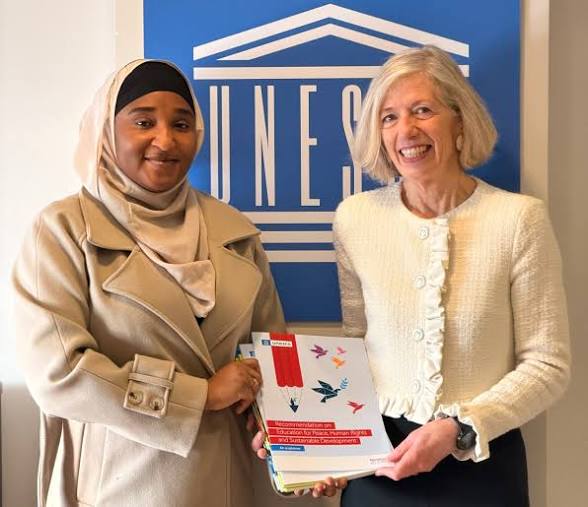
Nigeria’s planned partnership with UNESCO to establish an international media and information literacy institute arrives at a moment when the country’s information space is under increasing strain.
From viral social media posts to politically charged narratives, the speed at which information spreads today often outpaces the ability to verify it. In that context, the idea of equipping citizens with the skills to better understand and question what they see, hear, and share is not just timely, it feels necessary.
At its core, the initiative is meant to strengthen critical thinking in how Nigerians engage with information. Media literacy goes beyond simply reading or watching the news; it involves understanding sources, recognizing bias, identifying manipulation, and making informed judgments. Ideally, this kind of education would lead to a more aware population, one that is less vulnerable to misinformation, less reactive to sensational content, and more grounded in facts when forming opinions.
But while the concept is sound, the reality it seeks to address is far more complex.
Nigeria’s information challenges are not only about misinformation; they are also about trust. Over time, many citizens have developed skepticism toward official statements and even established media outlets. This distrust has pushed people toward alternative channels of information—WhatsApp broadcasts, online influencers, and unverified blogs. In many cases, these platforms feel more relatable and immediate, even if they are less reliable. As a result, correcting false information becomes more difficult, not just because it spreads quickly, but because people are not always inclined to believe corrections when they come.
This is where the proposed institute faces one of its biggest tests. Teaching people how to verify information is important, but rebuilding trust in credible sources is a much deeper challenge. It requires consistent transparency, accountability, and a visible commitment to truth from both government institutions and media organizations. Without that foundation, media literacy efforts risk becoming theoretical exercises rather than practical tools.
Accessibility is another critical factor. Nigeria is a country of over 200 million people, spread across diverse regions with varying levels of education, digital access, and language. If the institute’s programs are limited to urban centers or academic institutions, they will miss a large portion of the population. True impact will depend on whether these efforts can reach ordinary Nigerians in their everyday environments markets, community centers, local schools, and informal networks.
This also means adapting content to different contexts. Media literacy cannot be taught in a one-size-fits-all format. What works for a university student in Lagos may not resonate with a trader in a rural community.
Language, cultural references, and delivery methods all matter. Radio programs, local-language workshops, and community-based outreach could be just as important as formal training sessions. Without this level of adaptation, the institute risks being seen as distant or irrelevant to those who arguably need it most.
The timing of this initiative adds another layer of significance. Nigeria is gradually moving toward the 2027 general elections, and political activity is already beginning to take shape. In such periods, information becomes a powerful tool, not just for informing the public, but for influencing opinions and, in some cases, manipulating perceptions. A more media-literate population could serve as a safeguard against the spread of misleading political narratives, helping citizens make decisions based on facts rather than emotional or divisive messaging.
However, this also introduces a delicate balance. Any initiative focused on information must be careful not to appear as an attempt to control narratives. If the institute is perceived as aligned too closely with political interests, it could face resistance from the very public it aims to empower. Independence and transparency will be key to building credibility. People need to feel that they are being equipped with tools to think for themselves, not being guided toward specific conclusions.
Another important dimension is the role of the media itself. While educating the public is essential, it is equally important to ensure that the information being produced meets high standards of accuracy and integrity. Journalism in Nigeria, like in many parts of the world, faces significant challenges. Economic pressures, competition for attention, and the demand for speed can sometimes compromise quality. If audiences are being asked to become more discerning, media organizations must also rise to the occasion by prioritizing credibility over sensationalism.
This creates a shared responsibility. Media literacy should not place the entire burden on the audience to separate fact from fiction. Instead, it should work alongside efforts to strengthen journalism, enforce ethical standards, and promote accountability within the media industry. Only then can there be a meaningful improvement in the overall information ecosystem.
The younger generation presents both a challenge and an opportunity. Many young Nigerians are deeply embedded in digital culture, where information is constant and often unfiltered. For them, the line between news, entertainment, and personal opinion is increasingly blurred. Media literacy, in this context, becomes a critical life skill. If the institute can engage this demographic effectively through platforms they already use and understand, it could have a lasting impact on how future generations interact with information.
Yet, even with all these possibilities, success is far from guaranteed. Nigeria has seen numerous initiatives launched with strong intentions, only to lose momentum due to poor implementation, insufficient funding, or changing political priorities. The real challenge is not in announcing the institute, but in sustaining it. It must remain active, relevant, and adaptable over time, responding to new trends in media and communication as they emerge.
There is also the broader question of whether education alone can solve a problem that is deeply tied to human behavior. People do not always share information because they believe it is true; sometimes they share it because it aligns with their emotions, beliefs, or identities. Addressing this aspect requires more than technical knowledge, it requires fostering a culture that values truth, patience, and critical reflection over immediacy and reaction.
In that sense, the institute should be seen as part of a larger effort rather than a standalone solution. Combating misinformation will require coordinated action across multiple fronts: stronger institutions, responsible media practices, digital platform accountability, and an engaged, informed public.
So, can a media literacy institute truly change Nigeria’s information landscape? It has the potential to make a meaningful contribution, but only if it is implemented with depth, inclusivity, and independence. It cannot operate in isolation, nor can it rely on short-term enthusiasm. Its success will depend on whether it becomes embedded in everyday life, shaping how people think and interact with information over the long term.
Ultimately, the goal is not just to create informed individuals, but to build a society where truth carries more weight than speculation, and where information serves as a tool for progress rather than division. That is an ambitious goal, but one that Nigeria cannot afford to ignore.

