


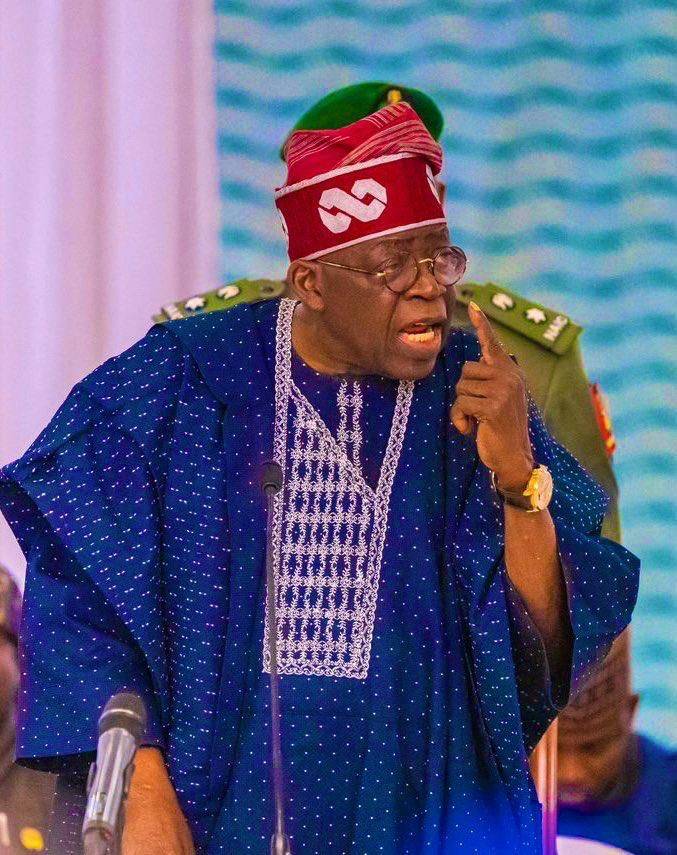
Bola Ahmed Tinubu has openly declared his intention to seek a second term in 2027, a move that is already stirring political debate across Nigeria.
His statement, delivered with a tone of defiance, comes at a time when the country continues to grapple with widespread insecurity, economic pressure, and growing public dissatisfaction. By insisting that he “will not be pushed out by critics,” Tinubu has effectively drawn a line in the sand, signaling both confidence in his leadership and readiness for a potentially heated electoral contest.
The announcement did not come in isolation. It reflects a broader political calculation rooted in Nigeria’s evolving democratic landscape. Incumbent presidents often enjoy structural advantages, including party machinery, state visibility, and influence over national narratives.
Tinubu’s declaration suggests he intends to leverage these advantages while framing his presidency as a work in progress, one that requires continuity rather than disruption.
However, the timing of this declaration is critical. Nigeria is still facing persistent insecurity in several regions. From insurgency in the Northeast to banditry in the Northwest and communal clashes in the Middle Belt, the security situation remains one of the most pressing challenges confronting the government. Critics argue that announcing a re-election bid before achieving visible, sustained improvements in national security could be perceived as politically tone-deaf. Supporters, on the other hand, see it as a show of resolve, arguing that complex security issues require long-term strategies that extend beyond a single term.
Tinubu’s defenders within the ruling party maintain that meaningful progress has been made, even if it is not yet fully apparent to the public. They point to ongoing military operations, intelligence coordination, and regional security partnerships as evidence of a government actively addressing the crisis. According to this perspective, the president’s second-term ambition is tied to consolidating these efforts rather than abandoning them midway.
Opposition figures have responded with skepticism, questioning whether the administration has done enough to earn another mandate. For them, Tinubu’s statement is less about confidence and more about political positioning. Some argue that the focus should remain squarely on governance rather than early campaign signaling. Others see the declaration as an attempt to shape the political narrative early, forcing opponents to react and organize sooner than they might have planned.
Within the opposition itself, Tinubu’s announcement could have a unifying or divisive effect. On one hand, it provides a clear target around which different parties might rally. On the other, it exposes existing fractures, particularly regarding zoning arrangements and candidate selection for 2027. The question of whether the presidency should remain in the South or shift to another region is already generating intense debate, and Tinubu’s early declaration only amplifies these tensions.
Public reaction has been mixed. For some Nigerians, the idea of continuity offers a sense of stability in uncertain times. They argue that changing leadership too frequently can disrupt policy implementation and slow down national development. Others, however, are less convinced. They believe that leadership must be evaluated strictly on performance, especially in areas that directly affect daily life, such as security, inflation, and employment.
Economic realities also play a significant role in shaping public perception. The country continues to face inflationary pressures, rising food prices, and currency instability. While some reforms introduced by the Tinubu administration are designed to address structural issues, their short-term impact has been felt most sharply by ordinary citizens. This economic backdrop complicates the president’s re-election bid, as voters may weigh long-term policy intentions against immediate hardships.
Another important dimension is the role of political messaging. Tinubu’s statement that he will not be pushed out by critics reflects a strategy of projecting strength and resilience. In Nigerian politics, such messaging can resonate with supporters who value assertiveness and decisiveness in leadership. However, it can also alienate critics who interpret it as dismissive of legitimate concerns.
Striking the right balance between confidence and accountability will be crucial as the political season intensifies.
Looking ahead, the road to 2027 is still long, but the contours of the contest are beginning to take shape. Tinubu’s early declaration effectively marks the unofficial start of political maneuvering, even if formal campaigns are still years away. It sets the stage for policy debates, coalition-building, and grassroots mobilization that will define the next phase of Nigeria’s democratic journey.
Ultimately, the success of Tinubu’s second-term ambition will depend less on declarations and more on delivery. Nigerians are likely to judge his candidacy based on tangible outcomes—safer communities, improved economic conditions, and a sense of national progress. Political statements can set the tone, but they cannot substitute for results.
As the country moves forward, one thing is clear: the conversation about 2027 has already begun, and it is being shaped not just by politicians, but by the everyday experiences of millions of Nigerians.
Whether Tinubu’s confidence translates into electoral success will depend on how effectively his administration can address the challenges that continue to define the nation today.