


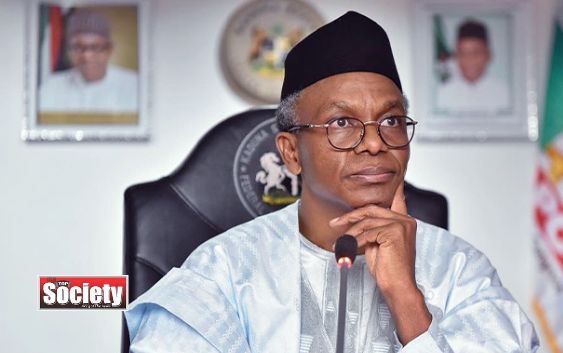
It was gathered by Top Society that the Former Kaduna State governor Nasir El-Rufai has announced plans to return to Nigeria and honour an invitation from the Economic and Financial Crimes Commission (EFCC). He confirmed that he has formally communicated with the commission and will appear in person on Monday, February 16, following weeks of speculation about his stay outside the country.
The announcement comes after widespread public discussion suggesting possible legal scrutiny or political pressure. By openly declaring his intention to present himself before the EFCC, El-Rufai appears determined to address the rumours directly and clarify his position.
As a former two-term governor, El-Rufai remains an influential and sometimes controversial figure in Nigeria’s political scene. His views on governance and national issues continue to generate attention, making any development concerning him a major talking point. His planned meeting with the EFCC has therefore drawn interest from both supporters and critics.
Backers of the former governor say his decision to return voluntarily demonstrates confidence and a willingness to cooperate with lawful authorities. They argue that notifying the commission in advance reflects transparency and respect for due process. According to them, public officials should be prepared to respond to inquiries whenever necessary.
However, some observers see the situation as part of broader political undercurrents. Nigeria’s political landscape has experienced internal party debates and shifting alliances in recent months. In such an atmosphere, investigations involving prominent politicians often attract political interpretations, even when official agencies maintain that their actions are guided strictly by law.
Legal experts have noted that appearing before the EFCC does not imply guilt. The commission is empowered to investigate allegations relating to financial crimes, and invitations for questioning are part of its standard procedures. In many instances, such engagements end without further action if no wrongdoing is established.
For many Nigerians, the case highlights ongoing concerns about accountability and fairness. While some view it as evidence that institutions are carrying out their duties, others emphasize the need for impartial handling and clear communication to maintain public trust.
With the scheduled date approaching, attention remains focused on what the meeting may reveal and whether it will settle the speculation surrounding the former governor. For now, El-Rufai’s public commitment to appear before the EFCC has shifted the conversation from uncertainty to anticipation, as political watchers await the next development.