





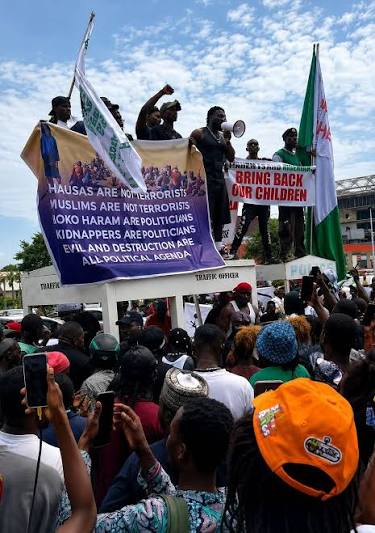
Hundreds of Nigerians gathered in Abuja to participate in a peaceful demonstration aimed at drawing attention to the country’s worsening security challenges and economic difficulties.
The protest, which was led by social media activist Martins Vincent Otse, popularly known as VeryDarkMan (VDM), attracted supporters from different backgrounds who voiced concerns about the state of the nation.
Participants marched through parts of the Federal Capital Territory carrying placards and chanting slogans calling for urgent government intervention. The protesters expressed frustration over the continued rise in kidnappings, violent attacks, and other forms of criminal activity affecting communities across the country. Many argued that stronger measures are needed to protect citizens and restore confidence in the nation’s security architecture.
Beyond security concerns, demonstrators also highlighted the impact of economic hardship on ordinary Nigerians. Rising food prices, increased transportation costs, and the general cost of living were among the issues raised during the protest.
Participants said many families are struggling to meet basic needs and called on authorities to implement policies that would ease the burden on citizens.
VDM, who addressed supporters during the demonstration, urged leaders at all levels of government to prioritize the welfare and safety of the people. He emphasized the need for practical solutions to the challenges facing the country and encouraged citizens to continue speaking out on issues that affect their daily lives.
Security personnel were deployed to various locations in Abuja to ensure the protest remained peaceful and orderly. Their presence was noticeable around major roads and public facilities as authorities monitored the situation. Despite the large turnout, the demonstration proceeded without major incidents, with organizers repeatedly urging participants to remain calm and law-abiding.
The protest reflected growing public concern over issues that have dominated national conversations in recent years. Many attendees said they joined the march not only to demand better security but also to call attention to broader governance and economic challenges affecting millions of Nigerians.
Observers noted that the demonstration underscores the increasing influence of youth-led movements and digital activists in shaping public discourse. Social media platforms have become powerful tools for mobilizing citizens and amplifying concerns about national issues, enabling activists to reach large audiences and encourage civic participation.
As the protest concluded, participants reiterated their demand for decisive action to address insecurity and improve living conditions. They expressed hope that their message would resonate with policymakers and lead to meaningful reforms capable of improving the lives of Nigerians.
The Abuja demonstration has once again brought national attention to the challenges facing the country, highlighting the growing desire among citizens for improved security, economic stability, and responsive leadership. While opinions may differ on the methods used to express these concerns, the protest served as a reminder of the importance of civic engagement in a democratic society.

