






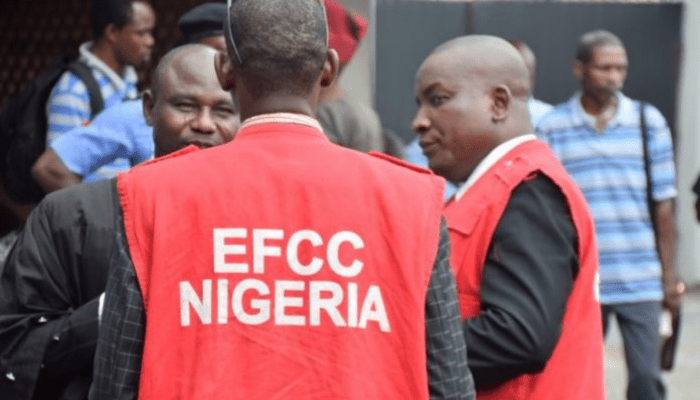
The Federal High Court in Abuja has ordered the Economic and Financial Crimes Commission (EFCC) to arrest and produce an Abuja-based realtor, Rebecca Omokamo Godwin-Isaac, after she failed to appear for the continuation of her trial over allegations bordering on land fraud, forgery, and money laundering.
The order was issued by Justice Joyce Abdulmalik during proceedings after the defendant was absent from court without any satisfactory explanation. The judge directed the anti-graft agency to ensure that the defendant is brought before the court at the next sitting, stressing the need for compliance with judicial processes and the rule of law.
The case has drawn significant public attention because it touches on the persistent challenge of fraudulent land transactions in the Federal Capital Territory (FCT), where increasing demand for property has created opportunities for unscrupulous individuals to exploit unsuspecting buyers and investors.
During Tuesday’s proceedings, counsel to the EFCC informed the court that the defendant failed to honour the court’s summons despite being aware of the hearing date. The prosecution further alleged that she had deliberately made herself unavailable to law enforcement authorities, frustrating efforts to proceed with the trial.
According to the EFCC, the defendant also violated the conditions of the administrative bail earlier granted to her by travelling outside the court’s jurisdiction without obtaining the required approval. The prosecution argued that such actions demonstrated a lack of respect for the court and justified the request for a warrant to secure her appearance.
The prosecution further alleged that the defendant obstructed officials of the EFCC from executing an interim forfeiture order relating to one of the disputed properties. The agency claimed that the action amounted to interference with an ongoing judicial process and raised concerns over possible attempts to frustrate the investigation.
After listening to the prosecution’s submissions, Justice Abdulmalik granted the request and ordered the EFCC to arrest the defendant and produce her before the court on the next adjourned date. The judge subsequently fixed July 23, 2026, for the continuation of the trial.
The EFCC has accused the defendant of participating in fraudulent land transactions involving forged documents and alleged money laundering activities connected to real estate deals within Abuja. Although the charges have yet to be determined by the court, the anti-corruption agency insists that it has gathered sufficient evidence to prosecute the matter.
Like every criminal proceeding in Nigeria, the defendant is presumed innocent until proven guilty by a competent court of law. The trial is expected to provide both the prosecution and the defence the opportunity to present their evidence before the court reaches a final decision.
Land fraud has remained one of the most common property-related crimes in Abuja and several major Nigerian cities. With rapid urban expansion, rising property values, and increasing demand for residential and commercial plots, fraudsters have developed sophisticated methods of deceiving prospective buyers.
Industry experts say victims often lose millions of naira after purchasing plots of land from individuals who either have no legal ownership or present forged title documents. In many cases, multiple buyers unknowingly purchase the same parcel of land from fraudulent agents, leading to lengthy legal disputes.
The Federal Capital Territory Administration (FCTA) has repeatedly warned residents against purchasing land without carrying out proper verification through relevant government agencies. Authorities have also encouraged prospective property owners to engage qualified legal practitioners and registered surveyors before completing any transaction.
Real estate professionals have equally urged buyers to insist on conducting official searches at the Abuja Geographic Information Systems (AGIS) and other relevant land registries before making payments. Such due diligence, they argue, significantly reduces the risk of falling victim to fraudulent schemes.
Over the years, the EFCC has intensified efforts to tackle financial crimes connected to the real estate sector. The commission has investigated numerous cases involving fake land allocations, forged certificates of occupancy, fraudulent housing investments, and the laundering of illicit funds through property acquisitions.
Analysts believe the anti-graft agency’s continued prosecution of alleged offenders is intended to restore confidence in Nigeria’s property market and discourage criminal activities that undermine legitimate investments.
The court’s latest order also highlights the importance of respecting judicial proceedings. Legal practitioners note that once a defendant is granted bail, strict compliance with all bail conditions is mandatory. Failure to attend scheduled court hearings or violating bail terms may result in the revocation of bail, issuance of arrest warrants, or additional legal consequences.
Observers say courts are increasingly taking firm action against defendants who fail to appear for trial, particularly in cases involving financial crimes, corruption, and other serious offences. Such measures are considered necessary to prevent unnecessary delays and ensure that justice is served within a reasonable timeframe.
The development has generated discussions within Nigeria’s legal and real estate communities, with many stakeholders calling for stronger regulations to improve transparency in property transactions. They argue that enhanced digital land records, stricter monitoring of estate agents, and tougher penalties for fraudulent practices would help reduce the prevalence of land scams.
Consumer advocacy groups have also urged members of the public to remain vigilant when purchasing land or investing in real estate. They advise prospective buyers to verify ownership documents, confirm government approvals, avoid cash transactions without proper documentation, and obtain legal advice before signing agreements.
As the case resumes, attention will focus on whether the EFCC successfully executes the court’s order and produces the defendant for trial. The outcome of the proceedings could have wider implications for ongoing efforts to combat fraud within Nigeria’s rapidly expanding real estate sector.
For many Nigerians, especially residents of the Federal Capital Territory, the case serves as another reminder of the importance of exercising caution when engaging in land transactions. While property investment remains one of the country’s most attractive sectors, experts maintain that proper due diligence is the most effective protection against fraud.
With the trial set to continue before the Federal High Court in Abuja, the judiciary is expected to carefully examine the evidence presented by both parties before reaching its verdict. Until then, the allegations remain before the court, and the defendant retains the constitutional right to be presumed innocent unless proven guilty.

