






Northeast Nigeria is facing an escalating humanitarian emergency as reductions in international aid leave an estimated 1.2 million people struggling with worsening hunger. Years of conflict, displacement, and economic hardship have already weakened the region’s ability to sustain itself, and the recent drop in humanitarian support is pushing many vulnerable households closer to starvation.
States across the northeast have endured prolonged instability that has disrupted everyday life and destroyed vital sources of income. Farmlands have been abandoned due to insecurity, markets have been damaged or shut down, and access to basic services remains limited. For millions of residents, humanitarian assistance has long served as the backbone of survival. With aid now being scaled back, many families are finding themselves without reliable access to food.
The primary driver of these aid reductions is a significant shortfall in global humanitarian funding. As donor nations confront economic pressures and redirect attention to other international crises, funding allocated to Northeast Nigeria has declined. This has forced aid providers to reduce food distributions, narrow the number of beneficiaries, and suspend programs that previously helped communities manage food shortages.
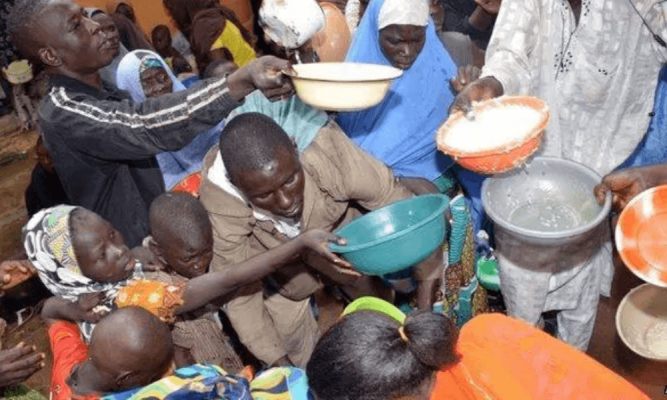
The impact on households is immediate and deeply distressing. Many families are cutting down to one meal a day or skipping meals entirely. Parents are diluting food portions to make limited supplies last longer, often at the expense of nutritional value. In camps for displaced persons and in host communities, signs of malnutrition—particularly among young children—are becoming increasingly visible.
Children and women are the most affected by the deepening food crisis. Young children lacking adequate nutrition face serious risks to their physical and mental development, with effects that can last a lifetime. Pregnant and breastfeeding women, who require higher levels of nourishment, are also at heightened risk of health complications. These vulnerabilities place enormous pressure on already overstretched health services in the region.
Beyond the immediate health consequences, the hunger crisis is also creating wider social risks. As food becomes scarcer, families may adopt harmful coping strategies, including withdrawing children from school, forcing them into labor, or arranging early marriages. In some cases, desperation may push individuals toward unsafe migration or make them more vulnerable to exploitation and recruitment by armed groups.
Local food production, which could help reduce reliance on aid, continues to face major barriers. Insecurity has restricted access to farmlands, while the rising cost of farming inputs has made cultivation increasingly unaffordable. Climate-related challenges, including flooding and erratic rainfall, have further damaged harvests. Without sustained investment in agriculture and livelihoods, communities remain trapped in a cycle of dependency.
Humanitarian experts warn that the situation could worsen significantly if funding is not urgently restored. Seasonal food shortages are approaching, and reduced assistance during this period could have devastating consequences. Early action, they stress, is critical to preventing a full-scale famine and protecting lives.
Long-term solutions must go beyond emergency food aid. While immediate assistance is essential to address hunger, durable recovery will require improved security, investment in agriculture, job creation, and access to education and healthcare. Strengthening community resilience will help reduce vulnerability to future shocks.
As Northeast Nigeria confronts this growing crisis, the consequences of reduced aid are becoming impossible to ignore. Without swift and sustained intervention, millions of lives remain at risk, underscoring the urgent need for renewed global commitment to the region.
Leave a comment
Leave a comment

