




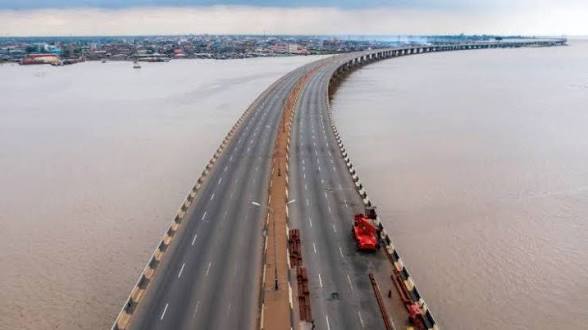
A fatal road accident on the iconic Third Mainland Bridge earlier today has left one person dead and four others injured, reigniting public concern over road safety in Lagos, a city already grappling with intense traffic and frequent transport-related incidents.
According to early reports, the crash occurred during peak movement hours, when thousands of commuters rely on the bridge as a major link between the mainland and the island.
Eyewitnesses described a chaotic scene involving multiple vehicles, with emergency responders arriving shortly after to rescue victims and manage the situation. The injured were rushed to nearby hospitals, while the deceased was confirmed at the scene.
Though the exact cause of the accident is still under investigation, preliminary accounts suggest a combination of overspeeding and possible driver misjudgment. Some witnesses also pointed to poor lane discipline and sudden braking, factors that have historically contributed to accidents on the busy bridge. Authorities have yet to release an official statement detailing the sequence of events.
The Third Mainland Bridge, one of the longest bridges in Africa, serves as a critical artery in Lagos’ transportation network. Every day, it carries thousands of vehicles, from private cars to commercial buses and heavy-duty trucks. Its strategic importance means that any disruption especially one involving casualties has immediate ripple effects on traffic flow and public safety concerns.
Today’s accident quickly led to significant traffic congestion, with long queues stretching across connecting routes. Commuters reported being stranded for hours, while others sought alternative routes to avoid the gridlock. For many Lagos residents, such incidents have become an unfortunate but familiar part of daily life.
Road safety experts have long warned about the dangers associated with high-traffic infrastructure like the Third Mainland Bridge. Factors such as speeding, reckless overtaking, vehicle maintenance issues, and driver fatigue continue to pose risks. In recent years, there have been repeated calls for stricter enforcement of traffic laws, improved road monitoring systems, and increased public awareness campaigns.
The role of enforcement agencies, particularly the Federal Road Safety Corps, has come under renewed scrutiny. While the agency has made efforts to regulate driving behavior and respond to emergencies, critics argue that more proactive measures are needed to prevent accidents rather than simply react to them. Suggestions include the installation of speed cameras, better signage, and consistent patrol presence along major routes.
In addition, questions are being raised about the condition of vehicles on Lagos roads. Commercial transport operators, in particular, are often accused of neglecting basic maintenance in a bid to maximize profits. Faulty brakes, worn-out tires, and overloading are common issues that can quickly turn a minor mistake into something deadly.
Urban planners also point to the broader challenge of infrastructure strain. Lagos, as one of Africa’s fastest-growing cities, faces immense pressure on its roads and transport systems. The Third Mainland Bridge, despite its size and significance, was not originally designed to handle the current volume of traffic it experiences daily. This mismatch between capacity and usage increases the likelihood of accidents, especially during rush hours.
For residents, today’s tragedy is more than just another headline, it is a stark reminder of the risks they face each time they step onto the road.
Happy to 1Many commuters have taken to social media to express frustration, fear, and anger, calling on authorities to take decisive action to improve road safety.
As investigations continue, there is hope that this incident will serve as a turning point, prompting both government agencies and road users to take safety more seriously.
However, without sustained commitment and concrete measures, such hopes risk fading until the next accident brings the issue back into focus.
For now, the focus remains on the victims, the life lost and those injured and the urgent need to prevent similar tragedies on one of Lagos’ most vital transport links.

