






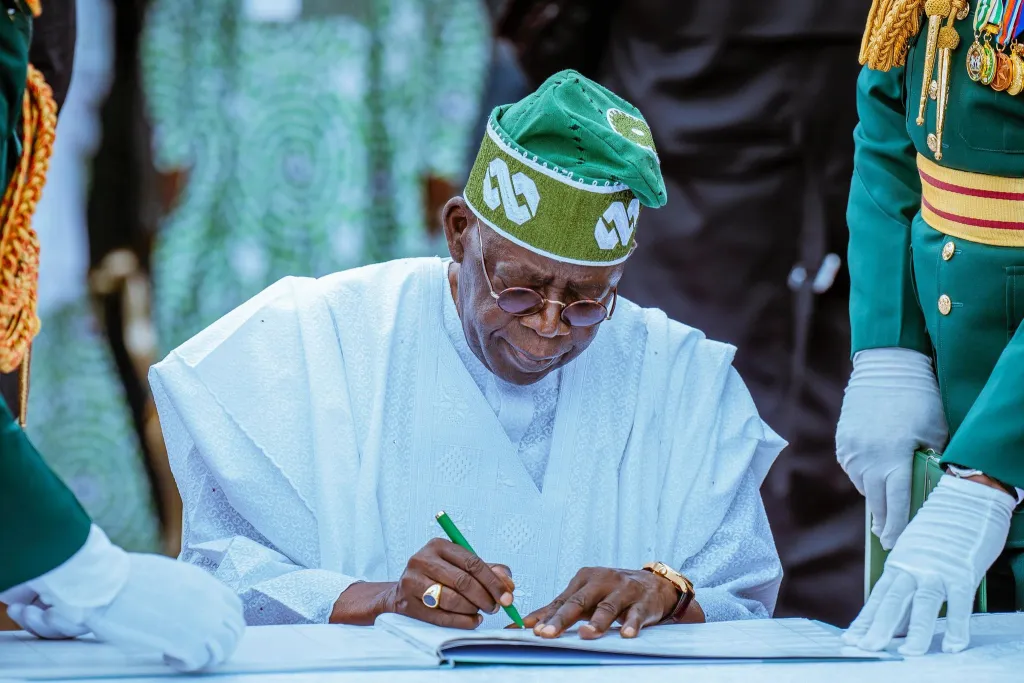
President Bola Ahmed Tinubu has stated that Nigeria is gradually overcoming some of the severe economic pressures that have affected the country in recent years. According to him, one of the clearest indicators of this progress is that many state governments are no longer borrowing money simply to pay workers’ salaries.
The president made this assertion while speaking about the economic reforms introduced since the beginning of his administration and the steps being taken to stabilize the nation’s finances.
For many years, several states across Nigeria faced serious financial challenges. In some cases, state governments struggled to meet basic obligations such as paying civil servants and pensioners. This situation led many of them to depend heavily on loans, overdrafts, and federal government intervention funds to meet salary obligations. At different times, special bailout funds and restructuring programs were introduced to help states cope with their financial burdens.
The issue of states borrowing money to pay salaries became a major concern in Nigeria’s fiscal management discussions. Economists and policy analysts argued that such practices were unsustainable and could deepen debt problems at the state level. Borrowing for recurrent expenses such as salaries was widely criticized because it left little room for development projects and infrastructure investment.
President Tinubu’s administration has introduced a series of economic policies aimed at addressing the country’s fiscal challenges and strengthening revenue generation.
Among the most notable reforms were the removal of the petrol subsidy and adjustments in the foreign exchange system. While these policies initially caused economic hardship for many Nigerians due to rising costs of goods and services, the government argued that they were necessary steps toward long-term economic stability.
According to the president, these reforms have helped improve the financial position of both the federal and state governments. He noted that increased revenue allocations from the federation account have enabled states to meet their obligations more effectively. With improved monthly allocations, many states now reportedly have greater financial capacity to pay workers without resorting to borrowing.
The administration believes that stronger fiscal discipline and better revenue distribution mechanisms are contributing to this improvement. The federal government has also emphasized the importance of transparency and accountability in how state governments manage public funds. By ensuring that resources are properly utilized, authorities hope to prevent the reemergence of the salary crisis that once affected many states.
Another factor that may be contributing to the improved financial situation of states is the increased focus on internally generated revenue. Over the past decade, several states have begun implementing strategies to expand their revenue base beyond federal allocations. These strategies include improving tax administration, promoting local industries, and encouraging investment within their territories.
Experts say that if states continue to strengthen their internal revenue sources, they will become less dependent on federal allocations and external borrowing. This could lead to more sustainable economic growth at the subnational level and allow states to fund important development projects such as roads, schools, hospitals, and agricultural initiatives.
However, some analysts caution that the improvement in state finances should be carefully monitored. While higher federal allocations may temporarily ease financial pressure, long-term stability will depend on responsible financial management and economic diversification. Without these measures, states could still face financial challenges if revenue inflows decline in the future.
Labour unions and civil society organizations have also continued to advocate for consistent and timely payment of workers’ salaries and pensions. For many public servants, regular salary payments are essential for meeting daily living expenses, supporting families, and contributing to local economic activity.
Beyond salaries, there are also calls for governments at all levels to focus on job creation and economic opportunities for young people.
Nigeria has a large youth population, and many graduates struggle to find employment after completing their education. Strengthening state economies could play a key role in addressing this challenge.
The president has expressed optimism that the country is moving in the right direction despite the economic difficulties experienced during the early stages of the reforms. He emphasized that while the reforms required sacrifice from citizens, they were intended to lay a foundation for long-term growth and financial stability.
As Nigeria continues to implement economic reforms and strengthen its fiscal management systems, the question of how states manage their finances will remain an important part of national economic discussions. If the current trend continues, it could mark a significant shift in the financial health of state governments and contribute to broader economic recovery across the country.

