






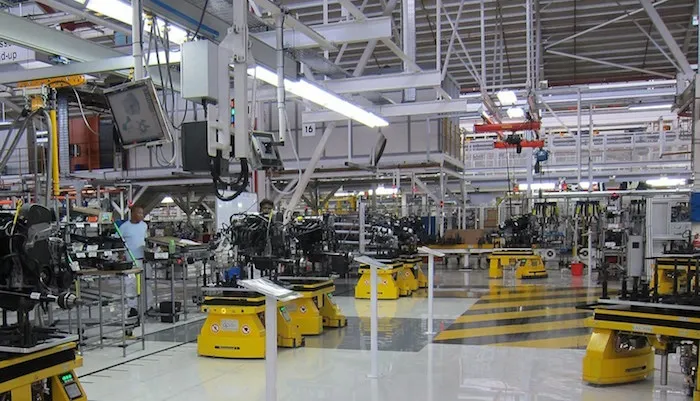
Nigeria’s manufacturing sector has recorded a sharp 54 percent decline in foreign direct investment, even as total capital inflows into the country show signs of improvement. The development has raised concerns among industry stakeholders who fear that weakening investor confidence in the productive sector could slow economic diversification efforts and undermine job creation.
Recent financial data indicate that while overall capital importation into Nigeria has increased compared to previous periods, the manufacturing sector has not benefited proportionately. Instead, foreign investors appear to be channeling funds into other segments of the economy, particularly the financial services and oil and gas sectors, leaving manufacturing with a significantly reduced share of foreign capital.
The decline comes at a time when Nigeria is actively promoting industrialization as a pathway to economic stability. Manufacturing plays a critical role in value addition, export expansion, and employment generation. A sustained drop in foreign investment into the sector could weaken efforts to reduce reliance on crude oil exports and imported finished goods.
Industry analysts attribute the decline to multiple structural and macroeconomic challenges. Chief among them is foreign exchange volatility. Manufacturers depend heavily on imported raw materials, machinery, and components.
Uncertainty in the exchange rate, combined with limited access to foreign currency in previous periods, created difficulties for production planning and discouraged new investors from committing long-term funds.
Energy costs also remain a major constraint. Persistent power supply challenges force manufacturers to rely on alternative energy sources such as diesel and gas-powered generators. The high cost of self-generated power significantly increases production expenses, making locally manufactured goods less competitive compared to imports from countries with more stable energy infrastructure.
In addition to infrastructure deficits, high borrowing costs have placed pressure on manufacturers. Elevated interest rates, introduced as part of monetary tightening measures to control inflation, have made it more expensive for businesses to access credit. While these policies may help stabilize the broader economy, they also reduce the attractiveness of long-term industrial investments that require substantial upfront capital.
Policy inconsistency has further dampened investor sentiment. Sudden regulatory changes, shifting trade policies, and uncertainties around tariffs and import restrictions create an unpredictable business environment. Foreign investors typically prioritize markets with stable, transparent, and predictable policy frameworks. When regulations change frequently, it increases perceived risk and discourages capital inflows into sectors that require long-term commitments like manufacturing.
Security concerns in certain parts of the country also contribute to hesitation among investors. Manufacturing facilities require stable environments for production, distribution, and workforce management. Perceived risks to supply chains and logistics operations can weigh heavily on investment decisions.
Despite these challenges, overall capital inflows into Nigeria have improved, driven largely by portfolio investments and renewed interest in financial markets. Higher yields on government securities and reforms in the foreign exchange market have attracted short-term foreign investors seeking returns. However, portfolio investments differ significantly from foreign direct investment in manufacturing. While portfolio flows can boost liquidity in financial markets, they are often volatile and can exit quickly during periods of uncertainty. In contrast, manufacturing investments typically create factories, generate employment, and contribute to long-term economic growth.
Economic experts warn that an imbalance favoring short-term capital over productive investment may limit the broader developmental impact of rising inflows. Manufacturing remains essential for sustainable growth because it strengthens domestic supply chains, encourages technology transfer, and supports small and medium-sized enterprises that operate as suppliers and distributors.
The decline in foreign investment could also affect Nigeria’s trade balance. A strong manufacturing base reduces dependence on imported consumer goods and industrial inputs. When domestic production capacity weakens, import bills rise, putting additional pressure on foreign reserves and the local currency.
Stakeholders in the manufacturing sector are calling for targeted reforms to reverse the trend. Key recommendations include stabilizing the foreign exchange market, improving access to affordable financing, and accelerating infrastructure development particularly in power, transportation, and ports. Efficient logistics systems can significantly lower operational costs and make Nigeria more attractive as a production hub.
There are also calls for clearer industrial policies that provide long-term incentives for investors. Tax breaks, export processing zones, and special economic zones have been identified as potential tools to attract foreign manufacturers. However, these initiatives must be supported by consistent implementation and strong governance to build credibility.
Human capital development is another critical factor. A skilled workforce enhances productivity and attracts investors seeking efficient labor markets. Expanding vocational training, technical education, and partnerships between industries and academic institutions could improve the sector’s competitiveness.
While the 54 percent decline presents a serious challenge, some analysts view it as an opportunity for policymakers to reassess strategies and strengthen the investment climate. By addressing structural bottlenecks and ensuring policy stability, Nigeria could reposition its manufacturing sector as a viable destination for long-term foreign capital.
In the broader context of economic reform, the goal remains clear: diversify the economy beyond oil and create sustainable sources of growth. Manufacturing holds significant potential to drive that transformation.
Reversing the downward trend in foreign investment will require coordinated action across fiscal, monetary, and industrial policies.
Without deliberate efforts to restore investor confidence, the sector may struggle to achieve its full potential despite improvements in overall capital inflows.

