


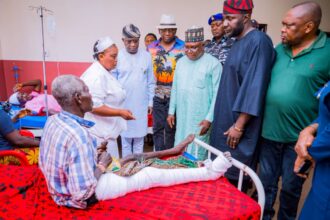


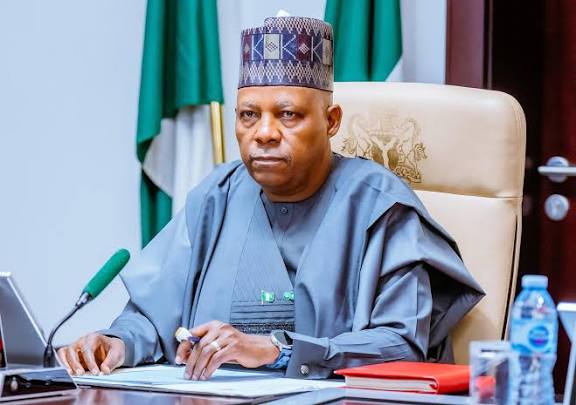
Vice President Kashim Shettima on Saturday visited Kwara State to commiserate with victims and families affected by the recent deadly militant attacks in parts of the state. The visit followed directives from President Bola Ahmed Tinubu, who mandated a federal delegation to assess the situation, sympathize with grieving communities, and reinforce the government’s commitment to restoring peace and security.
The attacks, which occurred in communities within Kaiama Local Government Area, left scores of residents dead and many others injured or displaced. Armed assailants reportedly stormed rural settlements, burning homes and forcing families to flee. Survivors described scenes of panic and devastation as entire households were uprooted overnight. The violence has been described as one of the most severe incidents in the area in recent years, drawing national attention and concern.
Upon arrival in Kwara, the Vice President was received by Governor AbdulRahman AbdulRazaq, senior state officials, security commanders, and community leaders. The visit included meetings with traditional rulers, local government authorities, and security stakeholders to evaluate the security situation and discuss immediate and long-term responses.
Addressing community members, Shettima conveyed President Tinubu’s heartfelt condolences to the people of Kwara State. He described the killings as tragic and deeply disturbing, emphasizing that the victims were innocent civilians who had been living peacefully before the attack. He assured residents that the federal government shares in their grief and stands firmly with them during this painful period.
The Vice President reaffirmed the administration’s resolve to ensure justice for the victims. He stated that security agencies have been directed to intensify operations in the affected areas and to pursue those responsible for the violence. According to him, such attacks represent a violation of citizens’ fundamental right to live safely and practice their beliefs without fear or intimidation.
As part of the immediate response, additional security personnel have been deployed to the region to prevent further attacks and stabilize vulnerable communities. Military units are now conducting patrols and surveillance operations aimed at restoring confidence among residents and deterring future threats. Authorities have indicated that intelligence gathering and coordinated security efforts will be strengthened in surrounding areas.
Beyond security measures, humanitarian assistance has also been mobilized. The National Emergency Management Agency has been instructed to work alongside the Kwara State Emergency Management Agency to provide relief materials to displaced families. These efforts include the distribution of food supplies, temporary shelter materials, medical support, and other essential items to ease the suffering of those affected.
During interactions with local leaders, the Vice President emphasized the importance of collaboration between federal and state authorities. He noted that sustainable peace requires joint action, community engagement, and continuous communication between security agencies and local residents. Community leaders expressed appreciation for the swift federal response and called for sustained support to rebuild destroyed homes and livelihoods.
Governor AbdulRazaq, speaking during the visit, reiterated the state government’s commitment to working closely with federal authorities to strengthen security architecture across Kwara. He urged residents to remain calm and cooperate with security agencies by sharing useful information that could help prevent further violence.
The attacks have raised broader concerns about the spread of insecurity into areas previously considered relatively stable. Analysts suggest that the incident underscores the need for comprehensive strategies that address not only immediate security threats but also underlying factors such as poverty, unemployment, and community vulnerabilities.
Shettima’s visit also included a private meeting with families who lost loved ones. In these engagements, he offered prayers for the deceased and words of comfort to grieving relatives. The emotional encounters highlighted the human cost of insecurity and reinforced the urgency of decisive government action.
The federal government has pledged that the perpetrators will be brought to justice and that affected communities will not be abandoned. Plans for longer-term rehabilitation and reconstruction are expected to follow emergency relief operations. Authorities have indicated that rebuilding efforts will focus on restoring homes, schools, and community infrastructure damaged during the attacks.
For many residents, the Vice President’s presence symbolized national solidarity in a moment of deep sorrow. While security challenges persist, the visit served as a reminder that the tragedy has not gone unnoticed at the highest levels of government.
As Kwara begins the process of healing, attention now turns to the effectiveness of ongoing security operations and the sustainability of humanitarian support. The success of these measures will determine how quickly affected communities can rebuild their lives and regain a sense of normalcy.
Vice President Shettima’s visit ultimately underscored a broader message: that the protection of civilian lives remains a top priority for the federal government, and that collective efforts are essential to ensuring lasting peace across Nigeria.

