

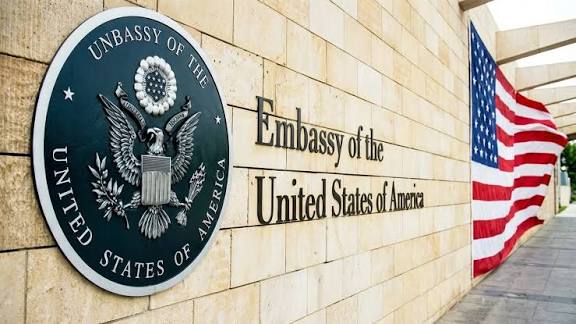
The United States diplomatic mission in Abuja has cancelled all visa appointments scheduled for Wednesday, March 4, 2026, citing heightened security concerns and the possibility of protests in Nigeria’s capital city. The decision, announced through official communication channels, was described as a precautionary measure aimed at safeguarding staff, applicants, and American citizens residing in the Federal Capital Territory.
According to the advisory, there was credible information suggesting a high likelihood of demonstrations connected to rising international tensions. Although the protests were not directly linked to visa services or embassy operations, the mission emphasized that large gatherings can quickly become unpredictable. In light of this, officials opted to suspend visa interviews for the day rather than risk potential disruptions or security breaches.
Affected visa applicants were informed that their appointments would be rescheduled. The embassy assured those impacted that they would receive further communication with new interview dates and instructions. While acknowledging the inconvenience the cancellation may cause, the mission maintained that safety considerations must take priority in situations where uncertainty surrounds public gatherings.
In addition to cancelling interviews, the embassy issued guidance to American citizens living in Abuja. The advisory recommended that U.S. nationals limit non-essential movement, avoid crowded places, and stay clear of any demonstrations. Citizens were also urged to monitor reliable information sources for updates, remain vigilant in public spaces, and ensure that their mobile phones were fully charged. Carrying valid identification documents at all times was also advised.
The security alert comes amid reports of solidarity demonstrations in parts of Nigeria related to ongoing tensions in the Middle East. While many previous gatherings across the country have been peaceful, some have reportedly escalated into confrontations with security forces in certain regions. Such developments may have contributed to concerns that similar protests could emerge in the nation’s capital.
Diplomatic missions around the world often conduct regular security assessments, especially during periods of international instability. In such cases, embassies may take proactive measures, including restricting access to facilities or temporarily suspending services, to minimize exposure to potential threats. The decision to cancel visa appointments in Abuja reflects this broader approach to risk management.
Beyond the one-day cancellation, routine consular services were temporarily suspended for several additional days as a precaution. This move was intended to allow authorities to reassess the situation and ensure that adequate security measures were in place before resuming full operations. Applicants with appointments during the affected period have been encouraged to check their email accounts and the embassy’s website for updates and rescheduling details.
For many Nigerians, visa interviews represent important milestones tied to education, business, tourism, or family reunification. A sudden cancellation can therefore disrupt carefully planned travel arrangements. Some applicants may have traveled long distances to Abuja in preparation for their interviews, making the suspension particularly inconvenient. Nevertheless, embassy officials reiterated that the decision was taken in the interest of public safety.
Security analysts note that diplomatic facilities are often considered sensitive locations during times of protest, even when they are not the direct target of demonstrations. Large crowds in proximity to embassy premises can create logistical challenges, including traffic congestion and restricted access routes. In worst-case scenarios, peaceful protests can be infiltrated by disruptive elements, heightening risks for bystanders and personnel alike.
The development also highlights how global geopolitical tensions can produce ripple effects far beyond the regions directly involved. Events unfolding thousands of miles away can influence public sentiment and spark demonstrations in other countries. As a result, diplomatic missions must remain alert to local reactions to international developments and adjust their operations accordingly.
Nigerian authorities have not reported any major incidents in Abuja related to the anticipated protests as of the time of the cancellation. However, the embassy’s action underscores the importance of preventive measures in security planning. By acting ahead of potential unrest, officials aim to avoid emergency responses that could arise if a situation deteriorates unexpectedly.
As the situation evolves, attention will likely focus on whether the protests materialize and whether consular services resume fully without further interruptions. For now, the embassy has reassured applicants and citizens that it remains committed to providing services as soon as it is deemed safe to do so.
The episode serves as a reminder that safety considerations often guide diplomatic decisions, even when such actions temporarily disrupt routine services. While visa applicants may face short-term delays, the overarching objective remains clear: protecting lives and maintaining secure operations in an environment marked by uncertainty.