

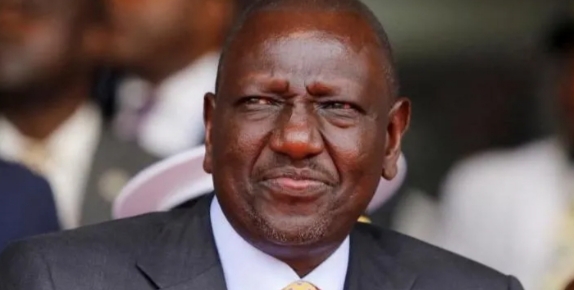
Kenyan President William Ruto is facing strong criticism after making comments about how Nigerians speak English.
While speaking to a group of Kenyans living in Italy, Ruto said that Nigerian English can be difficult to understand.
He joked that people might need a translator to follow what Nigerians are saying, even though they are speaking English.
He also praised Kenya, saying that Kenyans speak some of the best English in the world.
His remarks quickly spread on social media and caused anger, especially among Nigerians and other Africans.
Many people felt the comments were disrespectful and unfair, arguing that no country’s accent should be mocked.
Zimbabwean journalist Hopewell Chin’ono reacted by saying that English is a colonial language and should not be used to measure intelligence, education, or development. His comment was widely shared online and supported by many users.
Both Kenya and Nigeria use English as an official language because of their shared colonial history under Britain.
However, the way English is spoken in each country is naturally different. These differences come from the influence of local languages, culture, and everyday communication styles.
Nigeria has more than 500 local languages, and these languages shape the way English is spoken across the country. This has led to what is commonly called “Nigerian English,” which has its own pronunciation, expressions, and rhythm.
In the same way, Kenya’s many languages also influence how English is spoken there.
During his speech, Ruto praised Kenya’s education system, saying it helps produce people who speak English very well.
However, his repeated comments about Nigerian English being hard to understand drew laughter from his audience and criticism from others who later watched the clip online.
Many social media users accused him of promoting division among Africans instead of unity. Some described his remarks as unnecessary and said African leaders should support one another rather than make comparisons.
Former Nigerian senator Shehu Sani also responded, pointing out that Nigeria has produced world-famous writers such as Wole Soyinka, Chinua Achebe, and Chimamanda Ngozi Adichie.
His response suggested that Nigeria’s contribution to global English and literature cannot be ignored.
Some critics also advised Ruto to focus more on issues affecting Kenya, such as unemployment, rising living costs, and economic challenges, instead of making controversial remarks.
Online exchanges between Nigerians and Kenyans are not new. On platforms like X (formerly Twitter), users from both countries often engage in heated debates, sometimes joking and sometimes serious.
These discussions usually cover topics like music, sports, economic performance, and politics.
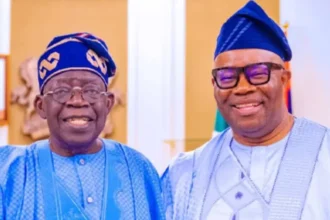
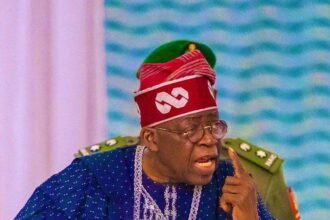
Recently, Nigerian President Bola Tinubu also faced criticism from Kenyans after saying Nigerians were better off than people in some other African countries.
Some observers believe Ruto’s comments may have been influenced by that earlier statement, although he did not directly mention it.
Despite the controversy, some Kenyans defended Ruto, saying his comments were meant as humor and should not be taken too seriously. They argued that the reaction online may have exaggerated the situation.
Nigeria remains the country with the largest number of English speakers in Africa. Over time, Nigerian English has grown into a recognised form of the language, with unique phrases and expressions.
Some of these expressions, such as “next tomorrow,” are even being included in international dictionaries.
Nigeria’s large population and active
diaspora, especially in countries like the United Kingdom, have helped spread its version of English across the world, influencing global communication and popular culture.