






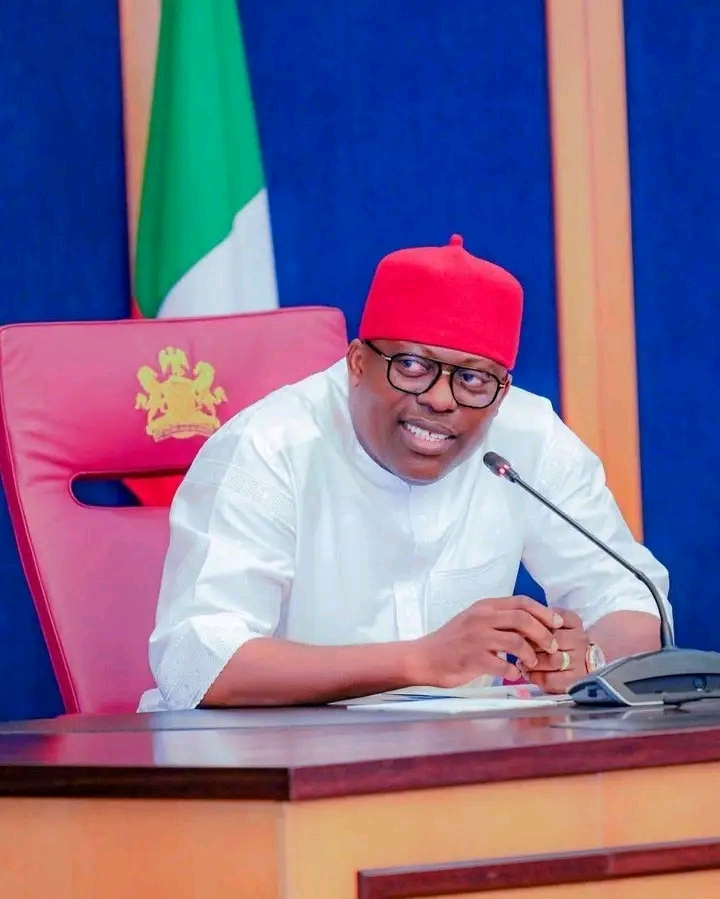
The withdrawal of Siminalayi Fubara from the governorship primary of the All Progressives Congress has continued to generate widespread reactions across Rivers State and Nigeria’s political landscape, with implications that extend beyond a single party contest.
What initially appeared as a straightforward political withdrawal has now evolved into a broader conversation about loyalty, power balance, and the future structure of party politics in the state.
In the immediate aftermath of the announcement, reactions split sharply along political and emotional lines.
Supporters of Fubara described the development as unexpected, with some expressing disappointment that a figure many had seen as a central contender in the state’s evolving APC structure stepped aside at a crucial moment. For this group, the withdrawal felt less like a strategic repositioning and more like a missed opportunity to consolidate influence through direct electoral contest.
However, within other circles, especially among party loyalists, the move was quickly reframed as a calculated step toward internal stability. Party insiders argued that Rivers State’s political environment has remained tense for years, and any effort that reduces internal friction should be seen as constructive. From this perspective, Fubara’s decision is being interpreted as an attempt to prevent further fragmentation within the party ahead of the general election cycle.
A recurring theme in the reactions is the question of influence and control within Rivers APC. Some observers have raised concerns about whether the party’s internal structure operates independently or whether it is shaped by broader political negotiations involving major stakeholders. This has revived long-standing debates about the influence of key political actors in the state and their role in shaping candidate emergence and party direction.
Linked to this discussion is the continued political relevance of the Minister of the Federal Capital Territory, Nyesom Wike, whose influence in Rivers politics has remained a subject of national attention. While no direct claims have been conclusively established regarding the withdrawal, political commentators frequently reference the broader context of reconciliation efforts and power realignments within the state. These interpretations have fueled speculation that Fubara’s exit from the race may be part of a larger political arrangement aimed at stabilizing competing blocs.
At the federal level, attention has also turned to President Bola Ahmed Tinubu, with analysts suggesting that ongoing reconciliation efforts across party lines and internal factions may be influencing political developments in key states like Rivers. While official statements remain limited, observers argue that the timing of the withdrawal fits into a wider pattern of negotiation-driven politics, where consensus-building often takes precedence over open competition in volatile party environments.
Within the APC structure, reactions have been largely cautious but optimistic. Some party figures have described the withdrawal as a “mature political decision,” emphasizing that internal unity is essential for electoral success. According to this view, contested primaries in deeply divided states can weaken party cohesion and reduce competitiveness in general elections. By stepping aside, Fubara is seen by some as helping to reduce tension that could otherwise escalate into factional disputes.
Still, not all reactions have been positive. Critics within opposition and neutral political circles argue that withdrawals of this nature often raise more questions than they resolve. For them, the concern is not only about the individual decision but about what it signals regarding transparency in internal party democracy. They argue that when candidates step down in high-stakes contests, it can sometimes reflect behind-the-scenes agreements that are not fully visible to party members or the public.
This perception has contributed to growing debate about internal democracy within Nigerian political parties more broadly. The Rivers APC situation is now being discussed as a case study in how political negotiations, elite consensus, and strategic withdrawals can shape candidate selection processes. Some analysts warn that repeated patterns of negotiated exits may weaken grassroots engagement over time if party members feel excluded from decision-making.
On the ground in Rivers State, reactions remain mixed. Some local supporters express relief that the political tension surrounding the primary has eased, especially given the state’s history of intense political rivalry. Others remain uncertain about what the withdrawal means for future alignments, particularly as it relates to local leadership structures and upcoming electoral strategies.
A key implication emerging from the development is the potential reshaping of the APC’s internal balance in Rivers State. With Fubara stepping aside, attention now shifts to who will consolidate support within the party structure and how alliances will be reorganized ahead of future elections. This has sparked renewed interest in emerging political figures who may now see an opportunity to strengthen their positioning.
Another implication is the possible recalibration of political loyalty within the state. Withdrawals in competitive primaries often trigger shifts in allegiance, as supporters reassess where their interests are best represented. In this case, political observers suggest that Fubara’s supporters may either align with the party’s consensus candidate or gradually drift toward alternative political arrangements depending on how events unfold.
Beyond immediate electoral consequences, the development also highlights the fragile nature of political stability in Rivers State. Over the years, the state has experienced shifting alliances, internal disputes, and high-level reconciliations that frequently redefine political relationships. The latest withdrawal adds another layer to this complex environment, reinforcing the idea that Rivers politics remains highly fluid.
Analysts also point to the broader national significance of the event.
Rivers State is one of Nigeria’s most politically strategic regions due to its economic importance and voting strength. As such, developments within its major political parties often attract national attention and are sometimes interpreted as indicators of wider trends in party management and elite negotiation.
There is also the question of how this decision will affect governance perception. As Governor, Siminalayi Fubara remains a central figure in state administration, and his political choices are likely to be closely linked with expectations around governance stability and continuity. Political observers suggest that balancing governance responsibilities with evolving party dynamics will be crucial in shaping public perception in the coming months.
Looking ahead, the most immediate implication is uncertainty. While some stakeholders interpret the withdrawal as a stabilizing move, others see it as the beginning of a new phase of political recalibration. The absence of a direct contest leaves space for negotiation, alliance-building, and potential restructuring within the party’s state chapter.
In conclusion, the reactions to Fubara’s withdrawal reflect the complexity of Rivers State politics, where decisions are rarely viewed in isolation. Instead, they are interpreted through layers of historical rivalry, party structure, and national political strategy. Whether seen as a sacrifice for unity or a sign of deeper political alignment, the development has undeniably reshaped the conversation around the future of the APC in Rivers State and the broader direction of its political leadership.

