


When President Bola Tinubu assumed office, he introduced the “Renewed Hope” manifesto, which outlines his mission and vision for repositioning Nigeria and driving the country forward.
The 80-page manifesto is more than just a policy framework; it is described as “a statement of commitment, a covenant between us and the people.” The document elaborates on the concept of “Renewed Hope,” which refers to a positive outlook or expectation for a better outcome or situation. The government emphasized that “renew” means to refresh, revive, or restore to make something like new. Thus, Renewed Hope is the promise of a better tomorrow.
Analysts interpret this as a collective aspiration for Nigerians to build a new society based on shared prosperity. Vice President Kashim Shettima explained that the Renewed Hope agenda is a transformative policy aimed at repositioning Nigeria as a prime global investment destination.
At the heart of the Renewed Hope agenda is the quest to revitalize Nigeria, fostering prosperity and unity. The manifesto outlines that the Renewed Hope agenda seeks to ensure that all Nigerians, including those with no income, as well as vulnerable and underprivileged groups, have access to a decent life.
One of the promises made in the manifesto is that “under our government, our cities and towns will witness a level of industrial activity unprecedented in our nation’s history. In this, our youth shall become a leading catalyst driving the economy.” This vision extends beyond creating jobs; it includes empowering those who see their future in starting and owning businesses within the new economy. The goal is to open the economy in a way that leverages the best that modern digital and IT-driven sectors have to offer.
The government has also addressed the concerns of the youth, stating, “We must pay special attention to our young population. They are this nation and its future. Youths aged between 15 and 35 account for over 65 percent—or over 130 million—of our 200 million people. Our youth unemployment rate, as well as our overall jobless rate, has always been unacceptably high.”
The manifesto acknowledges the challenges faced by young people, many of whom feel alienated and left behind. It emphasizes that if Nigeria is to live up to its potential, its youth must be given a fairer deal.
In terms of economic reform, the government has pledged to restructure the economy’s structural framework. “The structural model upon which our national economy has always been based needs major reform,” the manifesto states. It highlights that Nigeria’s economy, traditionally reliant on exporting raw materials and importing expensive finished products, requires a shift. Crude oil remains the primary source of foreign exchange and federal revenue, but over the long term, these revenues will be insufficient to meet rising costs.
Agriculture, which has traditionally been the backbone of the nation, will continue to play a crucial role. However, the government intends to meld the best of the existing sectors with emerging economic opportunities. The Renewed Hope agenda emphasizes fiscal prudence in public expenditure, recognizing that public money is a storehouse of public values and trust.
The government’s reform agenda is based on eight key points, and it already has a blueprint for what it intends to accomplish. Ministers in Tinubu’s cabinet are expected to be fully aware of the government’s vision and mission.
As we reflect on the administration, it is essential to evaluate how each member of Tinubu’s cabinet has delivered on the government’s policies within their respective ministries. This analysis will focus on five out of the 45 ministers in Tinubu’s cabinet who have distinguished themselves in their assigned ministries.
NYESOM WIKE: Minister of FCT
 Nyesom Wike, the Minister of the Federal Capital Territory, is one of the ministers who is always in the news because of his engagements. To some, he is a controversial figure due to his attitude and approach to issues. Many applaud him for his courageous moves and for not remaining silent when there are issues to be discussed.
His faceoff with his successor as Governor of Rivers State, Sim Fubara, and his disagreements with Senator representing the FCT, Ireti Kingibe, have led some to conclude that he derives pleasure from being controversial.
Richard Milhous Nixon, the 37th president of the United States (1969-1974), made the famous statement that, “If an individual wants to be a leader and isn’t controversial, that means he never stood for anything.”
This perception of Wike has led some to form opinions about him, but those who are familiar with his antics and antecedents see him as a workaholic who did his best as Governor of Rivers State, transforming the state and making it more attractive through tangible projects. He also opened up many previously inaccessible communities.
These accomplishments endeared him to many, who were excited when he was nominated to head the FCT Ministry. Wike did not disappoint those who placed their trust in him.
His tenure as the Federal Capital Territory (FCT) Minister has been nothing short of a roller coaster ride, drawing both praise and criticism from various quarters. Known for his assertive governance style and vocal support for his political party, Wike has faced intense scrutiny, leaving civil society organizations (CSOs), activists, and residents divided in their opinions.
Since assuming office, he has continued to prioritize infrastructural development and urban renewal. Wike’s remarkable achievements so far have led FCT residents to question what the previous administration actually accomplished, considering the significant strides he has made in such a short time.
Wike’s zeal for work led to the introduction of new road networks and revitalization projects, which have undoubtedly improved the FCT’s aesthetics and functionality.
At the time of his assumption of office, the FCT had several uncompleted, abandoned, and un-awarded road and general infrastructure projects that were begging for attention. Added to the list was a litany of aging roads and facilities that were overdue for maintenance, expansion, or outright reconstruction.
Some of the projects he has executed include the Federal Secretariat (First Phase), Abuja Metro Line, Southern Parkway, Roads B6 and B12, the Vice President’s official residence, Wuse Interchange, and Outer Southern Expressway (OSEX).
The resurfacing of aging roads in different parts of the city, such as Asokoro, Maitama, Wuse 1, Wuse 2, Garki 1, Garki 2, Jabi, and Utako districts, is now a common feature, working at an unprecedented pace in the FCT.
Apart from providing infrastructural facilities, Wike has also taken bold steps to combat corruption in the FCT administration. The anti-corruption drive aimed at bringing transparency and accountability into the administration has earned him accolades from members of civil society organizations and other anti-corruption advocates.
His failure to relinquish involvement in the affairs of his state, and his protracted wrangling with his successor Fubara, have led some to conclude that he derives pleasure from causing trouble. Moreover, he is perceived as autocratic by some schools of thought, who believe he wants things done his way and prioritizes his interests over others.
In addition, his irreconcilable differences with Senator Kingibe further cement his reputation as a selfish person who cares about his interests.
To the residents of Abuja, he is their long-awaited messiah who came to transform the FCT to meet their yearnings and aspirations. Once he determines that a project is desirable or in the public interest, he plunges into it with admirable drive.
The minister’s attention is not just focused on the city center alone. He also focuses on the satellite towns, and the FCT’s six area councils are included in his plans. He has even commenced the development of rural parts of the FCT, giving them the attention they deserved after many years of neglect.
Due to his workaholic nature, he does not tolerate laziness or encourage indolence. The minister is equally in no mood to tolerate mediocrity or any other obstacle in his way.
On April 4, 2024, he terminated the contract of Messrs Integrated Facility Management Services Ltd, which was earlier in charge of maintaining the International Conference Centre, Abuja, with immediate effect. He immediately contracted the project to Messrs Julius Berger Nig Plc to carry out immediate and comprehensive renovation of the strategic center.
He also announced an indefinite closure of the Centre to pave the way for the renovation works. This move was applauded by many Abuja residents, against the backdrop of the long neglect of the edifice, resulting in the serious decay of several facilities. It was also a stern wake-up call for other facility managers and a reminder that the axe dangles close by.
His relentless efforts to make Abuja an eldorado have earned him encomium from people who previously did not believe in him.
Senator Shehu Sani, a human rights activist, expressed the optimistic feelings of a growing number of FCT residents and many Nigerians towards the minister on his X handle.
He wrote, “The FCT is undergoing visible and verifiable infrastructural changes and improvements in the Area Councils and the metropolis. The Minister is delivering on this mandate commendably.”
The post attracted over 268,000 views, 4,800 likes, 753 retweets, and 277 comments within two days it was posted. Most of the comments were positive about Mr. Wike’s performance. A few were either cautious or non-committal, while a tiny proportion was critical.
Senator Sani, a vocal opposition member, has been forthright in his criticism of some of the policies and programs of the government at all levels. Such a compliment about the FCT minister coming from the activist opposition member makes it convincing and believable. It might as well be reflective of the growing opinion of FCT residents about their new minister.
On the security challenges facing the FCT, Mr. Wike has his challenges, which he is confronting head-on and, in some cases, praying the National Assembly to weigh in. One of his major constraints concerns the security of lives and property in the FCT, especially against the upsurge in kidnapping incidents a few months ago. It is one critical sector which he has begun to address and needs to do more on.
The minister is seeking the National Assembly’s approval for him to start receiving monthly security votes like state governors.
Some consider his demand germane because he oversees an 8,000-square-kilometer territory, which is not only larger in geographical size and population than some states but also harbors the seat of the Federal Government as the capital of Nigeria. For this reason, he wants access to security votes for quick and effective responses to security challenges.
Many wonder how the minister can achieve these laudable accomplishments despite the nation’s economic downturn. His focus is not only limited to the Federal Capital Territory but also addresses the challenges and clamors of the indigenous settlers, who have been agitating for inclusiveness in the administration of their settlement, stressing that they have been marginalized and denied certain privileges that ought to accrue to them.
Beyond elitist clamors for appointment slots and perks by some ‘indigenes,’ the minister understands the compelling needs of the ‘indigenes.’ This was likely why he announced N280 million worth of scholarships for students in primary, secondary, and tertiary institutions from poor backgrounds. Most children of the original inhabitants fall under the indigent category.
In addition, to assuage the indigenous settlers, Wike flagged off the rehabilitation of about 40 dilapidated public schools spread across the six area councils of the FCT.
For the average Abuja ‘indigene’ who may not be able to afford the exorbitant fees charged by private schools, public schools are of immense importance. Through programs and policies like the scholarship scheme and the school rehabilitation program, the minister has succeeded in calming frayed nerves among the indigenous social activists.
Wike further earned more respect from the indigenous settlers when he drew one of their most successful political leaders, Philip Tanimu Aduda, close to his administration. Mr. Aduda served three consecutive terms between 2011 and 2023 as the Senator representing Abuja. The Karu-born politician had earlier represented the AMAC/Bwari Federal Constituency for two terms between 2003 and 2011 in the House of Representatives.
The minister didn’t mind sacrificing the incumbent senator representing Abuja, Mrs. Ireti Kingibe, for Mr. Aduda, who he described as his friend but who was actually of more immediate relevance to him as he steadies his grip on the FCT terrain.
FESTUS KEYAMO: Minister of Aviation
 When Festus Keyamo (SAN) was appointed the Minister for Aviation and Aerospace Development, many doubted his ability to excel in the ministry. Critics argued that he was a misfit for the industry due to his lack of expertise.
Their argument seemed genuine, as under President Muhammadu Buhari, many unsuitable candidates were appointed to head certain ministries, leading to poor performance.
Furthermore, Keyamo had no prior experience with the aviation and aerospace ministry. He was first appointed as Minister of State for the Niger Delta Development Commission and then to the Ministry of Labour and Productivity in the same capacity.
Keyamo came into the ministry during a challenging period, taking over from Hadi Sirika, who is standing trial for corruption charges alongside his daughter. He inherited numerous unresolved issues, such as the controversial Nigeria Air project, airport concessions, dollar scarcity/repatriation concerns, high aviation fuel costs, and multiple taxation issues.
Other contentious issues in the ministry included rising airfares, law enforcement and safety concerns, flight delays and cancellations, encroachment on airport lands, insufficient transportation services, and touting and hawking at airports.
In the previous administration, Mr. Sirika published the Aviation Sector Roadmap with key components such as the concession of four airports, the establishment of a national carrier – Nigeria Air, the development of agro-filled/cargo terminals, and the establishment of maintenance, repair, and overhaul centers.
While some progress was made, the aviation sector under Mr. Sirika faced several setbacks, prompting some airlines to stop or reduce operations in the country.
To guarantee the growth, development, and safety of the Nigerian aviation sector, Mr. Tinubu promised, among other things in his Renewed Hope manifesto, to focus on improving airport runways and other critical aviation infrastructure.
Tinubu emphasized modernizing and expanding existing airport facilities, improving aircraft maintenance, safety measures, and incident reporting requirements for domestic airlines, and ensuring fairness and transparency in ticket pricing for international and domestic airlines.
Part of Tinubu’s promises includes compensating passengers for significant flight delays or cancellations attributable to the airline or its staff.
“We will also enhance runway and airport security through the use of modern surveillance technology. We will continue with the current administration’s plans to establish a new national carrier,” Mr. Tinubu’s Renewed Hope manifesto states.
Upon assuming office as aviation minister, Mr. Keyamo emphasized that transparency, team spirit, and selflessness are key principles for actualizing the president’s mandate for the aviation sector.
“I am people-oriented, and my aim is to satisfy people,” Mr. Keyamo said.
Less than two weeks into his tenure as aviation minister, Mr. Keyamo, alongside Federal Capital Territory Minister Nyesom Wike, resolved a protracted land dispute that had delayed the commencement of the construction of the Abuja airport’s second runway. Despite an initial deposit made over a year before the
current administration, Mr. Wike said the FCT Administration (FCTA) would pay N825.8 million as compensation to the host Jiwa community and other stakeholders in Abuja. This decision enabled the project contractors to return to work.
Amid heightened concerns over Mr. Sirika’s poor handling of the Nigeria Air project, Mr. Keyamo announced in September the temporary suspension of all plans for Nigeria Air and airport concessions.
Within a month in office, the minister directed all airlines to vacate the old terminal at the Murtala Muhammed International Airport (MMIA) in Lagos, prompting the Federal Airports Authority of Nigeria (FAAN) to announce the relocation of international flight operations from the old terminal to the new terminal two, making it fully operational. Keyamo identified flaws in the design of the facility that had previously rendered the terminal unusable.
OLUBUNMI TUNJI-OJO: Minister of Interior
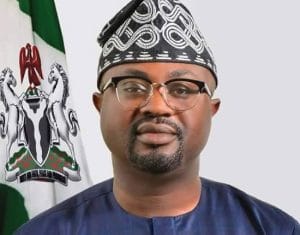 President Bola Tinubu is said to have appointed top experts to his cabinet, among them Dr. Olubunmi Tunji-Ojo, the Minister for Interior. Coming from the business world, he brought his zeal to excel into the ministry he oversees.
Tunji-Ojo has emerged as a beacon of transformative leadership in President Tinubu’s administration since his assumption of office. The interior minister has orchestrated unprecedented reforms, driving the various agencies under his purview toward a brighter horizon.
His commitment and dedication to service have led to significant achievements across the sectors within his ministry, marked by a resolute commitment to enhancing efficiency, professionalism, and progressive change.
One of his major achievements is the commendable feat at the Nigeria Immigration Service (NIS), where he cleared an overwhelming backlog of 204,332 passports within three weeks.
Beyond this, Tunji-Ojo’s visionary directives have heralded a new era of efficiency and service delivery. He pledged to revolutionize passport processing, promising a two-week timeline and the introduction of home and office delivery of passports starting in February 2024. His initiative to implement personal uploads of passport photographs further streamlines the application process, fostering convenience and accessibility.
The minister’s proactive stance on international relations demonstrates his commitment to reciprocity in visa processes, challenging inequitable privileges granted to foreign nationals while championing the rights of Nigerian applicants.
The minister also ensured that the welfare of paramilitary officers under his ministry is prioritized. He advocated for equitable compensation and initiated plans for a functional pension board, boosting morale and productivity within the ranks. His efforts signify a pivotal step toward aligning paramilitary salaries with those of the Nigeria Police Force (NPF), ensuring fairness and equity.
Tunji-Ojo’s resolve to decongest correctional facilities through the clearance of fines and compensations worth N585 million for 4,068 inmates showcased his compassionate approach to criminal justice reform. His dedication to transforming correctional homes into centers of rehabilitation signifies a paradigm shift from punitive measures to holistic rehabilitation, fostering hope and redemption.
With his sterling performances thus far, Dr. Olubunmi Tunji-Ojo is poised to elevate the Ministry of Interior to greater heights, fortifying the nation’s security and amplifying its role in shaping a brighter future for Nigeria.
In recognition of his outstanding performance, he was awarded the “Public Service Person Of The Year 2023” by Leadership Newspaper. Vanguard Newspaper also gave him an award in appreciation of his commitment to advancing the ministry.
Tunji-Ojo’s engagement with agencies, stakeholders, and international partners underscores his commitment to tackling illegal migration and organized crime, ensuring a safer and more secure nation. His tenure as Minister of Interior stands as a testament to his unwavering dedication and transformative leadership.
MOHAMMED IDRIS MALAGI: Minister of Information
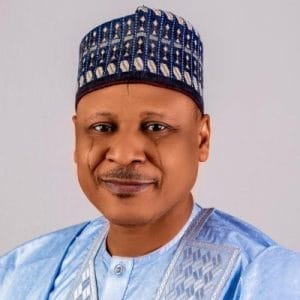 The appointment of Alhaji Mohammed Idris Malagi as the Minister of Information and National Orientation signifies a significant step toward advancing effective communication and fostering a cohesive national identity.
Alhaji Idris, a seasoned journalist with diverse expertise, is a dedicated and exemplary leader. These qualities make him an indispensable asset in moving the country forward.
In the past, most of those who served as information ministers have not been sincere in dealing with Nigerians in passing information about government activities. Information disseminated about government policies to the public is often either propaganda or half-truths and half-lies. This makes it difficult for the populace to understand the government’s direction and to support government programs.
Alhaji Idris started his assignment on a sound footing. Indeed, he’s building on his statement before the Senate when he appeared for screening. He introduced and presented himself to the lawmakers and Nigerian citizens, home and abroad, with a high level of professionalism. He clearly exhibited himself as a thorough public relations and media practitioner.
On his first day in office, he declared to Nigerians that the ministry would not need to tell lies to defend the government. Instead, he stated, “We will always say it as it is.”
This statement recalls Mahatma Gandhi’s counsel to those managing information in challenging times: “Choose the right path and always speak the truth.”
Idris further assured that the ministry and the government would be transparent and truthful while providing information. They would own up to any mistakes and make adjustments where necessary.
He promised to roll out a plan to protect the country’s image and give visibility to its actions and activities. He also hinted at the need for greater attention to the National Orientation Agency (NOA) as a vehicle for heightened public awareness efforts.
Experts have welcomed this break from the past when government officials thrived on unverifiable claims of achievements. Criticism of the government was often met with derision and stereotyping instead of fact-based refutation, and the right of media professionals to challenge false claims by the government was questioned.
Now, there appears to be a new era of professionalism and truth in the dissemination and management of public information. This aligns with the ethical code of conduct of all PR practitioners, a group Idris has been part of for nearly three decades.
However, Mohammed Idris’s task is not easy. He faces numerous challenges in explaining and defending the policies and actions of his boss, President Tinubu. Some of these policies have led to hardships, such as the removal of the subsidy on premium motor spirit (PMS), known as petrol, and the floating of the Naira, which has led to the national currency’s devaluation. Additionally, the state of insecurity remains a significant issue.
Since Alhaji Malagi took office, Nigerians are better informed about government activities. They are no longer kept in the dark or in suspense regarding what the government is doing.
He has remained committed and dedicated to his duty, informing the nation about government actions, inactions, and the reasons behind them.
From his track record of accomplishments to his dedication to positive change, Alhaji Idris embodies the qualities of a visionary leader who can help shape a more informed and cohesive Nigeria.
His proficiency in media entrepreneurship and public relations equips him to effectively communicate and engage with a wide range of stakeholders, an indispensable trait for advancing the Ministry of Information and National Orientation’s objectives.
OLADELE ALAKE: Minister of Solid Minerals
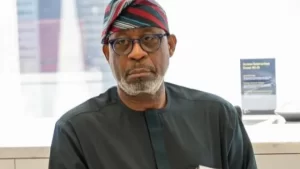 The Ministry of Solid Minerals Development (MSMD) has historically received little attention in Nigeria despite its potential to generate substantial revenue, co-existing with Steel Development as the Ministry of Mines and Steel.
There is no doubt that Nigeria is a country abundantly blessed with mineral resources present in almost every state, but the sector has faced underutilization, inefficient governance structures, illegal mining, and opacity.
The attention successive governments gave to the oil sector further marginalized the visibility of the solid minerals industry. However, a transformative shift occurred with the advent of President Bola Tinubu’s administration and the appointment of Dr. Dele Alake as the Minister of Solid Minerals Development.
Upon resumption, Alake initiated a seven-point agenda aimed at reforming the sector, restoring investor confidence, and renewing global interest.
He also identified eight priority minerals gold, baryte, iron ore, lead/zinc, coal, limestone, bitumen, and lithium as key focal points for intervention.
Within his first 100 days in office, significant milestones were achieved. One notable accomplishment is the signing of a Memorandum of Understanding (MOU) with the German firm Geo Scan GmbH. This strategic partnership involves deploying cutting-edge proprietary technology capable of exploring mineral resources up to 10,000 meters below the earth’s surface, at no cost to Nigeria.
The outcome will be the generation of comprehensive big data on the specified priority minerals and their deposits, aligning with the minister’s agenda.
According to a release issued by Segun Tomori, a special assistant to the minister on media, another pivotal development in Alake’s tenure is the launch of revised guidelines for community development agreements (CDA). The objective is to ensure that host communities benefit maximally from mining operations, while the government is paid royalties for economic development.
Alake emphasized the symbiotic relationship between mining companies and host communities, stressing the importance of a peaceful environment for the mutual benefit of all stakeholders.
As part of his commitment to transparency and accountability, Alake pledged to strengthen the ministry’s mines inspectorate. This move aims to verify the authenticity of mining agreements and explores the potential involvement of traditional rulers in signing agreements on behalf of host communities.
By addressing issues of governance, community engagement, and technological advancement, Alake is steering the Ministry of Solid Minerals Development toward a path of sustainable growth and development.
The minister’s dynamic approach signals a promising era for the solid minerals sector in Nigeria. The strategic alliances forged and the proactive measures implemented underscore a commitment to unlocking the sector’s vast potential and positioning it as a cornerstone of economic development in the country.
In a bold move towards reform, the minister announced the revocation of 1,633 mining licenses. This action was taken due to the operators’ default in paying stipulated annual service fees, exceeding the 30-day notice issued by the Mining Cadastral Office (MCO).
According to Sections 11 and 12 of the Nigerian Mineral and Mining Act (NMMA), the operators had a grace period which they failed to utilize. The minister emphasized a new era of accountability, warning against shortchanging the government in the payment of royalties and taxes, signaling the end of such practices.
Alake also issued a stern warning to illegal miners, declaring a commitment to enforcing the law under President Tinubu’s administration.
As part of the broader strategy to enhance security in the mining environment, plans for the establishment of mines police and a mine surveillance task force are being considered.
An indicator of this initiative was the visit of the Minister of Defence, HE Abubakar Badru, and his Minister of State, HE Bello Matawalle, to Alake’s office. Matawalle pledged unwavering support and collaboration with the Ministry of Solid Minerals Development, recognizing the sector’s crucial role in Nigeria’s economic development. Alake, however, emphasized that the new security architecture would leverage advanced technology to monitor mining sites covertly, detect intrusions, and provide rapid responses to mitigate potential threats.
Apart from domestic efforts, the minister has actively engaged the international community to explore investment prospects in a revitalized mining sector.
Diplomatic endeavors have yielded positive results, with a notable agreement signed in Australia. The deal entails free training for Nigerian mining professionals on modern mining technology and practices. Alake, representing Nigeria, and Australia’s Minister of Mines and Petroleum, Hon. Bill Johnston, inked the agreement, promising Nigerian miners access to training, study trips, and exchanges of mineral professionals. The collaboration is expected to attract foreign direct investment, positioning Nigeria as a competitive player on the global stage.
The decisive actions taken by Alake reflect a commitment to transparency, accountability, and the overall revitalization of the solid minerals sector in Nigeria.
The decision to revoke some licenses, the establishment of enhanced security measures, and international collaborations underscore a vision for sustainable growth and development in the mining industry.
In order to attract investment to Nigeria’s mining sector, Alake addressed the Mines and Money Conference in London. At the conference, he passionately advocated for the benefits of investing in Nigeria, emphasizing lower production costs resulting from surface mining and the vast untapped mineral wealth within the country.
At the meeting, Alake highlighted Nigeria’s geological diversity, boasting over 44 distinct mineral types in exploitable quantities across more than 500 locations. He underscored the global significance of lithium, recently recognized as a crucial strategic mineral, aligning with emerging trends.
The minister assured the audience that the Tinubu administration is actively removing bottlenecks hindering the ease of doing business in the sector. In addition, they are also addressing security challenges and prioritizing solid minerals beneficiation and adding value to the essential components for sustainable growth in the sector.
Alake’s compelling presentation generated substantial enthusiasm, leading to a high-level meeting with British Deputy Prime Minister Oliver Dowden. Dowden, who chairs the British National Economic Security Council, expressed interest in partnering with Nigeria on energy minerals, particularly lithium.
Also, the founder of Carousel Bio-energy, Jafar Hilali, pledged to facilitate investment by a consortium of British companies in the lithium value chain.
The collaboration aims to produce lithium battery-powered energy buses for the Nigerian domestic market. The British Deputy Prime Minister extended an invitation on behalf of the British government to President Tinubu to attend an African summit scheduled for 2024 to strengthen diplomatic ties.
On the sidelines of the London conference, a meeting with the United States Assistant Secretary for Energy and Natural Resources, Geoffrey Pratt, took place. Both leaders agreed to establish a joint team of officials to explore financing options for credit to mining firms and infrastructure projects. Pratt expressed satisfaction with the ongoing reforms announced by Alake, highlighting the United States’ interest in being Nigeria’s partner of choice in developing the solid minerals sector.
The renewed interest from the government has sparked excitement within the mining industry. Alake’s office has become a hub of activity as local and foreign investors eagerly visit, seeking opportunities to contribute to the development of the mining sector.