


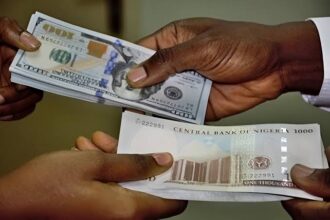



The United States will begin a new visa bond programme that requires some Nigerians and other African citizens applying for business and tourist visas to pay a refundable bond of up to $20,000.
The new policy will take effect on Monday, August 3, 2026, following the completion of a pilot programme launched in August 2025.
According to the US Department of State, the policy is aimed at reducing the number of visitors who remain in the United States after their visas expire. It also seeks to encourage countries to improve identity verification, information sharing, and the security of travel documents.
The US government said the programme is based on Executive Order 14159, titled “Protecting the American People Against Invasion,” which directs government agencies to strengthen immigration enforcement.
During the pilot phase, 50 countries participated, with applicants required to pay visa bonds of up to $15,000, depending on their circumstances. The State Department said the programme helped reduce visa overstays, with fewer than 50 recorded during the first 10 months of the pilot, compared to 45,488 overstays in 2024.
However, the programme also led to a sharp decline in visa applications. Visa approvals for the affected countries dropped by 83 percent between August 2025 and July 2026, as many applicants decided not to pay the bond. The pilot generated about $115 million in bond payments.
Under the new rules, consular officers will decide whether an applicant must pay a bond and determine the amount, which could be $10,000, $15,000, or $20,000.
The decision will be based on factors such as the purpose of travel, employment, income, and the applicant’s ties to their home country.
The bond will be refunded without interest once US immigration authorities confirm that the traveler left the country before the visa expired and complied with all visa conditions. Those who violate the rules will lose the bond.
The maximum bond amount will also be reviewed for inflation every seven years, starting from October 1, 2027.
Countries affected by the policy include Nigeria, Algeria, Tunisia, Benin, Cabo Verde, Côte d’Ivoire, Gambia, Guinea, Guinea-Bissau, Mauritania, Senegal, Togo, São Tomé and Príncipe, Angola, Burundi, Central African Republic, Djibouti, Gabon, Ethiopia, Tanzania, Uganda, Botswana, Lesotho, Malawi, Mauritius, Mozambique, Namibia, Seychelles, Zambia, and Zimbabwe.
Meanwhile, the US Mission in Nigeria has warned visa applicants not to use AI-generated or AI-edited passport photographs.
It said only recent, unedited photos taken within the last six months will be accepted, as immigration officials must be able to clearly identify the applicant.

