




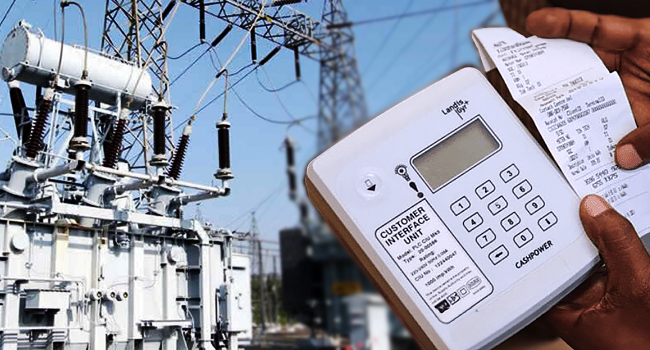
Electricity consumers in the country would soon bear the full brunt of what they consume as the Federal Government has commenced plans to migrate the power system into full cost reflective tariff (CRF).
The implication of this migration is that government’s subsidy on tariff would be completely removed, thus making the consumers to bear the full weight of the cost of electricity.
The Minister of Power, Chief Adebayo Adelabu gave the indication today, in Abuja, when he inaugurated the board of Nigerian Electricity Management Services Agency (NEMSA).
According to him, to ensure the continuity and the sustainability of the sector, such a step is necessary.
Adelabu also disclosed that the electricity infrastructure needs urgent attention, adding that some of the infrastructure are over 60 years old.
“We also talked about the infrastructural revamp of the sector. With over 60-year-old infrastructure across all the segments – from generation, transmission to distribution – I mean, we owe our country a duty to start renewing and revamping these infrastructural tools to levels that can guarantee uninterrupted and functional electricity supply,” he said.
The minister also revealed that as part of efforts to ensure regular power supply, the government has empowered sub-national governments to regulate all aspects of power sector activities within their sub-national territory.
This was as he assured that local government areas would soon be able to regulate power.
“The sub-national governments are now legally allowed to participate actively in all the sectors of the power sector. To date, about 17 states already have their regulatory autonomy. Which means they can regulate all aspects of power sector activities within their sub-national territory.
“Very soon, as we evolve this decentralisation objective, local governments will start showing interest in participating in this sector.
“When we talk about liberalisation, there is an increased presence of private sector investors in the power sector. Before, the National Electric Power Authority (NEPA), the Power Holding Company of Nigeria, (PHCN) and the transmission company of Nigeria (TCN) were all owned by the federal government,” he said.
On NEMSA board, the minister reminded the members of their responsibilities, saying that they must ensure that the agency is properly positioned to respond to emerging trends within the sector, including the growth of off-grid and renewable energy systems.
“Your task is to support management in scaling up its inspection and certification processes, deepening enforcement mechanisms and enhancing its task force operations to effectively combat the proliferation of substandard electrical materials in the market.
“You must also ensure that NEMSA is adequately positioned to respond to emerging trends within the sector, including the growth of off-grid and renewable energy systems, embedded generation and interconnected systems. The NEMSA that you left behind is no longer the same.
“The sector has transformed. We now have a sector that is governed by the Electricity Act of 2023 that has decentralisation and liberalisation as its focus. The activity of the power sector is no longer the exclusive jurisdiction of the federal government,” he pointed out.
He also stressed that the agency must tackle the use of substandard materials in the power sector, linking poor compliance with technical standards to issues such as grid collapse.
The newly inaugurated board, chaired by Ikechi Nwosu, acknowledged the challenges ahead, stating that the agency would require both increased manpower and advanced training to effectively regulate the sector.
NEMSA is responsible for enforcing technical standards and ensuring safety across Nigeria’s electricity supply industry, and the government’s directive signals a push for greater financial autonomy and operational efficiency within the agency.

