


Reports circulating on social media and several online platforms allege that a Nigerian businessman popularly identified as “Big Joe” was shot dead outside his shop in South Africa, an incident that has quickly sparked widespread reactions, emotional debates, and renewed concerns about the safety of foreign nationals living and working in the country.
While details remain unverified and official confirmation is still limited at the time of reporting, the story has already gained significant traction online, with many users linking it to broader tensions around xenophobia in South Africa.
According to the circulating accounts, the incident allegedly occurred outside the businessman’s place of work in a commercial area where he reportedly operated a retail business. Witnesses, as cited in online narratives, claim that armed individuals approached the location and opened fire before fleeing the scene. These accounts suggest that the attack happened suddenly and left bystanders in shock, though the exact sequence of events remains unclear due to the absence of verified police reports or independently confirmed eyewitness statements.
The identity of the victim, widely referred to as “Big Joe,” has not been fully established in official records available publicly, and different versions of the story are being shared across platforms. In some reports, he is described as a well-known Nigerian entrepreneur in his local business community in South Africa, while other accounts simply describe him as a shop owner without providing further background. This inconsistency has contributed to confusion about the authenticity and accuracy of the details being circulated.
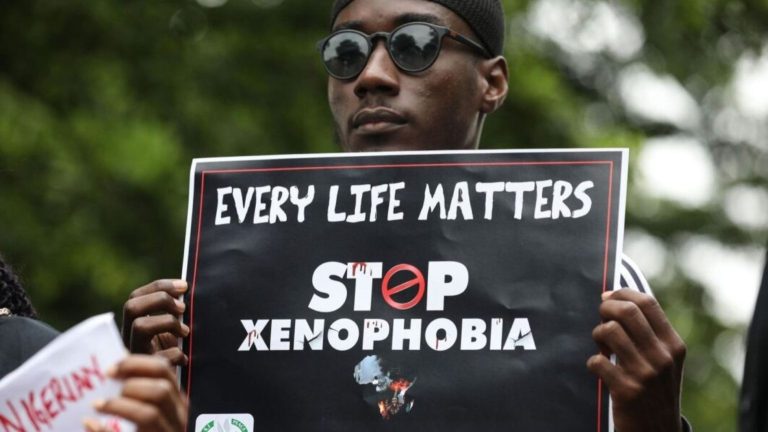
Despite the uncertainty surrounding the facts, the story has rapidly evolved into a broader discussion about xenophobia and the experiences of African migrants in South Africa. Many Nigerians and other Africans on social media have expressed anger and sadness over the alleged killing, interpreting it as another example of ongoing hostility faced by foreigners in certain parts of the country. Some commenters have drawn parallels with past incidents where foreign-owned shops were attacked or looted during periods of social unrest or economic tension.
Others, however, have urged caution, warning against jumping to conclusions before official investigations are completed. They emphasize that violent crime in South Africa affects both locals and foreigners alike and that attributing every such incident to xenophobia without verified evidence risks oversimplifying a complex security and crime landscape. South Africa continues to struggle with high rates of violent crime in some regions, which authorities have repeatedly acknowledged as a national concern not limited to any single group.
At the center of the online debate is the emotional impact of recurring reports involving African migrants who run small businesses in foreign countries. Many Nigerians abroad operate shops, convenience stores, and service-based businesses, often in busy urban or semi-urban communities. Because these businesses are highly visible and cash-based, they are sometimes perceived as vulnerable to armed robbery and targeted attacks, which further fuels anxiety when incidents like this are reported.
In this latest case, the alleged shooting has reignited conversations about the protection of foreign business owners and the effectiveness of law enforcement responses in such situations. Social media users have called for both Nigerian and South African authorities to provide clarity, investigate thoroughly, and ensure accountability if foul play is confirmed. Some have also appealed for stronger diplomatic engagement to address the recurring concerns raised whenever Nigerians are reportedly victims of violent crimes abroad.
On the other hand, community observers and analysts caution that misinformation can spread quickly in emotionally charged situations. In the digital age, graphic claims, edited images, and unverified video clips can circulate widely before being fact-checked, often shaping public perception long before official statements are released. This has led to repeated calls for restraint and responsible sharing of sensitive news, especially when lives, international relations, and ethnic sentiments are involved.
The alleged incident also highlights the broader issue of migrant entrepreneurship in South Africa, where many foreign nationals contribute to local economies by running small and medium-scale businesses. While these businesses provide livelihoods and services in various communities, they also operate in environments where competition, crime, and occasional social tension intersect. This combination can sometimes make foreign-owned shops more visible during disputes or criminal incidents, further intensifying public reaction when tragedies are reported.
As of now, no widely verified police statement has confirmed the identity of the victim or the exact circumstances surrounding the alleged shooting. Authorities in such cases typically conduct investigations before releasing detailed information, especially when there are conflicting reports or when social media activity precedes official communication. Until such confirmation is made public, many aspects of the story remain subject to clarification.
Meanwhile, reactions continue to pour in from different online communities. Some users are mourning what they believe to be another tragic loss of a Nigerian abroad, while others are urging patience and verification. Advocacy voices have also used the moment to highlight the need for improved safety measures for migrants and stronger reporting mechanisms when violent incidents occur.
The story of “Big Joe,” whether ultimately confirmed in its current form or later clarified, underscores how quickly local incidents can escalate into international talking points in today’s connected world. A single report, even when unverified, can trigger widespread emotional responses, political commentary, and renewed scrutiny of longstanding social issues.
For now, the situation remains developing. What is clear is that the incident has touched a sensitive nerve across online communities, particularly among Nigerians who see it as part of a broader pattern of concern regarding safety abroad. As investigations proceed and more information becomes available, the public will likely gain a clearer understanding of what truly happened outside the shop where the alleged shooting took place.