






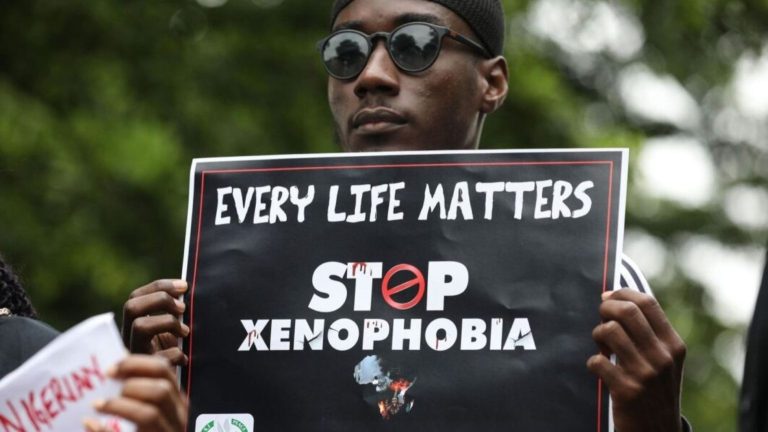
The South African government has assured residents that Tuesday, June 30, will proceed as a normal working day despite planned anti-immigration demonstrations expected to take place in parts of the country.
Authorities stated that government offices, schools, businesses and other public services would remain open and operate without interruption. The announcement was made to counter widespread reports on social media suggesting that South Africa would experience a nationwide shutdown linked to anti-immigration campaigns.
In an official statement posted on the government’s verified social media platforms, citizens were encouraged to continue with their daily activities and rely only on information released through official government channels. Officials stressed that there was no government-backed directive ordering undocumented migrants to leave the country by June 30.
The clarification follows growing mobilisation by anti-immigration organisations such as the March and March Movement and Operation Dudula. These groups have organised demonstrations demanding stricter immigration enforcement and stronger border controls, citing concerns over illegal migration, rising unemployment, crime and increased pressure on public resources.
Some of the campaigners have publicly declared June 30 as a deadline for undocumented migrants to leave South Africa. However, the government has firmly rejected those claims, insisting that immigration matters remain the sole responsibility of state authorities and must be handled according to existing laws.
Government officials warned that while peaceful protests are protected under the law, any attempt to threaten residents, force businesses to close, intimidate foreign nationals or encourage violence would attract legal action. Law enforcement agencies have been directed to ensure that demonstrations remain peaceful and within the limits of the law.
Justice and Constitutional Development Minister Mmamaloko Kubayi reaffirmed that there would be no disruption to economic or social activities across the country. She noted that security agencies had developed operational plans to maintain stability in areas where protests are expected.
The South African Police Service also confirmed that officers have been deployed to several identified hotspots. Police said they would maintain a visible presence to prevent violence, protect businesses and safeguard public infrastructure throughout the demonstrations.
President Cyril Ramaphosa has also publicly distanced his administration from the June 30 campaign. According to the president, immigration enforcement can only be carried out through lawful government institutions and not by private groups or individuals.
Ramaphosa urged citizens not to be influenced by misinformation or actions capable of creating instability. He emphasised that maintaining peace and protecting all residents remain priorities for the government.
South Africa has faced recurring tensions surrounding immigration for many years. High unemployment, which remains above 30 percent, has fuelled frustration among sections of the population who believe undocumented migrants contribute to job competition, criminal activity and increased demand for public services.
In recent weeks, demonstrations organised by Operation Dudula and similar groups have taken place in several communities, particularly around Johannesburg. Protesters have continued to demand stronger border security and stricter enforcement against illegal immigration.
Meanwhile, several civil society organisations have appealed for calm. The Ahmed Kathrada Foundation and other advocacy groups warned that inflammatory language surrounding immigration could escalate into xenophobic violence if not carefully managed.
Diplomatic missions representing several African countries have also advised their citizens living in South Africa to remain alert during the planned protests while avoiding areas where demonstrations are expected.
Authorities have also dismissed a series of viral social media posts claiming the government had officially endorsed the June 30 deadline.
According to officials and independent fact-checkers, many of the circulating notices contain fake government logos and appear to have been generated or manipulated using artificial intelligence to spread misinformation and create panic.
Police disclosed that they are closely monitoring online platforms for content capable of inciting violence or spreading false information. Security agencies are also working alongside private security companies to protect key infrastructure, commercial centres and public spaces.
South Africa has experienced multiple outbreaks of xenophobic violence over the past two decades, with foreign-owned businesses frequently becoming targets during periods of unrest. Security agencies say lessons from previous incidents have informed preparations for the June 30 demonstrations, with additional personnel deployed to prevent similar occurrences.
The government reiterated that immigration laws will continue to be enforced through lawful procedures rather than through public campaigns or unofficial ultimatums. Citizens and residents have been advised to carry on with their normal activities while remaining cautious and avoiding protest locations where possible.
Officials concluded by assuring the public that the state remains committed to maintaining public order, protecting lives and property, and ensuring that any immigration-related issues are addressed through constitutional and legal processes rather than intimidation or violence.

