




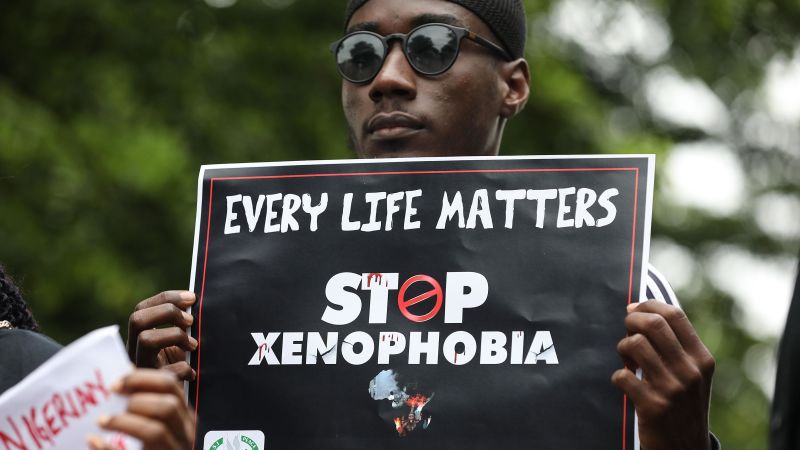
Thousands of foreigners living in South Africa are worried and uncertain as nationwide anti-immigrant protests begin today, June 30.
The protests follow weeks of tension, threats, and attacks against foreign nationals.
Anti-migrant groups had earlier given undocumented immigrants a June 30 deadline to leave the country. Reports indicate that at least three migrants two from Mozambique and one from Malawi have been killed during recent unrest.
Many migrants have decided to leave South Africa out of fear. Some said they received threats from neighbours, while others have been forced to leave family members behind.
Several African countries, including Nigeria, Ghana, Zimbabwe, Mozambique, Malawi, Kenya, and the Democratic Republic of Congo, have organised voluntary evacuation programmes for their citizens. Nigeria has already evacuated 324 citizens through two official flights.
South African President Cyril Ramaphosa has urged protesters to remain peaceful and obey the law. He stressed that while citizens have the right to protest, they do not have the right to threaten, intimidate, or attack others.
Ramaphosa noted that many foreign nationals live legally in South Africa, where they work, study, raise families, and contribute to the economy. He said they deserve protection under the country’s laws and constitution.
Security agencies have identified Gauteng, KwaZulu-Natal, Western Cape, and Eastern Cape as areas where violence could occur. Police have promised increased security and warned that anyone involved in violence will be arrested.
Business and labour groups have also criticised the anti-immigrant protests, arguing that migrants are being unfairly blamed for South Africa’s economic problems.
Labour unions said issues such as corruption, unemployment, weak governance, and economic stagnation are the real causes of the country’s challenges.
Business organisations have advised people to avoid unnecessary travel, especially in areas expected to experience protests, but they have not instructed businesses to close.
Many migrants remain anxious about what the day may bring.
Some are staying in temporary camps while waiting to return home. Others say they continue to face discrimination despite having legal documents allowing them to stay in South Africa.
KwaZulu-Natal Premier Thami Ntuli warned against violence, recalling the destruction caused by the July 2021 unrest.
He said South Africa cannot afford another period of chaos and urged residents not to allow protests to turn into xenophobic attacks.
Authorities continue to call for calm as the protests unfold, hoping to prevent further violence and protect both South Africans and foreign nationals living in the country.

