





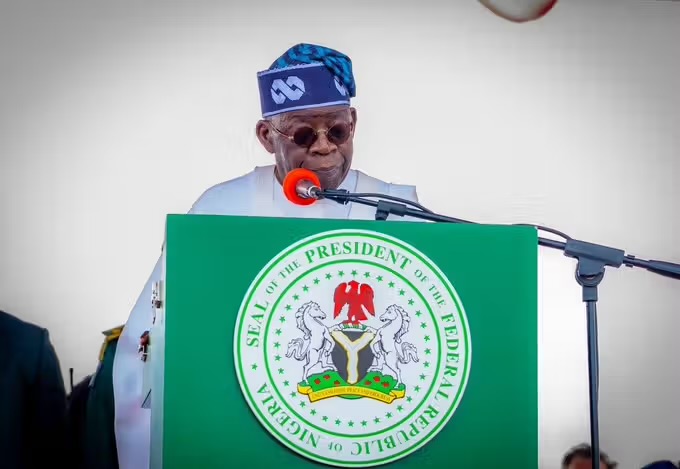
President Bola Ahmed Tinubu has approved a new set of appointments into strategic federal agencies, signaling another phase in his administration’s efforts to strengthen public institutions and improve service delivery across the country.
Among the most notable changes is the appointment of former House of Representatives member Abdulrazak Sa’ad Namdas as the new Director-General of the Border Communities Development Agency (BCDA), replacing the agency’s previous chief executive.
The latest appointments also include the selection of former Edo State lawmaker and legal practitioner Patrick Obahiagbon as Executive Director of the Niger Delta Power Holding Company (NDPHC). The appointments have generated significant political interest, with many observers describing them as part of a broader administrative restructuring aimed at injecting fresh leadership into critical government institutions.
The Border Communities Development Agency occupies an important position within Nigeria’s development framework. Established to improve the welfare of communities situated along the nation’s international borders, the agency is responsible for implementing projects that address the unique challenges faced by these often neglected areas. These projects include the construction of roads, schools, healthcare centres, water facilities, rural electrification schemes and other infrastructure intended to enhance the quality of life while strengthening national security.
By appointing Abdulrazak Namdas to lead the agency, the federal government is placing an experienced legislator at the helm of an institution tasked with promoting inclusive development. Namdas represented the Jada, Ganye, Mayo-Belwa and Toungo Federal Constituency of Adamawa State in the House of Representatives, where he built a reputation for active participation in legislative affairs. He also served as Chairman of the House Committee on Media and Public Affairs, a position that gave him extensive experience in public communication and government accountability.
Supporters of his appointment believe his legislative background and familiarity with public administration will help reposition the agency to deliver more impactful projects to border communities. These communities have long faced developmental deficits due to their remote locations, inadequate infrastructure and security concerns arising from cross-border activities. Many expect the new leadership to prioritize projects that directly improve livelihoods while supporting national efforts to secure Nigeria’s territorial boundaries.
The appointments announced by the presidency extend beyond the BCDA. Patrick Obahiagbon has been appointed Executive Director of the Niger Delta Power Holding Company, one of the country’s key institutions responsible for driving electricity infrastructure projects under the National Integrated Power Projects programme.
Obahiagbon is a familiar figure in Nigeria’s political landscape. A former member of the House of Representatives, he gained national attention during his years in parliament for his eloquent speeches and extensive use of sophisticated English vocabulary. Beyond his unique speaking style, he has remained active in legal practice and public affairs, making him one of the country’s well-known political personalities.
His appointment to the NDPHC is expected to bring fresh perspectives to the organisation as it continues efforts to improve electricity generation, transmission and distribution infrastructure across Nigeria. Reliable power supply remains one of the country’s most pressing development challenges, with industries, businesses and households continuing to seek more stable electricity services.
Alongside Obahiagbon’s appointment, President Tinubu also approved the reappointment of Jennifer Adighije Umeoji as the Managing Director of the Niger Delta Power Holding Company. Her return to the position signals the administration’s confidence in the ongoing reforms within the organisation and its commitment to maintaining continuity while introducing new leadership at the executive level.
The latest appointments come at a time when the Tinubu administration is pursuing reforms across various sectors of the economy. Since assuming office, the President has repeatedly emphasized the importance of efficiency, accountability and performance within government institutions. Several ministries, departments and agencies have witnessed leadership changes over the past year as part of efforts to improve governance and ensure that public institutions deliver on their mandates.
Government officials have consistently maintained that appointments into federal agencies are based on competence, experience and the ability to contribute meaningfully to national development. The administration has argued that effective leadership is critical to achieving the objectives of its Renewed Hope Agenda, which focuses on economic growth, infrastructure development, security, job creation and improved public services.
Political observers have nevertheless attached significance to the replacement of the former Director-General of the Border Communities Development Agency, who was widely regarded as being politically aligned with the Minister of the Federal Capital Territory, Nyesom Wike. While the presidency has not linked the appointment to political considerations, analysts believe changes in leadership across federal agencies often reflect broader administrative and political calculations that accompany governance.
Despite the political discussions surrounding the appointments, many stakeholders have urged the newly appointed officials to concentrate on delivering measurable results rather than political expectations. Development experts note that agencies such as the BCDA and NDPHC play strategic roles in improving the living conditions of millions of Nigerians and therefore require visionary leadership capable of translating government policies into practical outcomes.
For border communities, expectations remain particularly high. Residents in many of these areas continue to face limited access to quality healthcare, education, potable water, transportation and economic opportunities. Security challenges associated with illegal migration, smuggling and cross-border criminal activities have also increased the urgency of comprehensive development interventions. Effective leadership at the BCDA is therefore viewed as essential to addressing these longstanding issues.
Similarly, the Niger Delta Power Holding Company occupies a central place in Nigeria’s efforts to expand electricity access and strengthen the national power sector. Through investments in generation plants, transmission facilities and distribution infrastructure, the company contributes significantly to improving electricity supply across the country. Stakeholders hope that the newly constituted leadership team will accelerate ongoing projects while introducing innovative solutions to enhance operational efficiency.
The appointments also demonstrate the President’s continued emphasis on balancing continuity with renewal by retaining experienced officials where necessary while bringing new individuals into leadership positions. This approach is intended to preserve institutional knowledge while encouraging fresh ideas capable of improving performance.
As the new appointees prepare to assume their responsibilities, attention will increasingly shift from the announcement itself to the practical impact of their leadership. Nigerians will be watching closely to see whether the changes translate into improved infrastructure, more efficient public service delivery and tangible progress in sectors that directly affect citizens’ daily lives.
Ultimately, the success of these appointments will be measured not by political reactions but by the ability of the new leaders to fulfill the mandates of their respective institutions. Delivering quality projects, ensuring transparency, promoting accountability and responding effectively to the needs of Nigerians will remain the key benchmarks by which their performance is judged in the months and years ahead.

