

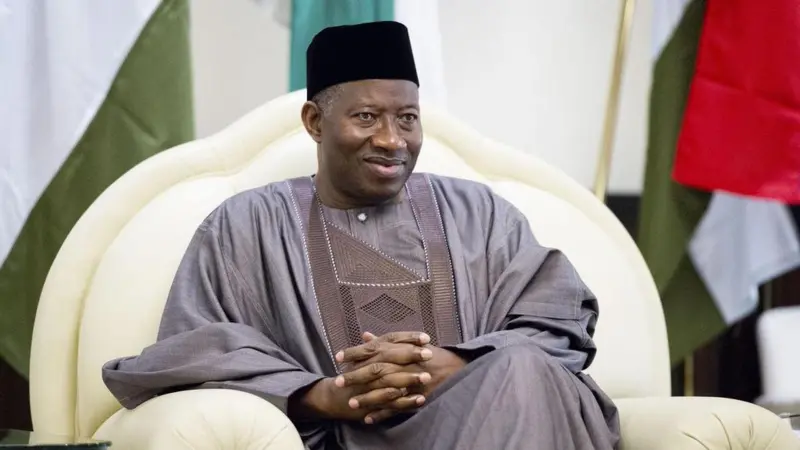
Former President Goodluck Jonathan has expressed concern over the increasing number of election-related court cases in Nigeria, saying the trend is weakening the country’s democracy.
Jonathan spoke on Tuesday at the 2026 Democracy Dialogue organised by his foundation in Bauchi.
He said Nigeria’s election dispute system is different from what is obtainable in many other African countries, where election results are usually settled through the ballot box rather than prolonged legal battles.
“The Nigerian situation is extremely different from most other African countries,” Jonathan said.
He described the level of election litigation in Nigeria as unusual and said court cases had become a regular part of the electoral process.
The former president recalled a conversation he had with a former Deputy President of South Africa when he was vice president. According to him, she was surprised that Nigerian politicians often go to court after losing elections.
“She asked me, ‘Jonathan, why would somebody go to court after losing an election?’” he said.
Jonathan explained that while election disputes are common in Nigeria, politicians in South Africa do not usually challenge election results in court after losing.
He said the judiciary must remain independent, fair and committed to the law. However, he noted that public confidence in some political judgments has declined.
Jonathan also said criminal offences committed during elections should be properly investigated and prosecuted. He, however, warned against turning every electoral disagreement into a prolonged legal battle.
He suggested that in some controversial cases, elections should be returned to the people to decide.
“In some highly controversial cases, it is better for the election to go back to the people,” he said.
The former president also criticised what he described as growing judicial involvement in the internal affairs of political parties, especially disputes over party primaries.
He said courts now sometimes decide who becomes a political party’s candidate and, in some cases, which political party should be recognised.
According to him, this has created uncertainty in Nigeria’s political system.
Jonathan maintained that political parties should have the main responsibility for selecting their candidates, while the courts should focus on interpreting and enforcing the law.
He stressed that democracy involves several important institutions, including political parties, electoral bodies, security agencies, the judiciary, civil society organisations, the media, election observers and voters.
He said Nigeria’s democracy would become stronger if election disputes were reduced and Nigerians regained confidence in both the electoral process and the judiciary.