

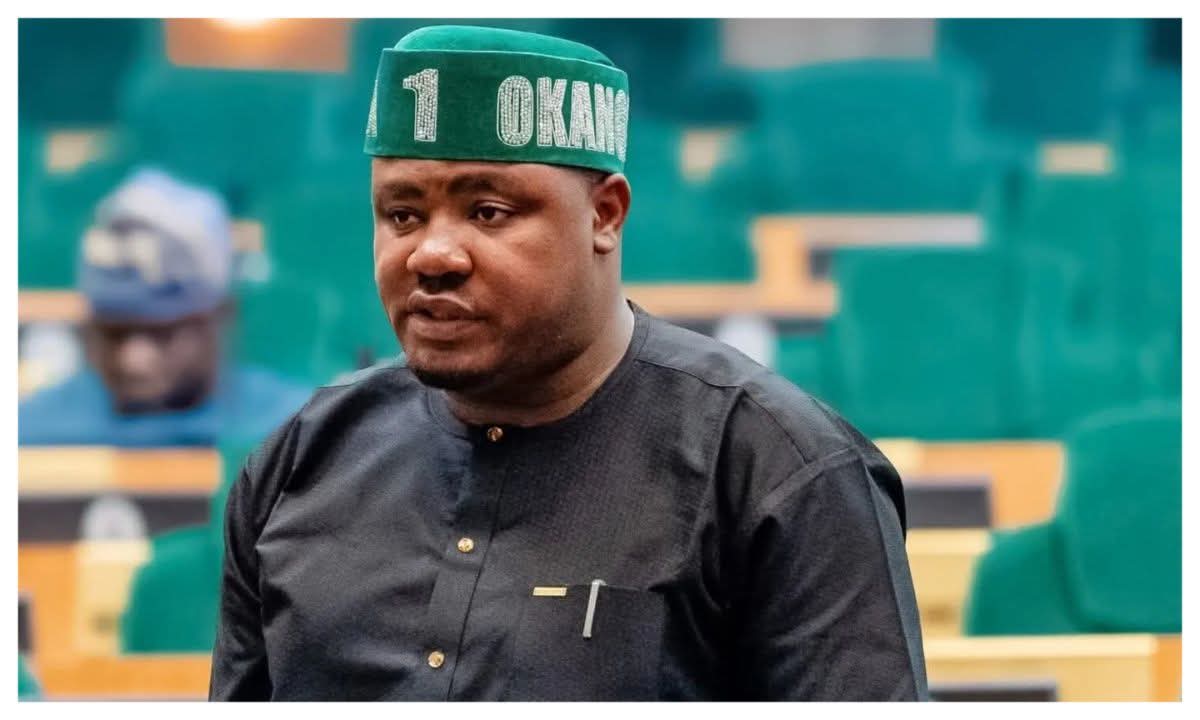
A fresh wave of political tension has emerged in the House of Representatives following allegations that CCTV footage may have contradicted the public claims made by Hon. Philip Agbese concerning his alleged endorsement of Hon. Ikenga Ugochinyere for the position of Minority Leader.
The dispute has further intensified an already sensitive leadership struggle within the opposition bloc in the Green Chamber, drawing attention from lawmakers, political observers, and party stakeholders.
The controversy reportedly began during a rowdy plenary session held on Thursday, when Hon. Agbese strongly denied any involvement in signing a document endorsing Hon. Ugochinyere for the Minority Leader position. His denial came amid growing debate over the leadership structure of the minority caucus following internal shifts triggered by political realignments, including the reported resignation of Hon. Kingsley Chinda, who was said to have moved toward a governorship ambition under the platform of the All Progressives Congress in Rivers State.
During his presentation on the floor of the House, Agbese insisted that he had no knowledge of, nor involvement in, any endorsement document being circulated in his name. He further argued that his signature had been forged and that the document being referenced by some lawmakers and online platforms did not reflect his position or consent. According to him, the situation represented a serious attack on his political integrity and credibility within the legislative chamber.
However, the matter took a more complicated turn when reports emerged suggesting the existence of CCTV footage allegedly obtained by Politics Nigeria. The footage reportedly showed Hon. Agbese visiting the office of Hon. Ikenga Ugochinyere on May 21, 2026, at approximately 5pm. According to the reports, the footage captured him in the process of appending his signature to an endorsement document, thereby raising questions about the consistency of his earlier denial.
The same footage was also said to have shown Agbese signing a register in the presence of Hon. Midala Usman, who represents the Askira-Uba/Hawul Federal Constituency in Borno State. These details have further fueled debate within political circles, with supporters and critics of both lawmakers interpreting the situation differently depending on their political alignment and interests within the minority caucus structure.
The emergence of the alleged footage came shortly after Agbese formally raised a motion of personal explanation during plenary. In his submission, he reiterated that his signature had been forged and insisted that he had not endorsed any candidate for the Minority Leader position. He also strongly denied receiving any financial inducement or benefit in exchange for supporting any leadership bid, stressing that his actions and decisions within the House had always been guided by principle and integrity.
“This is my integrity I am talking about,” he was quoted as saying during the heated session. “I never signed any document and I never received any amount of money, and I will never do.” His remarks were delivered with visible emotion, reflecting the seriousness with which he viewed the allegations circulating both within and outside the chamber.
Agbese further informed the House that he intended to formally submit the disputed endorsement list, along with related online publications, for proper investigation. He called for a transparent review process that would help clarify the authenticity of the signatures and ensure that no member was falsely implicated in political manoeuvring or internal caucus disagreements.
On the other hand, Hon. Ikenga Ugochinyere responded to the development by addressing the House and providing a different account of events. He explained that Agbese was not present during the minority caucus meeting where, according to him, about 61 lawmakers had endorsed his emergence as Minority Leader. Ugochinyere stated that the endorsement process was carried out in line with established caucus procedures and that Agbese’s absence at the meeting did not invalidate the broader consensus reached by participating members.
He further alleged that Agbese later visited his office personally, where he proceeded to append his signature to the endorsement document. This version of events directly contradicted Agbese’s claim that he neither signed nor consented to any such document, thereby deepening the disagreement between both lawmakers and their respective supporters.
The conflicting narratives quickly escalated tensions within the House, prompting intervention from the leadership of the chamber. Speaker of the House, Rt. Hon. Abbas Tajudeen, intervened by urging calm among members and directing that all disputes relating to the matter be resolved internally. He specifically instructed that the minority caucus should convene a dedicated meeting to address the disagreement, verify all claims, and arrive at a unified position that would preserve order and stability within the House.
The Speaker’s directive was aimed at preventing further escalation of the issue on the floor of the House, where debates had already become heated and disruptive. Lawmakers were reminded of the importance of maintaining decorum and allowing internal mechanisms of conflict resolution to function effectively without unnecessary public confrontation.
Meanwhile, the controversy has continued to generate significant reactions beyond the chamber.
Political analysts and commentators have expressed differing views on the implications of the dispute, particularly regarding the credibility of endorsement processes within legislative caucuses and the potential impact on opposition unity. Some observers argue that the situation highlights deeper divisions within the minority bloc, while others believe it reflects a routine political disagreement that will eventually be resolved through internal consultation.
The alleged CCTV footage has become a focal point in public discussions, although its authenticity and full context remain subjects of debate.
While some view it as potential evidence supporting claims of endorsement, others caution against drawing conclusions without official verification or a formal House investigation. The absence of an independent confirmation from neutral institutional sources has further complicated public understanding of the situation.
As the matter stands, no final determination has been made regarding the authenticity of the alleged signature or the validity of the endorsement list. The House of Representatives is expected to continue its internal review process through the minority caucus, where lawmakers will likely revisit the events in question and attempt to reconcile the conflicting accounts.
The outcome of this dispute may have broader implications for leadership alignment within the minority caucus, especially as political positioning continues to evolve ahead of future legislative and electoral cycles. For now, the situation remains unresolved, with both sides maintaining their respective positions while awaiting further investigation and possible clarification from House authorities.