



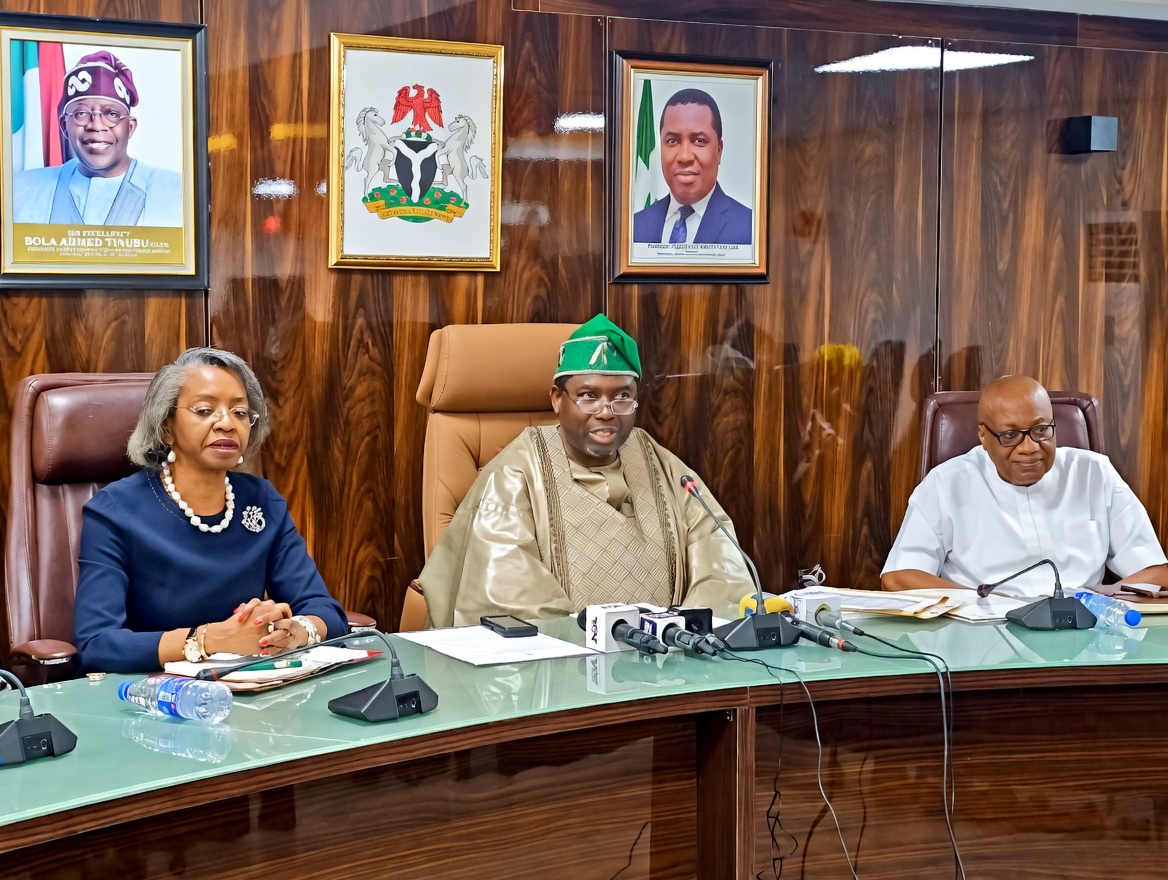
The swirling controversy around the credibility of Prof Joash Ojo Amupitan to remain as the Chairman of the Independent National Electoral Commission (INEC) is one that pundits and concerned Nigerians fear will detract from preparations for the 2027 general election, which is less than a year away.
What began as murmurs over alleged partisanship has now grown into a full blown crisis of credibility, raising urgent questions about trust, neutrality, and the future of the country’s electoral integrity.
At the centre of the storm are allegations linking Amupitan to partisan political activity, particularly through social media footprints that appear sympathetic to the ruling All Progressives Congress (APC).

Although the INEC Chairman has denied ownership of certain accounts, claims of digital traces such as emails, phone numbers, and overlapping identifiers have only deepened public suspicion. In today’s political climate, perception can be as powerful as proof, and the damage to public confidence is already evident.
Meanwhile, the caucus of the African Democratic Congress (ADC) in the House of Representatives on Monday called on President Bola Tinubu to immediately sack and prosecute Amupitan over allegations of partisanship ahead of the 2027 polls.
Raising concerns regarding man’s impartiality and neutrality to oversee a free, fair, and credible 2027 general election, they said It has been alleged that he previously made a partisan statement on his personal X account, wherein he expressed support for the ruling APC.
“Although INEC has denied that Prof Amupitan is the owner of the X account in question, digital forensic analysis and other online investigations by various sources suggest that the account is indeed his and that the phone number used to create it is registered in his name.
“This has raised concerns regarding his transparency, integrity, and trustworthiness, particularly given the critical nature of the office he holds, which will have far-reaching implications for the nation,” the caucus said.
The ADC Crisis Where Amupitan Threw Caution to the Wind
Over the past month, the leadership crisis within the ADC has deepened, with multiple court rulings, competing factions, and regulatory actions by INEC shaping the dispute.
The crisis can be traced to July 2025, when a coalition of opposition figures led by Atiku Abubakar, adopted the ADC as a platform for participation in the 2027 elections. This led to the emergence of a caretaker leadership headed by former Senate President David Mark, alongside former Osun State governor Rauf Aregbesola as national secretary, following the resignation of the previous party executives led by Ralph Nwosu.
INEC subsequently recognised this leadership in September 2025 and published its details on its official portal. However, the arrangement was challenged by a rival faction led by Nafiu Bala, a former national vice chairman of the party, who approached the Federal High Court in Abuja, arguing that he was the rightful leader in line with the party’s constitution.
The dispute triggered a series of legal battles. In a key development, the Court of Appeal, in a ruling delivered on 12 March, dismissed an interlocutory appeal filed by the Mark-led faction and ordered all parties, including INEC, to “maintain the status quo ante bellum” pending the determination of the substantive suit before the Federal High Court.
Following the ruling, INEC took a controversial step by withdrawing recognition of all factions claiming the party’s leadership. The commission also removed the names of the Mark-led National Working Committee from its portal. It announced it would no longer deal with any faction or monitor party activities until the court delivers a final judgment.
This decision effectively left the party without a recognised national leadership, sparking protests from both the Mark and Bala factions, each insisting on its legitimacy and accusing the electoral body of bias.
INEC Insists Court Order Guided its Action in ADC Crisis
Following protestations by the David Mark-led ADC and civil society organisations who feel that the democratic space is being conscripted and that the ruling APC is also trying to destabilise the only formidable opposition party left, Amupitan insisted that the electoral body acted based on the court’s order.
“INEC did not just take a decision; we didn’t just wake up one day and took this decision. There was something that led to it. There was an order of court,” he said.
The INEC chairman said the court of appeal gave a “clear directive” that all parties involved must avoid actions that could pre-empt the decision of the trial court.
He warned that ignoring court orders could have serious legal consequences, stating that the commission is trying to avoid a repeat of the electoral crisis previously experienced in Zamfara state.
According to him, “It happened in the past. We don’t want to conduct an election without this early warning. And at the end of the day, after you have won, the court again will come and declare the election invalid.”
Amupitan said such situations could result in candidates with fewer votes being declared winners. “And the implication is that the person with the second-highest number of votes will be declared the winner,” he said.
Law Versus Public Trust
With his previous online activities coming back to haunt him with a growing calls for his removal, a legal argument has emerged in Amupitan’s defence.
The Association of Legislative Drafting and Advocacy Practitioners (ALDRAP) has approached the court seeking interpretation of Section 156 of the Constitution, arguing that prior political affiliation should not disqualify an individual from serving as INEC chairman once neutrality is maintained in office.
While this position may stand on firm constitutional ground, it does not resolve the deeper concern of public trust. Democracy relies not only on legality but also on legitimacy.
The critical question remains whether Nigerians can trust an electoral umpire whose neutrality is widely questioned. Without that trust, even the most credible processes risk rejection.
What the Foregoing Portends for the 2027 Election
The implications of this controversy extend far beyond one individual. Opposition parties, civil society groups, and religious bodies have all raised concerns that retaining a controversial figure at the helm of INEC could undermine confidence in the 2027 elections.
The situation is further complicated by what many see as a pattern of recurring controversies during Amupitan’s tenure.
Silence from both Amupitan and the government has done little to calm the situation. At a time when transparency is essential, the lack of a strong and reassuring response only deepens suspicion.
Nigeria cannot afford uncertainty in its electoral system at such a critical period.
Ultimately, the issue is not just about Joash Ojo Amupitan. Yet, the allegations against him poses great threat to the elections he will be superintending over, partly in terms of voter confidence and apathy.
This is why those calling for his resignation may not be out of line. It is about safeguarding the credibility of the electoral process and preserving public confidence in critical democratic institutions. An electoral umpire must not be associated with any form of partisanship or bias for electoral integrity sake!