



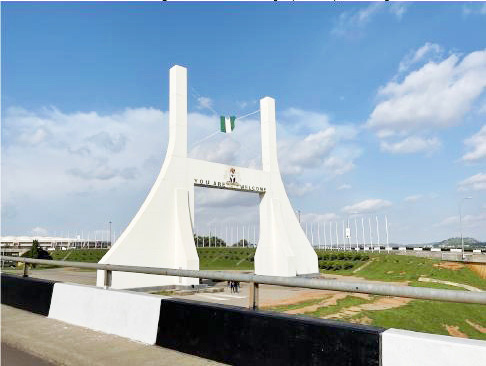
Abuja, Nigeria’s Federal Capital Territory, is experiencing a growing water challenge that continues to affect households, businesses and communities across the city and its satellite towns.
Despite the capital’s rapid development and billions of naira invested in water infrastructure, many residents still struggle to access reliable and affordable water.
The situation has become particularly concerning in satellite towns such as Gwagwalada, where rapid population growth has increased pressure on existing infrastructure. For many residents, turning on a tap and getting a steady supply of water is no longer something they can take for granted. Instead, households often depend on boreholes, water vendors and tankers to meet basic daily needs.
Recent reports have highlighted the gap between Abuja’s expanding population and the capacity of its water infrastructure. BusinessDay reported that residents and businesses across parts of the FCT continue to experience water shortages despite significant government expenditure on water projects. The report identified rapid urbanisation, ageing infrastructure, incomplete transmission networks and operational difficulties among the factors contributing to the crisis.
For residents of Gwagwalada, the situation is especially important. The area has developed considerably over the years and now accommodates a large and growing population. Its position as one of Abuja’s major satellite towns has attracted students, workers, families and businesses, increasing demand for essential infrastructure.
Yet, water supply has not always kept pace with this growth.
Residents who do not have access to functioning public water systems frequently have to purchase water from commercial suppliers. Water tankers and vendors have therefore become a common sight in communities where public supply is unreliable.
The financial consequences are significant.
A family that is already struggling with the rising cost of food, transportation, electricity and accommodation must also budget for water. For households with several children, the amount of water required for cooking, bathing, washing clothes, cleaning and other domestic activities can be substantial.
The burden is even heavier for low-income families.
While some residents can afford to install private boreholes or water storage systems, many others cannot. They are therefore dependent on vendors and whatever public supply becomes available.
Businesses are also affected by the shortage.
Hotels, restaurants, laundries, salons, schools, hospitals and other businesses require a consistent supply of water to function effectively. When public water becomes unavailable, business owners are forced to spend additional money purchasing water, maintaining boreholes or operating pumping systems.
Those additional costs can eventually be transferred to consumers through higher prices.
For residents, however, the problem goes beyond money. Water is directly connected to sanitation and public health.
A shortage can make it difficult for families to maintain adequate hygiene. When people are forced to conserve water, activities such as regular bathing, cleaning toilets, washing hands and properly cleaning cooking utensils can become more difficult.
There are also concerns about the quality of alternative water sources. Boreholes can provide an important solution, but groundwater quality depends on several factors, including the location and construction of the borehole and the condition of the surrounding environment.
This means that increasing dependence on alternative water sources should not replace the government’s responsibility to provide safe and properly regulated public water.
The water crisis is not restricted to Gwagwalada.
Several communities across the FCT have experienced periods of inadequate water supply. Residents in parts of the city and satellite towns have previously complained about dry taps and dependence on privately supplied water.
The situation reflects a wider challenge facing Abuja as its population continues to expand.
New residential estates, businesses and communities are being developed across the FCT, but infrastructure must grow alongside them. Roads, electricity, drainage, healthcare, schools and water systems all have to be planned around population growth.
Water is particularly important because it cannot be treated as an optional service.
A modern capital requires a reliable water network capable of serving both established neighbourhoods and rapidly developing satellite towns.
The Federal Government and the FCT Administration have continued to announce projects aimed at improving water supply.
In July 2026, President Bola Ahmed Tinubu commissioned the Bwari Township Water Supply Network. The project was presented as part of broader efforts to improve potable water access in the FCT, with plans to extend similar interventions to other satellite towns, including Gwagwalada, Kuje, Kwali and Abaji.
Such projects have generated hope among residents who have endured years of unreliable supply.
However, the real measure of success will not simply be the commissioning of water infrastructure. Residents will want to see whether water actually reaches their homes consistently.
Constructing a treatment plant is only one part of the process. Water must also be transmitted and distributed through functional pipelines. Pumping systems need reliable power, infrastructure needs regular maintenance and damaged pipelines must be repaired quickly.
There must also be effective monitoring to ensure that government investments produce the intended results.
Reports have previously pointed to administrative and operational difficulties within the FCT water system. Addressing these challenges could be just as important as constructing new infrastructure.
For Gwagwalada and other satellite communities, the need is urgent because population growth is unlikely to slow down.
Many people choose satellite towns partly because accommodation and living costs can be lower than in central Abuja. As more people move into these areas, demand for water will naturally increase.
If infrastructure does not keep pace, the current problem could become even more serious.
The authorities therefore face the challenge of planning beyond Abuja’s central districts. Satellite towns should receive adequate attention when infrastructure projects are designed because they are increasingly becoming important parts of the FCT’s urban system.
There is also a need for better communication between residents and water authorities.
When there is a disruption caused by maintenance, technical problems, electricity failures or other issues, residents should be informed promptly. Clear information would allow households and businesses to make alternative arrangements instead of being caught unaware.
At the same time, residents have a role to play in protecting available water infrastructure. Illegal connections, vandalism and careless disposal of waste can damage water systems and threaten water quality.
However, residents cannot solve a structural infrastructure problem on their own.
The responsibility ultimately rests with the relevant authorities to provide a reliable system and ensure that public funds allocated to water projects produce measurable improvements.
Abuja’s water crisis is therefore about much more than dry taps. It represents the pressure created when population growth, urban expansion and infrastructure development do not move at the same pace.
For residents of Gwagwalada, the expectation is simple: access to clean and affordable water should not be a luxury.
Families should not have to wake up wondering whether water will flow that day. Businesses should not have to spend excessive amounts simply to maintain basic operations. Children should not have to live in environments where inadequate water makes proper hygiene difficult.
As new water projects are commissioned across the FCT, attention must now shift from announcements to results.
The people of Abuja need functioning infrastructure, consistent distribution and sustainable management. If the government succeeds in connecting more communities to dependable water supply, the impact will extend beyond convenience. It will improve sanitation, support businesses, reduce household expenses and contribute to a healthier standard of living.
Until that happens, the water shortage will remain one of the pressing challenges confronting Abuja, particularly its rapidly growing satellite towns such as Gwagwalada.
The capital’s development may be visible in its roads, buildings and estates, but true development must also be measured by whether residents can access one of life’s most basic necessities: safe, reliable water.