



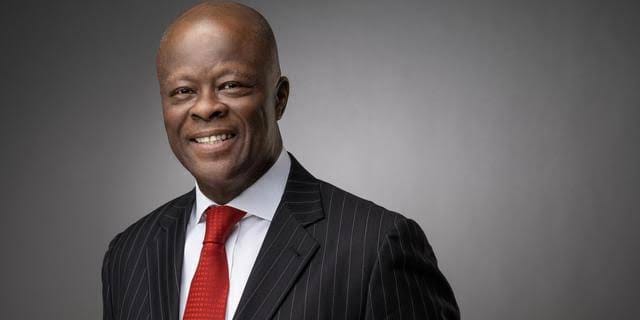
The Minister for Finance and Coordinating Minister for the Economy, Mr. Wale Edun, asserted on Tuesday that Nigeria could potentially earn over $13.3 billion annually by establishing a national asset register.
Edun made this announcement at the unveiling of the Afrinvest 2023 Nigerian Banking Sector Report in Lagos.
Represented by Dr. Armstrong Takang, the Managing Director of Ministry of Finance Incorporated (MOFI), Edun explained that the projected revenue from the national asset register could contribute three percent to Nigeria’s Gross Domestic Product (GDP), equivalent to $13.3 billion per year. He emphasized the tangible impact of this initiative, stating, “So, if we drive ourselves higher, we should have Assets Under Management (AUM) of not less than $150 billion.”
Edun highlighted the ongoing reform of MOFI by the federal government, pointing out that numerous asset classes had remained dormant for years. Many corporate assets, both domestically and internationally, have not generated revenue, prompting the need for change. Edun emphasized the importance of optimizing existing assets to deliver value and reduce reliance on external borrowings.

He stated,
“For the purpose of this exercise, our GDP is $450 billion, so we are talking about $13.3 billion extra revenues per year that can come from that exercise, and it is real. So, if we drive ourselves higher, we should have Assets Under Management (AUM) of not less than $150 billion.”
The minister added,
“So the message I leave with you today is, yes, we may have headwinds, we may have challenges, but I believe that if we manage our resources, our assets better by joining hands with the government to come up with proposals, we will get out of it.
“We have significant real estate assets both at home and abroad that are not yielding any revenues for us. That has to change. We have oil and gas assets that have been performing sub- optimally for decades and licences were given to people 10 to 15 years ago, but they have not invested a single dime in developing those assets. Whereas you have other investors that are looking to invest in those assets. We need to go back and determine how best to optimise those assets to deliver value for us. It will be cheaper for us to do that than relying on external borrowings.”
Addressing the challenges faced by the economy, Edun expressed confidence that effective resource management and collaboration between the government and private sector could lead to positive outcomes. He urged stakeholders to work together on proposals to overcome challenges.
Group Managing Director of Afrinvest Group, Ike Chioke, noted that the report provided a comprehensive analysis of the banking sector, addressing crucial issues, risks, and opportunities. Chioke highlighted the 2022 report’s accurate predictions, including subsidy removal and naira deregulation. He acknowledged the shock felt by many despite these predictions.
Don’t miss out on: NPA Announces $1.1 Billion Port Rehabilitation Project to Boost Trade Competitiveness
Chioke expressed optimism that the untapped potential in Nigeria’s banking, financial services, and overall economy could be optimized. He recognized early actions by the current government as signaling a new perspective for the economy’s trajectory. Chioke emphasized the need for comprehensive work and collaboration between the government and the private sector to revitalize Nigeria’s economy.
He said:
“In trying to push the economy, you are looking at multiple cycles that are running independently of themselves that need to be synchronised, from the monetary policy point of view to the fiscal policy, revenue from the NNPC and the debt side.
“We look at what the Debt Management Office is coping with and the fact that even with the recently passed N2.17 trillion supplementary budget, nobody has explained to us how the money is coming in.
“This is because we learned the central bank is not printing money for the government. So while we know that the revenue has finished, how are we able to do a supplementary budget without knowing the source of the income?”
In analyzing economic cycles, Chioke questioned the source of income for the recently passed N2.17 trillion supplementary budget, highlighting the importance of transparency in managing financial resources.