






Nigeria’s financial landscape is undergoing notable shifts as new data from the Central Bank of Nigeria (CBN) reveals significant changes in banks’ borrowing patterns, currency circulation, and deposits in the year 2023. The latest statistics from the CBN highlight a dynamic economic environment that has seen banks’ borrowings skyrocket and currency trends reshape the financial sector.
According to the CBN Money and Credit Statistics data, Nigerian banks’ borrowings from the Standing Lending Facility (SLF) of the CBN have witnessed a remarkable year-on-year (YOY) increase of 466 percent. These borrowings climbed to a staggering N268.3 billion as of the end of October 2023, up from N47.35 billion recorded in October 2022. This surge reflects an increased demand for financial support from the CBN by the country’s banking institutions.
The CBN operates two short-term lending windows for banks and merchant banks, namely, SLF and Repurchase (Repo) lending, which play a crucial role in managing the liquidity of the financial system.
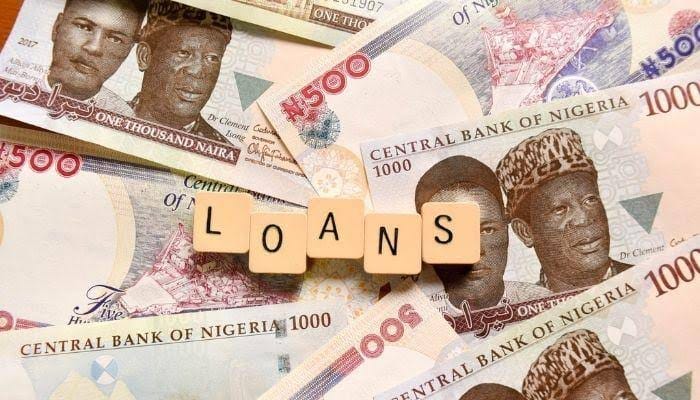
Another striking aspect of the CBN’s data is the fluctuation in currency outside banks. As of September 2023, this figure stood at N2.35 trillion, marking a remarkable 195 percent increase since January 2023. In the early months of 2023, currency outside banks had declined to N792.18 billion due to the redesign of the N200, N500, and N1000 notes. This redesign evidently had a significant impact on the circulation of currency in the economy.
Further insights from the CBN’s financial data reveal that banks’ deposits in the CBN Standing Deposit Facility (SDF) also experienced a substantial year-on-year growth. Deposits increased by an impressive 465 percent, reaching N5.29 trillion at the end of October 2023. This surge is compared to N935 billion in October 2022, indicating that banks are increasingly choosing to park their funds with the central bank.
While there have been significant fluctuations in domestic financial activity, the CBN’s foreign exchange sales to various sectors, including the Nigerian Foreign Exchange Market (NAFEM), Small and Medium Enterprises (SMEs), and Invisibles, have seen a year-on-year decline of 121 percent in the second quarter of 2023 (Q2’23). In the same period of the previous year (Q2’22), foreign exchange sales amounted to $3.7 billion, while in Q2’23, they dropped to $2.92 billion.
The CBN’s quarterly statistical bulletin for June 2023 reveals that foreign exchange sales in Q2’23 were distributed as follows: $1.2 billion in April, a 15.8 percent drop to $736.98 million in May, and a subsequent 27 percent increase to $939.39 million in June.
These developments in Nigeria’s financial sector indicate that the country’s banking landscape is in a state of flux. Banks are increasingly relying on the CBN for short-term funds, while currency trends and deposit patterns reflect ongoing changes in the country’s economic landscape. The decline in foreign exchange sales may have broader implications for the country’s external trade and economic stability.

