


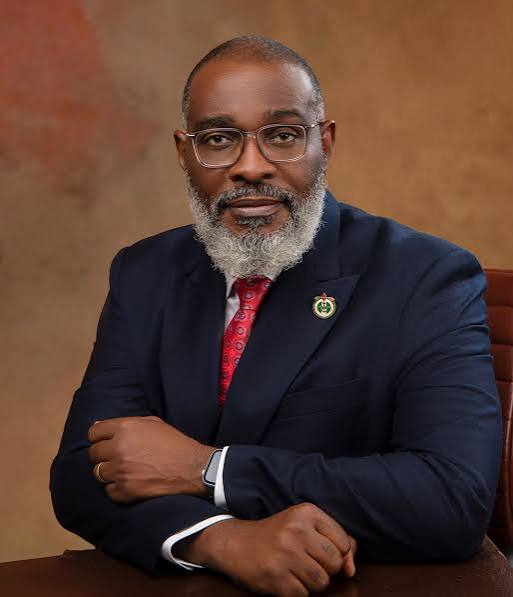
President Bola Ahmed Tinubu has taken another decisive step in his administration’s ongoing effort to address Nigeria’s persistent security challenges with the appointment of Adeyinka Fadewa as Special Adviser on Homeland Security.
The announcement, which has generated widespread reactions across political and security circles, is being viewed as a strategic move aimed at reinforcing the country’s internal security framework and improving coordination among the nation’s intelligence and law enforcement agencies.
The appointment comes at a critical time when Nigeria continues to battle multiple security threats across different regions. From insurgency in the North-East to banditry and kidnapping in the North-West and North-Central, as well as rising incidents of cybercrime and communal unrest in other parts of the country, the Tinubu administration has faced increasing pressure to deliver stronger and more coordinated responses to insecurity.
Presidential aides described the appointment as part of broader efforts to strengthen institutional capacity and ensure that the country’s security agencies operate with greater efficiency and intelligence-driven precision. The role of Special Adviser on Homeland Security is expected to serve as a central coordinating office that will bridge communication gaps among security institutions while providing direct strategic counsel to the President on urgent national security matters.
Adeyinka Fadewa is widely regarded as a seasoned expert with extensive experience in security intelligence, policy coordination, and national strategic planning. His background in both public administration and security operations has positioned him as a capable figure to navigate the complex terrain of homeland security in Nigeria.
According to sources within the presidency, Fadewa’s responsibilities will include coordinating intelligence-sharing among key security agencies, advising on policy implementation, identifying emerging threats, and recommending practical strategies to counter both traditional and modern security risks. His office is also expected to work closely with agencies such as the Department of State Services, the Nigerian Police Force, the Office of the National Security Adviser, and relevant military formations.
Security analysts say the appointment reflects President Tinubu’s understanding that modern security challenges require integrated responses rather than isolated actions from separate institutions. They argue that one of Nigeria’s longstanding security weaknesses has been poor synergy among agencies responsible for intelligence gathering and operational execution.
Analysts believe that by appointing a dedicated adviser focused specifically on homeland security, the administration is acknowledging the need for stronger collaboration, faster information processing, and a more proactive response structure.
The appointment has drawn positive reactions from many political observers who see it as a timely intervention. Several commentators noted that homeland security requires more than military force, emphasizing that effective prevention depends heavily on intelligence coordination, data analysis, policy consistency, and inter-agency trust.
Some experts also highlighted the growing complexity of non-traditional threats facing Nigeria, including cyberattacks, economic sabotage, digital fraud networks, and transnational organized crime. These threats, they argue, require sophisticated strategic planning and technical expertise, areas where Fadewa is expected to contribute significantly.
Within the presidency, there is confidence that Fadewa’s appointment will complement the broader security reforms already initiated by President Tinubu since assuming office. These reforms include restructuring operational command systems, strengthening border surveillance, investing in technological intelligence capabilities, and increasing collaboration with regional security partners across West Africa.
The administration has repeatedly stated that national security remains a top priority, stressing that economic growth and social stability cannot thrive in an atmosphere of fear and insecurity. President Tinubu has consistently assured Nigerians that his government will continue to pursue policies aimed at restoring public confidence and safeguarding communities across the federation.
Public reaction to the appointment has been mixed but largely hopeful. Many Nigerians have welcomed the decision as evidence that the government is listening to concerns about rising insecurity. Citizens in regions heavily affected by bandit attacks and kidnappings expressed optimism that stronger strategic coordination could lead to more effective interventions on the ground.
However, some critics have urged caution, insisting that appointments alone cannot solve systemic security problems unless accompanied by measurable operational reforms and accountability mechanisms. They argue that the true impact of the appointment will depend on how effectively Fadewa can translate strategy into practical outcomes.
Civil society groups have also called for transparency and regular public communication from the office of the Special Adviser. They believe that keeping citizens informed about national security efforts will help build trust and encourage public cooperation with law enforcement initiatives.
For Adeyinka Fadewa, the task ahead is both significant and demanding. He steps into office at a time when expectations are high and public patience is limited. Nigerians want results, not rhetoric, and the pressure to deliver meaningful improvements in security will be immediate.
As he assumes his new role, many will be watching closely to see how quickly he can establish effective coordination mechanisms and influence practical policy execution across the country’s fragmented security landscape.
The appointment signals President Tinubu’s determination to strengthen Nigeria’s homeland security architecture through strategic leadership and institutional reform.
Whether this latest move will translate into safer communities and measurable security progress remains to be seen, but it undoubtedly marks another important chapter in the administration’s evolving response to one of the nation’s most pressing challenges.