






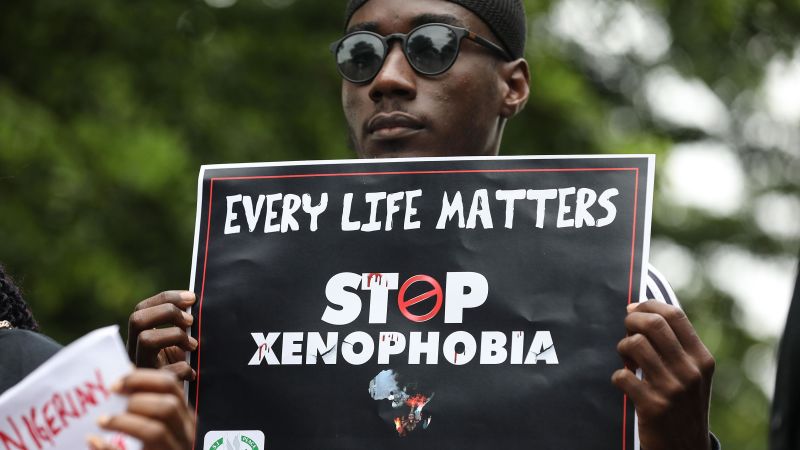
A fresh wave of xenophobic violence in South Africa has sparked outrage across the African continent, with disturbing reports emerging of foreigners being attacked, displaced, and even forced out of healthcare facilities. What began as scattered protests has evolved into a broader crisis, raising urgent concerns about safety, human rights, and the response of authorities.
In recent days, multiple cities including Durban, Cape Town, Gauteng, and KwaZulu-Natal have witnessed incidents targeting foreign nationals, particularly African migrants. Shops owned by foreigners have been looted or destroyed, while individuals have reported harassment, threats, and physical assaults. The situation has left many migrants living in fear, with some abandoning their businesses and homes to seek safety.
One of the most alarming developments is the reported expulsion of foreigners from hospitals. Witness accounts suggest that groups of protesters stormed certain public health facilities, demanding that non-South Africans vacate the premises. Patients who had come seeking urgent medical care were allegedly forced to leave, regardless of their condition.
This escalation has drawn sharp condemnation from human rights advocates, who argue that denying medical access crosses a dangerous line and violates basic humanitarian principles.
For many affected individuals, the hospital incidents represent a new and deeply troubling phase in xenophobic violence. Unlike attacks on businesses or homes, healthcare spaces are traditionally regarded as neutral and protected environments. The idea that vulnerable patients could be chased out of treatment centers has intensified fears among migrant communities and raised questions about the ability or willingness of authorities to maintain order.
The Nigerian community has been particularly impacted. Reports indicate that at least two Nigerians have lost their lives in separate incidents linked to the unrest. In response, the Nigerian government has issued advisories urging its citizens in South Africa to remain cautious, avoid public gatherings, and limit movement. However, some Nigerians both at home and abroad have criticized the response as insufficient, calling for stronger diplomatic action and clearer protective measures.
The crisis has also begun to strain diplomatic relations. Several African countries have voiced concern over the treatment of their citizens, with some demanding accountability and swift intervention. The situation has revived painful memories of past xenophobic outbreaks in South Africa, where tensions between locals and foreign nationals have periodically erupted into violence.
At the heart of the unrest are long-standing socio-economic challenges. South Africa continues to grapple with high unemployment, inequality, and pressure on public services. In this climate, foreign nationals are often scapegoated, accused fairly or not of taking jobs, overburdening infrastructure, or contributing to crime. While these perceptions are widely disputed, they have nonetheless fueled resentment and, in some cases, organized hostility.
Analysts warn that the repetition of such violence points to deeper systemic issues that have yet to be addressed. Community frustrations, political rhetoric, and weak enforcement against perpetrators have combined to create an environment where xenophobic sentiments can flare up quickly.
Without meaningful intervention, there is concern that these cycles of violence will continue.
The South African government has responded by promising a crackdown on those responsible for the attacks. Officials have pledged to arrest and prosecute offenders, while also engaging community leaders in efforts to calm tensions. Security forces have been deployed in affected areas, but critics argue that these measures often come too late, after significant damage has already been done.
Human rights organizations are urging authorities to go beyond reactive measures and implement long-term strategies to combat xenophobia. These include public education campaigns, stronger legal protections for migrants, and efforts to address the economic conditions that contribute to social tension. There are also calls for regional cooperation, with African governments working together to ensure the safety and dignity of their citizens across borders.
For the victims, however, the immediate concern is survival. Many displaced individuals are seeking temporary shelter, relying on community networks or assistance from embassies. Business owners face financial ruin after losing their livelihoods, while families struggle to access basic necessities in an increasingly hostile environment.
The reports of foreigners being chased from hospitals have added urgency to the crisis, highlighting the human cost of unchecked xenophobia. As the situation continues to develop, the focus is shifting toward whether authorities can restore order and rebuild trust, or whether the violence will escalate further.
Ultimately, the unfolding events in South Africa serve as a stark reminder of the fragility of social cohesion in times of economic strain. They also underscore the need for decisive leadership and collective responsibility in protecting the rights of all individuals, regardless of nationality. Until meaningful solutions are implemented, many migrants will remain caught in a cycle of fear and uncertainty, hoping for safety in a place they once called home.

