




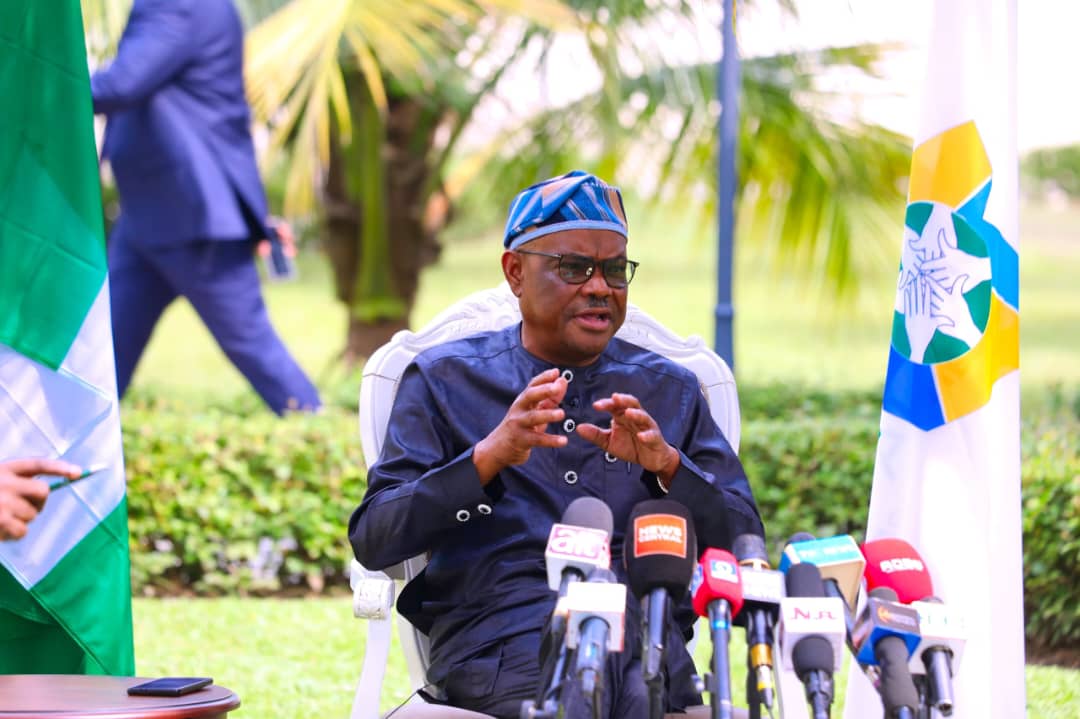
Minister of the Federal Capital Territory (FCT), Nyesom Wike, has once again stirred public debate after declaring that politics and the church are built on entirely different principles, insisting that success in one does not automatically translate into competence in the other.
His comments have reignited conversations across political and religious circles, with many Nigerians weighing the relationship between faith, leadership, governance and the realities of political life. While some believe political leaders should be guided primarily by religious values, others argue that governing a diverse society requires a different set of skills and responsibilities.
Speaking during a public engagement, Wike emphasized that every profession, vocation and calling has its own standards, expectations and operational rules. According to him, people often make the mistake of assuming that because someone is religious or comes from a religious background, they are naturally equipped to thrive in politics.
Drawing from his personal experience, the FCT Minister noted that although he is a Christian and was raised by a pastor, he has never claimed to be a pastor himself because ministry is a distinct calling with its own responsibilities.
He explained that being born into a religious family does not automatically confer the spiritual authority or qualifications required to lead a congregation. In the same way, he argued, political leadership demands its own unique abilities, experience and understanding.
According to Wike, politics should not be viewed through the same lens as religious service because both fields operate under different realities. While the church focuses on spiritual guidance, morality and worship, politics revolves around governance, negotiation, public administration, policy-making and managing competing interests within society.
He stressed that anyone seeking to become a politician must understand the rules that govern political engagement rather than expecting political decisions to mirror the structure of religious institutions.
The minister maintained that every profession requires dedication, training and an understanding of its guiding principles. Just as pastors are expected to study theology, shepherd congregations and uphold religious doctrines, politicians must understand governance, public policy, lawmaking and the complexities of representing diverse interests.
Wike also used the opportunity to respond to critics who have expressed frustration over recent political developments. According to him, many individuals commenting on politics often do so from a theoretical standpoint without appreciating the realities faced by those actively involved in governance.
He suggested that political leadership involves difficult choices that are not always visible to members of the public. Decisions made by elected officials and government appointees, he argued, often require balancing competing interests, managing limited resources and addressing complex social and economic challenges.
The minister implied that judging politics solely through emotional or idealistic expectations may not provide a complete understanding of how governments function. Instead, he encouraged a more practical appreciation of the political process and the responsibilities that come with leadership.
His remarks have generated mixed reactions among Nigerians.
Supporters argue that Wike’s comments reflect the practical nature of governance. They believe politics requires negotiation, compromise and strategic decision-making, qualities that differ significantly from the responsibilities of religious leaders whose primary focus is spiritual development.
According to this school of thought, effective governance cannot rely on idealism alone because political leaders must often make decisions that affect millions of people with varying beliefs, cultures and expectations.
Others believe the minister’s statement serves as a reminder that competence should be assessed based on an individual’s ability to perform the duties of a particular office rather than their religious identity.
They argue that being a devout Christian or Muslim does not automatically prepare someone for the demands of public administration, just as holding political office does not qualify an individual to lead a religious congregation.
However, critics insist that while politics and religion have different structures, ethical values should remain central to leadership. They argue that integrity, honesty, compassion and accountability—qualities often emphasized by religious teachings—are equally important in government.
Some observers believe public officials should continue to draw inspiration from their faith while recognising that governance requires decisions that serve citizens of different religious backgrounds.
The discussion has also reopened broader conversations about the relationship between religion and politics in Nigeria.
As one of the world’s most religious countries, Nigeria often witnesses political campaigns and public debates influenced by religious sentiments. Political candidates frequently reference their faith, while religious leaders sometimes play significant roles in shaping public opinion during elections and national discussions.
This close interaction between religion and politics has often produced differing opinions about how much influence religious institutions should have on governance.
Some analysts believe political leaders should be guided by moral principles rooted in faith but must ultimately govern according to constitutional provisions, democratic institutions and the rule of law.
Others maintain that separating religious expectations from political realities allows leaders to focus on policies that benefit the wider population regardless of religious affiliation.
Wike’s latest remarks have therefore become more than a personal reflection; they have evolved into a national conversation about leadership, qualifications and public expectations.
The comments also highlight the growing public interest in understanding what makes an effective political leader. While religious character remains important to many voters, issues such as competence, experience, vision, accountability and the ability to deliver development continue to dominate discussions ahead of future elections.
Political observers believe debates like these are likely to persist as Nigerians continue to demand better governance while also expecting leaders to uphold strong moral standards.
Whether viewed as a practical lesson on governance or a controversial political statement, Wike’s position has once again placed him at the centre of national discourse.
As reactions continue from political stakeholders, religious leaders and ordinary citizens, the conversation underscores the enduring challenge of balancing faith, ethics and the realities of democratic governance. Ultimately, the minister’s comments have encouraged renewed reflection on the distinct roles of politics and religion, while reminding Nigerians that leadership in any field requires its own unique preparation, responsibilities and understanding.

