




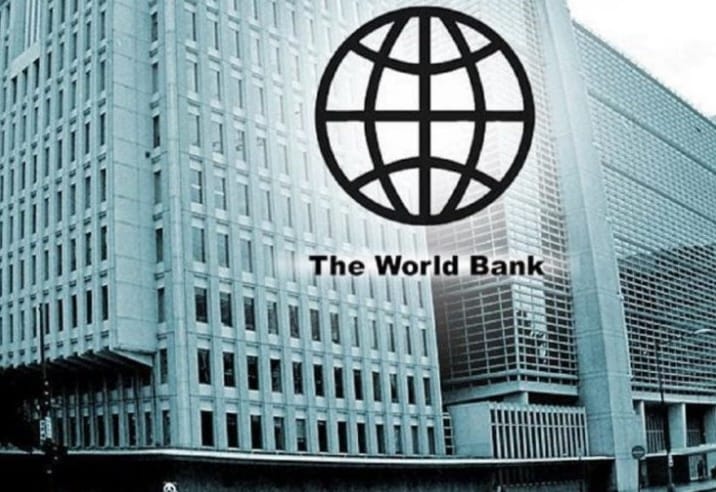
The World Bank is expected to meet on Friday, December 13, 2024, to decide on approving a $500 million loan to Nigeria. This funding, aimed at boosting rural access and agricultural marketing, represents a significant component of the Nigerian government’s efforts to bridge the development gap between rural communities and the larger economy.
The loan falls under the Rural Access and Agricultural Marketing Project – Scale Up (RAAMP), which is designed to enhance connectivity and improve market access for farmers and rural dwellers. According to documents from the Washington-based institution, the initiative will focus on the creation of infrastructure and systems that facilitate the seamless transportation of goods and services between communities and broader marketplaces.
To participate in this program, Nigerian states must fulfill strict prerequisites. Subnational governments are required to establish a fully functional Roads Fund and Roads Agency, complete with appointed boards, staff, and adequate administrative funding provisions in their budgets.
Previously, state eligibility under RAAMP merely required the drafting and submission of Road Fund and Roads Agency bills to state legislatures.
The new framework, however, mandates these institutions be fully operational before states can benefit.
Beyond infrastructure, the project also seeks to promote gender equity within the transport sector.
The World Bank document notes, “RARAs [Rural Access and Agricultural Marketing Projects] offer an opportunity to foster women’s representation in the transport sector.” This reflects a broader commitment by the lender to integrate social inclusion into development projects.
If approved, this will mark the 10th World Bank loan project secured under President Bola Ahmed Tinubu’s administration. Since assuming office 16 months ago, Tinubu’s government has obtained $6.45 billion in loans from the World Bank, with the amount set to rise following recent approvals of $1.57 billion for various initiatives.
Debt Profile and Rising Concerns
Nigeria’s borrowing from the World Bank has been substantial in recent years. Data reveals that in the past five years, the institution approved 35 loans for Nigeria, totaling $24.088 billion.
These loans have funded critical sectors, including $750 million for power, $500 million for women’s empowerment, $700 million for girls’ education, $750 million for renewable energy, $1.5 billion for economic stabilization reforms, and $750 million for resource mobilization reforms.
However, the nation’s growing debt profile is raising alarms among experts and former leaders. Nigeria’s total public debt had surged to ₦134.3 trillion as of June 2024, and further borrowing will likely increase this figure. Former President Olusegun Obasanjo has expressed concerns, warning that the rising debt poses significant challenges for future generations.
Similarly, Muda Yusuf, CEO of the Centre for the Promotion of Private Enterprise (CPPE), has criticized the government’s borrowing habits amid Nigeria’s persistent infrastructural deficits.
He cautioned that unchecked debt accumulation could cripple the country’s financial stability and economic prospects.
Implications for Nigeria’s Economy
While the $500 million loan has the potential to transform rural development and boost the agricultural sector, it also underscores the delicate balance Nigeria must maintain between addressing immediate developmental needs and ensuring long-term fiscal sustainability.
The Tinubu administration has justified these loans as essential for infrastructure and economic reforms, arguing they are necessary for fostering economic growth and reducing poverty.
If the World Bank approves the loan, it will reinforce its support for Nigeria’s developmental priorities. However, as Nigeria continues to depend heavily on external borrowing, questions about debt repayment capacity and economic management remain at the forefront of national discourse.
This loan, like previous ones, will be instrumental in addressing some of Nigeria’s critical challenges, but its effectiveness will largely depend on how efficiently it is utilized and whether it achieves its intended developmental goals.
If Nigeria secured the loan it would be the 10th time that the country would be getting such loan under the present administration.

