




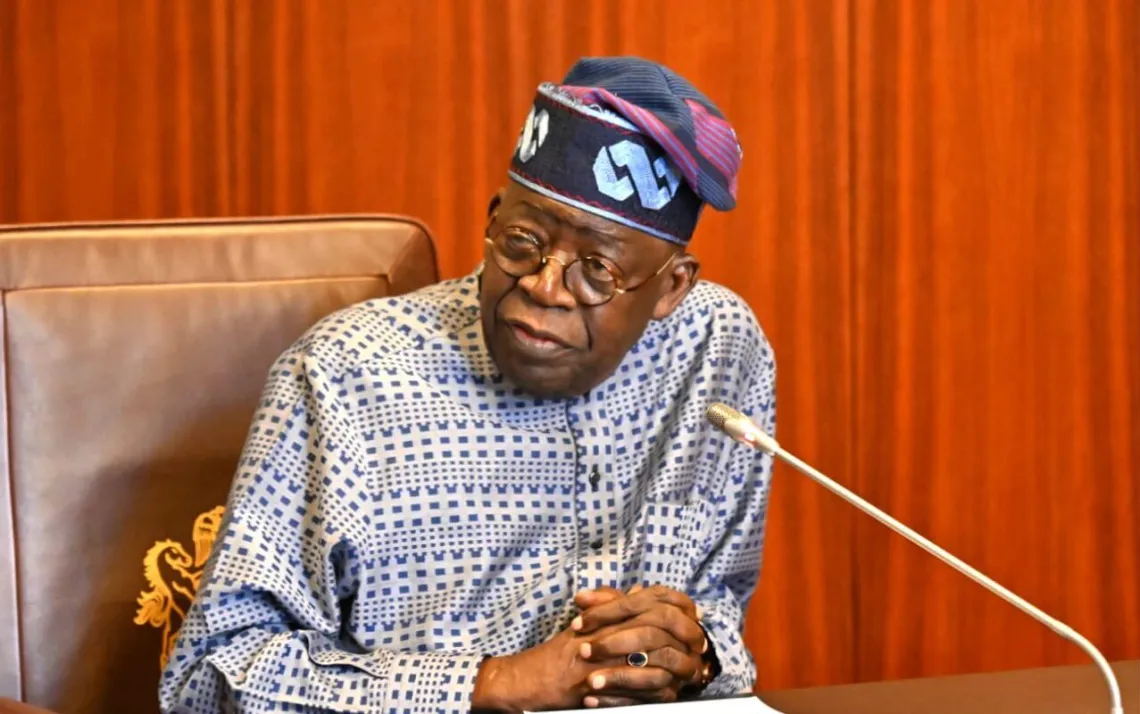
President Bola Tinubu has declared that the ongoing transformation of the Federal Capital Territory (FCT) is designed to benefit every resident, regardless of where they live, insisting that development in Abuja will no longer be limited to the city’s most affluent districts.
The President said communities across the six area councils, including satellite towns, are central to his administration’s vision of building a modern, inclusive and economically vibrant capital.
Speaking during the inauguration of key infrastructure projects in Abuja, Tinubu said the era when government investments appeared concentrated in elite districts such as Asokoro and Maitama should give way to a more balanced approach that prioritises all communities. According to him, the true measure of governance lies in ensuring that every citizen has access to quality infrastructure and opportunities that improve daily life.
The President noted that roads, bridges, public lighting and other critical infrastructure being delivered across the FCT are intended to connect communities, stimulate economic activities and improve the quality of life for residents. He explained that expanding development beyond the city centre would create more opportunities for businesses, reduce travel time and encourage investments in areas that had previously received less government attention.
Tinubu praised the Minister of the Federal Capital Territory, Nyesom Wike, for driving what he described as a new phase of infrastructure renewal across Abuja. He commended the FCT Administration for executing projects that link communities and improve mobility, adding that such investments demonstrate the government’s commitment to inclusive development rather than selective progress.
According to the President, infrastructure remains one of the strongest foundations for national growth. He said well-constructed roads and modern public facilities not only make transportation easier but also support agriculture, commerce, education and healthcare by making it easier for people and goods to move across communities. He stressed that improving connectivity within the FCT would strengthen economic activities while making life more convenient for residents.
Tinubu also pointed to the importance of developing satellite towns alongside the city centre. He said many workers who contribute to Abuja’s economy live outside the central districts and deserve the same level of attention from government. By extending infrastructure to these communities, the administration hopes to reduce pressure on the city while creating more balanced urban growth throughout the territory.
The President further highlighted ongoing efforts to improve public safety through better infrastructure. He noted that expanded street lighting, upgraded roads and improved public facilities contribute to safer communities by enhancing visibility and making emergency response easier. He added that the administration remains committed to projects that directly improve the everyday experiences of residents.
Beyond transportation, Tinubu said the government’s investments are expected to encourage private sector participation in housing, retail, hospitality and other sectors. Better roads and public services, he explained, make previously underserved communities more attractive to investors, creating employment opportunities and boosting local economies. He expressed confidence that sustained infrastructure development would generate long-term economic benefits across the FCT.
The President reiterated that the Renewed Hope Agenda places strong emphasis on inclusive growth and equitable access to development. He maintained that every community, regardless of its location or population, deserves infrastructure that supports economic prosperity and social well-being. According to him, the administration will continue to identify projects that have meaningful impacts on ordinary Nigerians while ensuring prudent use of public resources.
Tinubu also appealed to residents to protect public infrastructure from vandalism and misuse. He observed that government investments can only deliver lasting benefits when citizens take ownership of public assets by using them responsibly and reporting acts capable of damaging them. He said protecting roads, streetlights and other facilities would reduce maintenance costs and allow government resources to be directed toward additional development projects.
The President acknowledged that infrastructure development is a continuous process requiring patience, planning and sustained investment. While recognising that there is still more work to be done, he assured residents that the government remains committed to completing ongoing projects and initiating new ones where necessary. He said every completed project represents another step toward building a capital city that serves all its residents fairly.
Observers say the administration’s emphasis on extending development beyond traditional high-income districts reflects growing recognition of the importance of integrating satellite communities into Abuja’s overall growth strategy. As the population of the Federal Capital Territory continues to expand, investments in roads, bridges, drainage systems and public utilities are increasingly viewed as essential to supporting sustainable urban development.
Residents across different parts of the FCT have welcomed the completion of several infrastructure projects in recent months, expressing hope that improved road networks and public services will ease transportation challenges and encourage further investment in their communities. Many believe that continued attention to underserved districts will contribute to more balanced development across the territory.
As work continues on additional infrastructure projects, the Federal Government says its objective remains clear: to build a Federal Capital Territory where development is not defined by postcode or social status, but by the needs of the people. Tinubu maintained that every district, from the city centre to the farthest satellite town, deserves modern infrastructure that promotes opportunity, safety and economic growth.
With several projects already completed and more under construction, the administration believes Abuja is gradually evolving into a capital that reflects inclusive national development. The President expressed confidence that sustained investment, responsible leadership and public cooperation will ensure that every district benefits from the transformation taking place across the Federal Capital Territory, fulfilling the government’s promise that no community will be left behind.

