



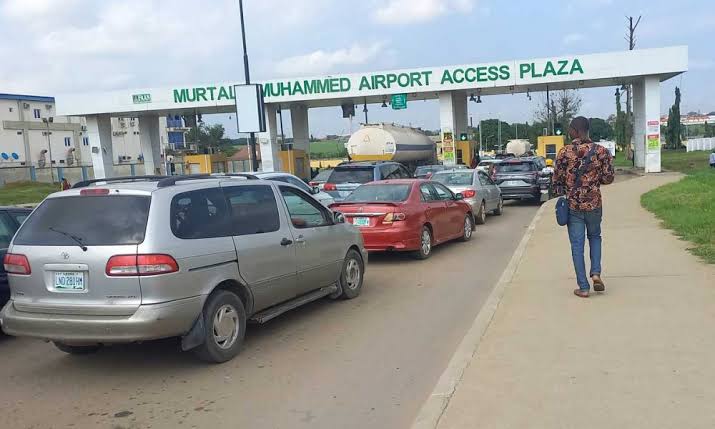
The Federal Government has temporarily suspended the cashless toll payment system at major airports across Nigeria following significant public complaints, severe traffic congestion, and reports of travelers missing flights due to delays caused by the new policy. The decision reflects the government’s acknowledgment of the difficulties faced by commuters and its commitment to ensuring a more efficient and convenient airport experience.
The cashless toll system was introduced to modernize revenue collection at airport entry points, car parks, and lounges. The goal was to eliminate cash handling, reduce fraud, and improve accountability by using electronic payment methods. Officials argued that such a system would streamline payments, reduce human errors, and ensure that all revenue collected could be properly monitored.
While the intent was to improve operational efficiency, the rollout faced immediate challenges that made its implementation problematic.
One of the main issues was traffic congestion at key airport access points, especially in Lagos and Abuja.
Vehicles were reportedly stuck in long queues for several hours, leading to frustration among travelers. Many passengers missed scheduled flights, and social media was filled with videos and reports showing traffic stretching for kilometers around airport entrances. The disruption highlighted the fact that while digital systems can improve efficiency, inadequate planning and infrastructure can create unintended complications, particularly in high-traffic areas.
In response to the disruptions, the government ordered that the policy be suspended immediately. Authorities stressed that the suspension is temporary and does not signify a permanent abandonment of the cashless system. The pause is meant to give the government time to review and refine the system to ensure it can be implemented effectively without inconveniencing the public. Officials indicated that lessons learned from the initial rollout would guide improvements, including adjustments to traffic management, payment processing, and public education about the new system.
Top Society notes that there are also indications that the government may adopt a hybrid payment approach, allowing both electronic and cash payments during the transition period. This approach aims to maintain the benefits of a digital system while accommodating travelers who may not yet be familiar with or have access to electronic payment options. By combining both methods, authorities hope to prevent congestion, improve revenue collection efficiency, and provide a smoother experience for airport users.
The suspension underscores the broader challenge of introducing digital systems in environments where infrastructure and public readiness are uneven. While modernization and efficiency are essential, it is equally important to ensure that new policies are user-friendly and do not disrupt critical services. Travel and logistics stakeholders have welcomed the government’s decision, noting that airport access should always be seamless and reliable.
Moving forward, the government has reassured the public that the cashless toll system will be reintroduced once adjustments are made. The aim is to balance modernization goals with the practical needs of travelers, ensuring that revenue collection is efficient, transparent, and convenient. The experience serves as a reminder that policy implementation, particularly in public services, requires careful planning, stakeholder engagement, and flexibility to respond to real-world challenges.
This temporary suspension highlights the government’s responsiveness to public concerns and its commitment to creating a system that works effectively for both administrators and users. Travelers can now rely on familiar payment methods while authorities refine the cashless toll system for a more efficient and user-friendly future.