




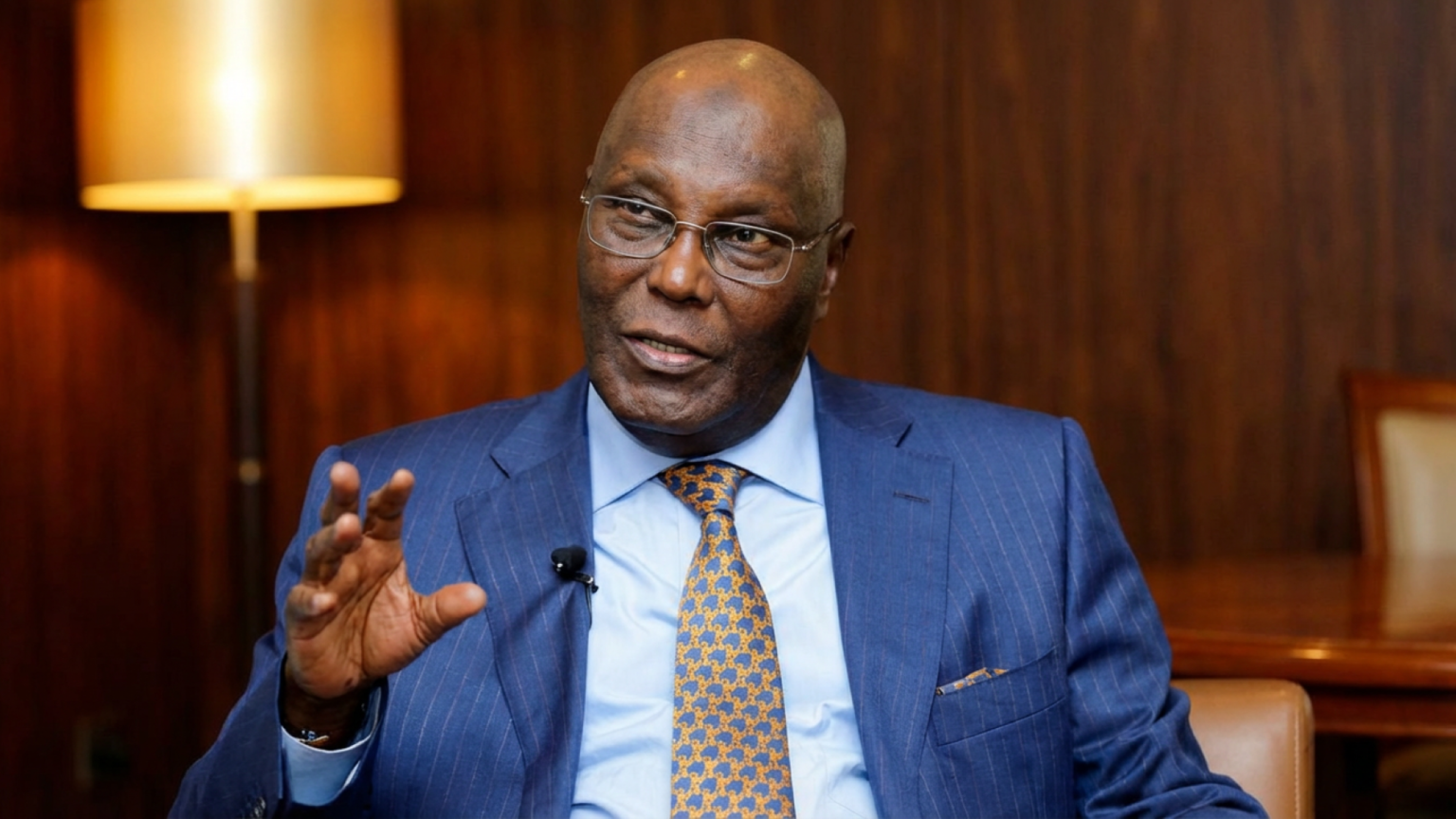
The Presidency has accused former Vice President Atiku Abubakar of engaging in activities aimed at influencing officials in the United States against the administration of President Bola Ahmed Tinubu, a development that has sparked fresh political debate across Nigeria.
The allegation has further heightened tensions between the ruling All Progressives Congress (APC) and the opposition People’s Democratic Party (PDP), with both sides exchanging strong words over the role of opposition politics and international diplomacy.
The latest controversy emerged after senior officials in the Presidency alleged that Atiku had been reaching out to influential policymakers and political figures in the United States to present a negative picture of the Tinubu administration. According to presidential aides, such actions amount to an attempt to undermine Nigeria’s international standing and weaken confidence in the country’s democratic institutions.
The Presidency argued that while political disagreements are expected in every democracy, opposition leaders should resolve their differences within Nigeria’s constitutional framework rather than seeking foreign intervention. Government officials maintained that taking domestic political disputes to international audiences could damage investor confidence, affect diplomatic relations, and project Nigeria in an unfavorable light.
Presidential spokespersons insisted that President Tinubu’s administration remains focused on implementing reforms designed to reposition the country’s economy despite the challenges inherited from previous administrations. They pointed to ongoing efforts to stabilize the foreign exchange market, improve revenue generation, attract foreign investment, and strengthen national security as evidence that the government remains committed to delivering on its promises.
According to the Presidency, criticism is a legitimate part of democracy, but lobbying foreign governments against a sitting administration crosses an important line. Officials argued that patriotic citizens, regardless of political affiliation, should prioritize Nigeria’s national interest when engaging with international partners.
The allegations have, however, been rejected by associates of the former vice president. Supporters of Atiku Abubakar insisted that his interactions with international leaders and policymakers are neither secret nor unusual for a politician of his stature. They argued that discussions on democracy, governance, transparency, and the rule of law are common features of international diplomatic engagement.
Members of Atiku’s political camp maintained that raising concerns about governance should not be interpreted as an attempt to sabotage Nigeria. Instead, they argued that constructive criticism helps strengthen democratic institutions by encouraging accountability and better governance.
Political observers note that Atiku has consistently remained one of the strongest voices criticizing President Tinubu’s policies since the conclusion of the 2023 presidential election. His criticisms have centered on economic reforms, the rising cost of living, inflation, unemployment, insecurity, and the implementation of key government policies.
The Tinubu administration, on the other hand, has defended its decisions, arguing that many of the economic reforms currently causing hardship are necessary sacrifices required to rebuild the nation’s economy after years of structural challenges. Government officials have repeatedly stated that while the reforms may be painful in the short term, they are expected to produce sustainable economic growth in the long run.
Analysts believe the latest exchange reflects the increasingly competitive political atmosphere ahead of future electoral contests. Although the next general election remains some years away, both the ruling party and opposition leaders have continued to position themselves politically through public statements, policy debates, and engagements with both domestic and international audiences.
The controversy also raises broader questions about the relationship between domestic politics and international diplomacy. In many democratic societies, opposition leaders routinely meet with foreign diplomats, investors, development agencies, and government officials. Such meetings often focus on governance, economic opportunities, human rights, democratic development, and regional security.
However, political analysts point out that the interpretation of those engagements often depends on the prevailing political climate. Supporters of incumbent governments frequently view international criticism as attempts to weaken national sovereignty, while opposition groups argue that international engagement is a legitimate avenue for promoting democratic accountability.
Nigeria’s political history contains several examples of opposition leaders seeking support or recognition from international partners during periods of political uncertainty. Similarly, successive governments have occasionally accused political opponents of attempting to damage the country’s reputation abroad whenever criticism from foreign governments or international organizations emerges.
Despite the sharp rhetoric, experts caution that both the government and opposition have important roles to play in strengthening Nigeria’s democracy. While the government is expected to remain accountable and transparent, opposition parties are equally expected to provide constructive alternatives rather than merely criticizing government policies.
Civil society organizations have also urged political leaders to focus on issues that directly affect Nigerians, including inflation, food security, electricity supply, healthcare, education, youth unemployment, and insecurity. According to governance advocates, citizens are more concerned about practical solutions to everyday challenges than prolonged political confrontations.
Economic experts note that Nigeria continues to face significant fiscal pressures despite recent reforms. Rising inflation, exchange rate volatility, and the high cost of living remain major concerns for households and businesses. At the same time, the government continues to emphasize ongoing investments in infrastructure, agriculture, digital innovation, and energy as pathways to long-term national development.
Foreign policy analysts also stress that Nigeria remains an important strategic partner for the United States and other Western nations due to its population, economic potential, regional influence, and role in African peacekeeping efforts. As such, diplomatic engagement between Nigerian political leaders and international stakeholders is likely to remain an important aspect of the country’s democratic landscape.
The latest dispute between the Presidency and Atiku Abubakar underscores the deep political divisions that continue to shape Nigeria’s public discourse. Whether the allegations ultimately influence public opinion remains uncertain, but they have once again highlighted the intense rivalry between the country’s leading political actors.
As Nigerians continue to monitor developments, many observers hope that political leaders will prioritize national unity, economic recovery, and institutional stability over partisan conflicts. Regardless of political affiliation, citizens expect both the government and the opposition to uphold democratic values, respect constitutional processes, and place Nigeria’s long-term interests above political competition.

