


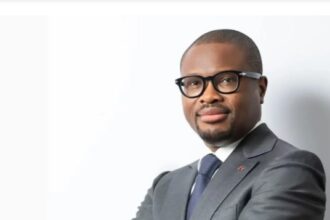


Governor of the Central Bank of Nigeria (CBN), Olayemi Cardoso, yesterday assured that the macroeconomic reforms and policy buffers built by the country over the past two years have positioned it to navigate the current global economic shocks arising from the geopolitical tensions occasioned by the United States–Israel war on Iran.
Cardoso said the reforms have rebuilt investor confidence, strengthened financial institutions, and improved the country’s foreign exchange market, placing the economy on a firmer footing despite renewed geopolitical tensions and global uncertainty.
The CBN’s governor’s assurance came on a day critical stakeholders from the private sector, academia, and civil society conceded to the need for the current reforms by the federal government.
However, they expressed concern that the hasty implementation without social protection as well as poor infrastructure had continued to exert a heavy toll on businesses and the masses.
The stakeholders converged on Abuja at a stakeholders’ dialogue on, “Sustaining and Deepening Economic Reforms in Nigeria,” organised by Agora Policy, in collaboration with Nigerian Economic Summit Group (NESG), with support from Nigeria Economic Stability and Transformation (NEST) and UK International Development.
Delivering a lecture titled: “Strong Foundations: From the Classroom to the Capital Base” as part of the Founders Day celebration of St. Gregory’s College in Lagos, Cardoso said the foundations laid by recent policy measures would help Nigeria navigate emerging global risks.
He noted that recent geopolitical developments, including tensions arising from the US–Israel–Iran conflict, could disrupt supply chains, push energy prices higher and heighten investor caution globally. However, he stressed that Nigeria’s economic buffers are now significantly stronger.
According to Cardoso, “Today, the global economy is facing renewed shocks, including continued geopolitical tensions and the latest developments in the US–Israel–Iran conflict.
“These events have the potential to push energy prices higher, disrupt supply chains, and increase risk aversion among global investors.
“But the macroeconomic reforms and policy buffers we have built over the past two years have placed Nigeria in a far stronger position to navigate these challenges.
“The storms may come, but our house will stand firm. Strong foundations matter: whether for individuals, institutions, or nations.”
The CBN governor added, “Many of you will know the lesson of building a house on solid rock versus building on sinking sand or a crumbling bank.
“Foundations matter because they determine whether a structure can withstand the storms that inevitably come.
“The same is true for economies. The strength of economic foundations often becomes most visible during moments of uncertainty.”
Cardoso said the rebuilding of trust in Nigeria’s economic management had led to a surge in capital inflows. According to him, capital and investment flows into the country increased by nearly 200 percent between 2023 and 2025, reflecting renewed confidence among both domestic and international investors.
He added that Nigeria’s external reserves have also improved significantly.
“Our external reserves have recently exceeded $50 billion, reflecting structural improvements in our balance of payments and increasing investment flows into the Nigerian economy,” he said.
The central bank governor said, currently, Nigeria’s foreign exchange market operated with far greater liquidity and efficiency, and has cleared the backlog of unmet demands. He said market participants were now able to transact without relying on extraordinary central bank’s interventions.
According to him, “We have also seen almost a 200 per cent increase in capital and investment flows between 2023 and 2025.
“To be clear, the relative stability of the currency we are seeing today is not an accident but the result of deliberate efforts to rebuild trust and strengthen the confidence of both domestic and international investors.
“Our external reserves have recently exceeded 50 billion dollars, reflecting structural improvements in our balance of payments and increasing investment flows into the Nigerian economy.”
The CBN governor said the depth of Nigeria’s foreign exchange market was attested to a couple of days ago when the amount of transactions that were done in the market exceeded $1 billion.
He said the progress reflected not only the resilience of Nigeria’s financial system, but also the growing confidence of investors in the long-term potential of the economy.
Cardoso said, “By strengthening the capital foundations of our banks and ensuring that our financial markets are transparent and well governed, we are also strengthening the foundations of economic growth itself.”

