






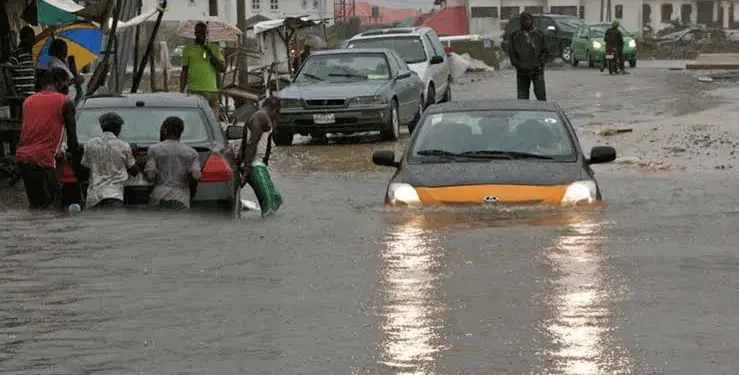
Every year, when the rainy season peaks, Lagos experiences widespread flooding that affects transportation, housing, and daily business activities across several communities.
As heavy rainfall intensifies, water levels rise quickly in low-lying areas such as Lekki, Ajah, and parts of Ikorodu. Roads in these locations often become temporarily impassable, leading to delays in movement and disruptions to commercial activity.
Residents and commuters typically experience longer travel times during peak rainfall periods, as some routes become difficult to navigate due to water accumulation. In response, many people adjust their schedules, leaving earlier than usual or relying on alternative routes to reach their destinations.
The situation is largely influenced by a combination of factors, including the city’s coastal geography, rapid urban development, and heavy rainfall patterns. Lagos is built on low-lying terrain with a network of lagoons and wetlands, which naturally makes it susceptible to water buildup during intense storms. As the city continues to expand, some natural drainage channels have been affected by construction and population growth.
Blocked drainage systems caused by waste disposal in gutters also contribute to the severity of flooding in certain areas. When drainage channels are obstructed, rainwater has limited pathways to flow, leading to surface water accumulation on roads and residential streets.
Despite these challenges, residents across the city continue to adapt. Traders in local markets often raise their goods above ground level during rainfall, while transport operators adjust their routes based on road conditions. In some areas, community members also engage in drainage clearing efforts to help reduce water blockage.
The flooding situation also highlights broader conversations around urban planning and infrastructure development. Experts and stakeholders continue to emphasize the importance of improved drainage systems, waste management practices, and sustainable city planning to address recurring seasonal flooding.
Government agencies have periodically carried out drainage clearance and environmental sanitation exercises aimed at reducing the impact of heavy rainfall. In addition, public awareness campaigns encourage residents to avoid dumping waste into drainage channels and to support community clean-up efforts.
While flooding remains a recurring seasonal challenge, it also underscores the need for long-term infrastructure resilience in rapidly growing urban centers like Lagos. Ongoing discussions focus on how to balance urban expansion with environmental sustainability to reduce the impact of future rainfall events.
As the rainy season continues, residents are advised to stay informed through weather updates, plan their movements carefully, and take necessary precautions during periods of heavy rainfall.
The situation remains a shared responsibility between urban planning efforts and community behavior, with the goal of ensuring safer and more navigable streets during peak rainfall periods.

