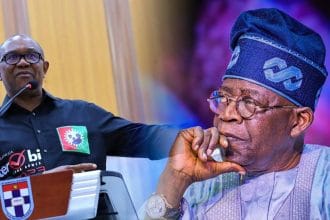




During the recent plenary session at the House of Representatives on Thursday, a significant political shift occurred as five prominent members of the Labour Party (LP) announced their defection to the ruling All Progressives Congress (APC). This unexpected move has sent ripples through the political landscape, highlighting underlying tensions within the Labour Party.
The lawmakers who have switched allegiance are Esosa Iyawe from Edo State, Tochukwu Okere representing Imo State, Donatus Matthew of Kaduna State, Bassey Akiba from Cross River State, and Daulyop Fom hailing from Plateau State.
Their departure marks a substantial loss for the Labour Party, which had been gaining momentum in recent years.
In addition to these five, Erhiatake Ibori-Suenu from Delta State, a lawmaker and the daughter of the former Delta State Governor, James Ibori, also left the Peoples Democratic Party (PDP) to join the APC. Her defection further underscores the shifting political alliances occurring within the legislative framework.
The primary reason cited by the departing lawmakers for their move is the internal divisions and factionalism plaguing the Labour Party.
Despite the party’s impressive performance in the 2023 elections, where it secured six Senate seats and over 34 seats in the House of Representatives, internal strife has undermined its cohesion and effectiveness. This internal discord has evidently led to dissatisfaction among its members, prompting them to seek stability and unity within the APC, which has long been a dominant force in Nigerian politics.
The Labour Party, established over two decades ago, had traditionally been viewed as a pro-worker’s organization with limited influence in mainstream politics. However, the 2023 elections marked a turning point for the party. Under the leadership of its presidential candidate, Peter Obi, the LP made significant inroads, transforming from a marginal player to a formidable contender. Obi’s campaign resonated with a large segment of the electorate, propelling the Labour Party to unprecedented heights by securing a substantial number of legislative seats. This surge was a stark contrast to the party’s performance in the 2019 National Assembly elections, where it failed to secure any seats, highlighting the dramatic turnaround it experienced within a short period.
Peter Obi’s impressive third-place finish in the presidential poll had led many political analysts and supporters to believe that the Labour Party was on the brink of becoming a major opposition force alongside the PDP against the APC. The expectation was that the LP would continue its upward trajectory, leveraging its newfound legislative representation to influence policy and governance significantly. However, the post-election period has been tumultuous for the party, with internal disagreements and power struggles emerging as significant challenges. These intra-party conflicts have not only hindered the party’s ability to present a united front but have also contributed to the disenchantment of its members, culminating in the recent wave of defections to the APC.
The defection of these lawmakers to the APC is a critical development that could have far-reaching implications for the balance of power within the House of Representatives. It not only weakens the Labour Party’s legislative strength but also reinforces the APC’s dominance. As the political dynamics continue to evolve, the Labour Party faces the daunting task of reconciling its internal differences and rebuilding its cohesion to maintain its relevance and effectiveness in Nigeria’s political arena.
In summary, the mass defection of Labour Party lawmakers to the APC underscores the fragile state of the LP’s internal unity despite its electoral successes. As the party grapples with internal divisions, the political landscape remains highly dynamic, with traditional powerhouses like the APC continuing to assert their influence while newer players like the Labour Party strive to solidify their positions amidst ongoing challenges.